x




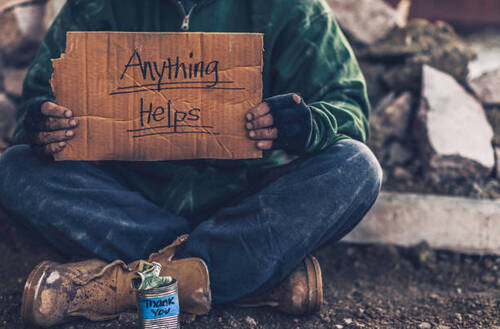
Poverty in the USA: Being Poor in the World's Richest Country | Business Documentary from 2019 In 2019, 43 million people in the United States lived below the poverty line, twice as many as it was fifty years before. 1.5 million children were homeless, three times more than during the Great Depression the 1930s. Entire families are tossed from one place to another to work unstable jobs that barely allow them to survive.
In the historically poor Appalachian mining region, people rely on food stamps for food. In Los Angeles, the number of homeless people has increased dramatically. In the poorest neighbourhoods, associations offer small wooden huts to those who no longer have a roof.
The middle class was once a symbol of the American dream. It meant financial security and an opportunity for a better future. But that portrait of the American middle class is quite different today. A survey in 2018 found that a third of middle-income adults don’t have as much as $400 to cover an unexpected expense.
And while the middle-class lifestyle grows more expensive and uncertain, it’s also moving beyond the reach of younger generations. “It was at least a secure category,” said Alissa Quart, author of ‘Squeezed: Why Our
Families Can’t Afford America,’ [but] there are certain kinds of assumptions around being a middle-class person” that have “shattered” over the past 10 to 15 years. Some middle-income households and experts believe a lack of supporting policies might be to blame for the drastic changes.
“There is no help whatsoever,” according to Chantal Jacob, a middle-income parent from suburban Texas. “There’s no policy in place to assist people. And I feel like as soon as you get a job, as soon as you’re working, they’re just like,
‘That’s all you need, a job. You got it, go forth and have at it.’ ” Lawrence Mishel, a distinguished fellow at the Economic Policy Institute, shares that sentiment.
“It’s not that the economy got worse, it was that there were policy decisions made so that the economic growth did not filter down to the vast majority.” The Biden administration has been pushing for several bills aimed at supporting middle-income households, including the $1 trillion bipartisan infrastructure legislation passed in November 2021 and the Build Back Better Act currently stalled in Congress.
But observers say it might not be enough to save the middle class from economic hardship now and in the future. “My friends that were struggling are still struggling,” said Jacob. “I’m still budgeting down to every dollar trying to get things done. So I just feel like if the changes are happening, they’re not trickling down fast enough for us to see the effects of it.”
Facing a pandemic, an unprecedented economic and social crisis, the United States seems to be on the brink. We followed middle-class Americans who now find themselves on the poverty line. Marc and Selene, had to close their restaurant and are struggling to pay the rent when their young son breaks his arm. Now they have to find an additional $11,000 in order to have it treated. A few months ago,
Steven was making $ 70,000 a year as a business executive. Today he lives with his wife in their car. But he refuses to give up his belief in capitalism and the American dream and is sure better days are coming. Meanwhile, Kirin faces deportation after losing her job as a cashier.