x




South Korea Luxury Fashion Market Overview
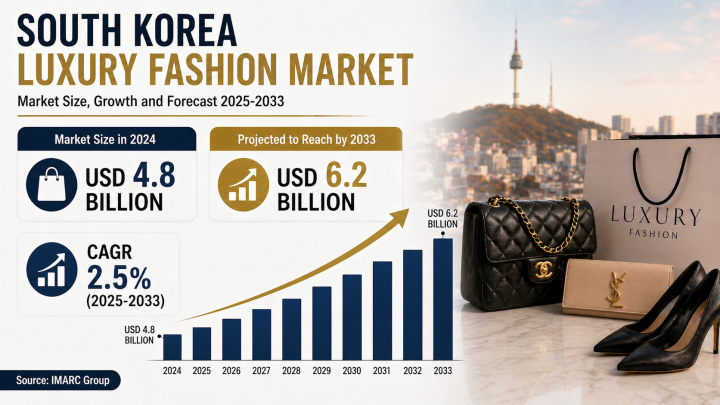
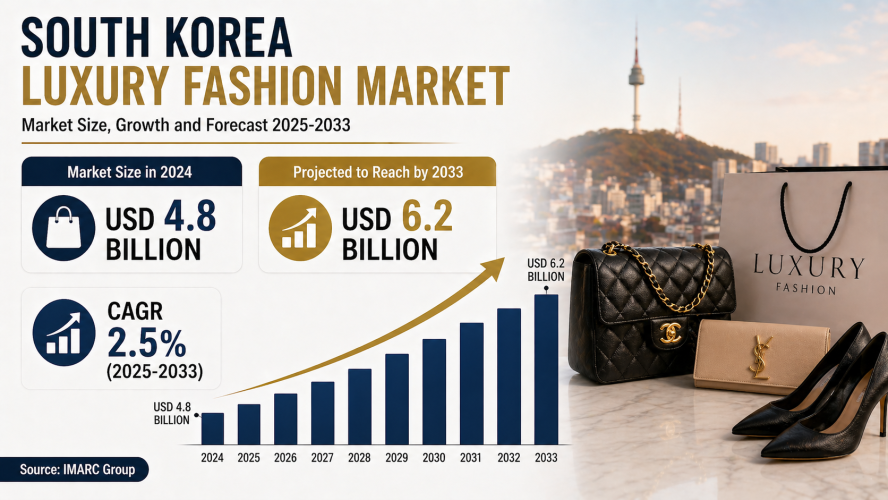
Market Size in 2024: USD 4.8 Billion
Market Forecast in 2033: USD 6.2 Billion
Market Growth Rate 2025-2033: 2.5%
According to IMARC Group's latest research publication, "South Korea Luxury Fashion Market Report by Product Type (Clothing and Apparel, Footwear, Accessories, Gems and Jewellery, Watches, Belts, Bags), Distribution Channel (Store-Based, Non-Store Based), End User (Men, Women, Unisex), and Region 2025-2033", the South Korea luxury fashion market size reached USD 4.8 Billion in 2024. Looking forward, IMARC Group expects the market to reach USD 6.2 Billion by 2033, exhibiting a growth rate (CAGR) of 2.5% during 2025-2033.
Download a sample PDF of this report: https://www.imarcgroup.com/south-korea-luxury-fashion-market/requestsample
How Digital Innovation and Personalization are Reshaping the South Korea Luxury Fashion Market
South Korea Luxury Fashion Market Trends & Drivers:
South Korea's high concentration of affluent consumers and strong purchasing power are major drivers sustaining the luxury fashion market. The country's fashion-forward culture and significant middle-to-upper-class consumer base value premium brands and exclusive designs. Additionally, South Korea's globally recognized fashion influence through K-beauty, K-fashion, and entertainment exports has elevated the aspirational value of luxury goods domestically. The market value reached USD 4.8 billion in 2024, reflecting steady demand for premium clothing, apparel, accessories, footwear, and jewelry segments. Rising disposable incomes among urban professionals and the expansion of luxury retail networks across Seoul's metropolitan area and major regional cities continue to support market expansion.
Another critical driver is the integration of entertainment and cultural marketing strategies. The global rise of K-dramas, K-pop, and Korean celebrity culture has created powerful brand ambassadors for luxury fashion products. South Korean consumers frequently reference fashion trends featured in popular TV dramas and worn by K-pop idols when making luxury purchases. This cultural influence extends internationally as Korean celebrities achieve global prominence, further elevating the aspirational appeal of South Korea-based luxury fashion brands. Additionally, younger affluent consumers in their 20s and 30s increasingly view luxury purchases as lifestyle statements and personal expression, driving demand for exclusive collections and limited-edition items across accessories, footwear, and apparel categories.
Finally, e-commerce transformation and experiential retail are reshaping distribution channels. Online luxury retailers and social commerce platforms have made high-end fashion more accessible, particularly to younger demographics. Premium department stores like Lotte, Hyundai Department Store, and Shinsegae remain important distribution channels, while luxury brands increasingly invest in flagship stores and experiential boutiques to enhance brand storytelling. The growth of luxury resale platforms and subscription-based models is also expanding the addressable market by offering more affordable entry points into premium fashion while catering to sustainability-conscious consumers seeking pre-owned designer goods.
South Korea Luxury Fashion Industry Segmentation:
The report has segmented the market into the following categories:
Breakup by Product Type:
Breakup by Distribution Channel:
Breakup by End User:
Regional Analysis:
Competitive Landscape:
The competitive landscape of the industry has also been examined along with the profiles of the key players.
Key Players:
Recent News and Developments in South Korea Luxury Fashion Market
March 2025: Leading luxury fashion brands expanded their flagship store presence in Seoul's premium retail districts, emphasizing experiential retail and personalized customer service to enhance brand loyalty among affluent South Korean consumers.
January 2025: E-commerce luxury fashion platforms achieved significant growth through enhanced digital authentication technologies and blockchain-based verification systems, reducing counterfeit goods and strengthening consumer trust in online luxury purchases.
December 2024: Luxury resale platforms and subscription-based rental services gained traction among younger affluent consumers, offering sustainable alternatives to full-price luxury fashion purchases and expanding the addressable market segment.
Note: If you require specific details, data, or insights that are not currently included in the scope of this report, we are happy to accommodate your request. As part of our customization service, we will gather and provide the additional information you need, tailored to your specific requirements. Please let us know your exact needs, and we will ensure the report is updated accordingly to meet your expectations.
About Us:
IMARC Group is a global management consulting firm that helps the world's most ambitious changemakers to create a lasting impact. The company provides a comprehensive suite of market entry and expansion services including thorough market assessment, feasibility studies, company incorporation assistance, factory setup support, regulatory approvals and licensing navigation, branding, marketing and sales strategies, competitive landscape and benchmarking analyses, pricing and cost research, and procurement research.
Contact Us:
IMARC Group
134 N 4th St. Brooklyn, NY 11249, USA
Email: sales@imarcgroup.com
Tel No:(D) +91 120 433 0800
United States: +1-201971-6302