x




How Government Support is Transforming the Bioreactor Industry
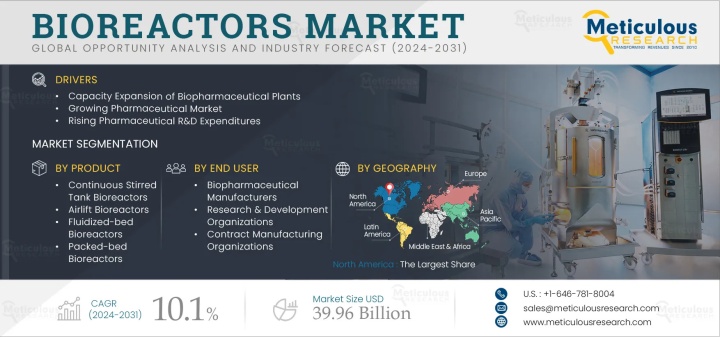
When we look at the biotechnology landscape today, one thing becomes crystal clear: government incentives are reshaping how companies approach bioreactor technology. The numbers tell a compelling story - we're looking at a market that's expected to reach $39.96 billion by 2032, growing at a steady 10.1% each year. But behind these figures lies a more human story about how smart policy decisions are making cutting-edge technology accessible to more companies than ever before.
Why Government Help Makes All the Difference
Think about it from a business owner's perspective. You're running a pharmaceutical company, and you know bioreactors could revolutionize your production process. But the upfront costs are intimidating, and the technical complexity feels overwhelming. This is exactly where government incentives step in to level the playing field.
The beauty of single-use bioreactor systems is that they already cost 60-70% less to set up compared to traditional stainless steel facilities. When you add government support on top of these savings, suddenly what seemed impossible becomes achievable. We've seen this play out across the industry as the global biopharmaceutical market has exploded from $275 billion to an anticipated $507 billion by 2024.
What's particularly interesting is how this support has enabled innovation among industry leaders. Companies like Thermo Fisher Scientific, METTLER TOLEDO, Merck KGaA, Eppendorf AG, Sartorius AG, and Danaher Corporation have leveraged these favorable policies to push the boundaries of what's possible with automated bioreactor systems and continuous processing technologies.
The Tax Break Revolution
Let's talk about something that directly impacts every company's bottom line: taxes. Smart governments have figured out that the right tax incentives can accelerate bioreactor adoption faster than almost any other policy tool.
Here's how it works in practice. When a company invests in bioreactor technology, investment tax credits let them deduct a significant portion of those costs directly from what they owe in taxes. For smaller companies especially, this immediate financial relief can make the difference between moving forward with a project or putting it on hold indefinitely.
But it doesn't stop there. Accelerated depreciation schedules mean companies can write off their bioreactor investments much faster than typical equipment. This is particularly smart policy because biotechnology equipment often needs upgrades and modifications - recognizing this reality in the tax code encourages continuous innovation.
The real game-changer has been watching single-use bioreactors take off, growing at an impressive 11.40% each year. These systems benefit enormously from favorable depreciation rules, and companies are responding by choosing them over traditional alternatives.
Research and development tax credits add another layer of support. Since implementing bioreactor technology usually requires significant process development work, these credits help companies through the learning curve. This has been especially important for pilot-scale bioreactors (10L-200L), which are showing some of the strongest growth as companies use them to bridge the gap between laboratory research and full-scale production.
The Vaccine Wake-Up Call
The COVID-19 pandemic changed everything about how we think about vaccine production. Suddenly, governments around the world realized that market-driven investment timelines simply couldn't keep up with urgent public health needs.
Emergency funding programs appeared almost overnight, allowing pharmaceutical companies to invest in large-scale bioreactor systems without going through the usual lengthy risk assessment processes. For the first time, companies could build vaccine manufacturing facilities in months rather than years.
What made this even more effective was the simultaneous streamlining of regulatory approval processes. Companies could get their bioreactor-based production systems approved faster while still maintaining all the necessary safety standards. This combination of financial support and regulatory efficiency created an environment where bioreactor technology could be deployed at unprecedented speed.
The strategic thinking behind this goes deeper than just pandemic response. Governments finally understood that having domestic vaccine production capabilities isn't just about public health - it's about national security. Bioreactor technology is particularly attractive for this because the same basic infrastructure can produce multiple types of vaccines, making it a smart long-term investment.
The Players Making It Happen
When we look at who's driving innovation in this space, the same names keep coming up. These companies haven't just benefited from government incentives - they've used that support to push the entire industry forward.
Recent developments show how this support translates into real innovation. We're seeing fully automated lab-scale bioreactors with advanced magnetic mixing systems and enhanced contamination control. The development of continuous bioprocessing systems, which offer better productivity and lower contamination risks than traditional batch processing, has been accelerated by strategic government support.
Where the Growth Is Happening
The geographic picture is fascinating. North America currently leads the market with a 34% share, primarily because of substantial government R&D investments and supportive regulatory frameworks. But the real excitement is in Asia-Pacific, which is growing at 11.90% annually.
Countries like China, India, and Brazil are creating tremendous opportunities for bioreactor vendors through government initiatives that support rising pharmaceutical investments, growing patient populations, and increasing foreign investment. These emerging markets show what happens when governments actively support biotechnology development.
The Bigger Picture
What we're witnessing goes beyond just market growth. These government incentives are creating ripple effects throughout the biotechnology ecosystem. High-skilled jobs are being created, educational programs are expanding, and international investment is flowing into domestic biotechnology sectors.
The success stories we're seeing today provide a roadmap for future policy development. As the industry continues evolving toward more sophisticated applications like personalized medicine and advanced cell therapies, the lessons learned from current incentive programs will be invaluable.
Looking Forward
The transformation of the bioreactor industry through government incentives represents more than just smart policy - it's a blueprint for how public and private sectors can work together to accelerate innovation. From tax incentives that make investments more attractive to emergency funding that can rapidly scale production capabilities, we're seeing how thoughtful government support can turn technological possibilities into commercial realities.
As we move forward, the companies and countries that best understand this partnership between public policy and private innovation will be the ones leading the next wave of biotechnology breakthroughs. The bioreactor industry's remarkable growth story is just the beginning of what's possible when government incentives align with technological opportunity.
Download Sample Report Here @https://www.meticulousresearch.com/request-sample-report/cp_id=5816
Contact Us:
Meticulous Research®
Email- sales@meticulousresearch.com
Contact Sales- +1-646-781-8004
Connect with us on LinkedIn- https://www.linkedin.com/company/meticulous-research