x




Global Container Fleet Market: Trends, Growth, and Future Outlook (2024–2032)
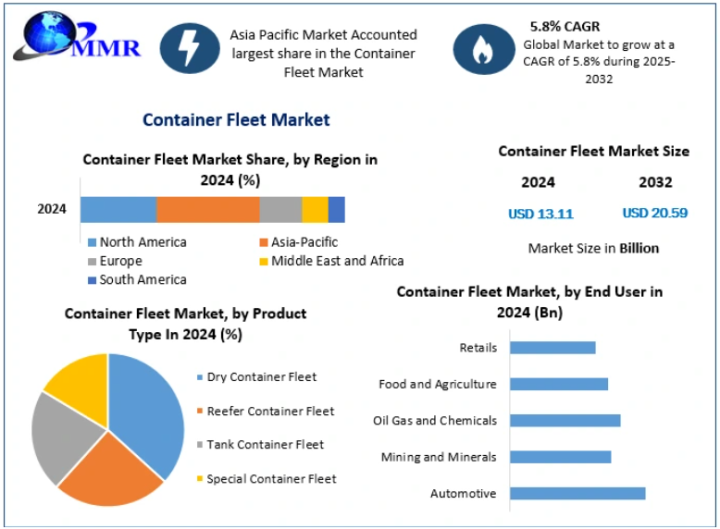
The Global Container Fleet Market was valued at USD 13.11 billion in 2024 and is expected to reach USD 20.59 billion by 2032, growing at a CAGR of 5.8% during the forecast period. Container fleets play a crucial role in facilitating global trade, enabling the efficient, standardized, and cost-effective transport of goods across international and domestic supply chains. As businesses continue to expand globally, containerized shipping remains a cornerstone of modern logistics and commerce.
Market Overview
The rise of globalization and the expansion of e-commerce have accelerated the demand for container fleets. These fleets allow for the reliable movement of goods, ensuring timely delivery while reducing operational costs. Containerization has revolutionized logistics, creating a more organized and secure system for cargo transport and enabling businesses to maintain competitiveness in an increasingly interconnected marketplace.
Additionally, technological advancements, digitalization, and automation have transformed the container fleet landscape. Smart containers equipped with sensors and tracking systems enhance operational efficiency, monitor cargo conditions, and optimize shipping routes. Environmental sustainability has also emerged as a key focus, with initiatives aimed at reducing carbon emissions and the ecological footprint of container shipping operations.
To know the most attractive segments, click here for a free sample of the report:https://www.maximizemarketresearch.com/request-sample/35879/
Market Dynamics
Drivers:
Challenges:
Opportunities:
Market Trends
Several key trends are shaping the container fleet market:
Industry data from the International Tank Container Organisation (ITCO) highlights the growth of tank container fleets, which rose to 801,800 units in 2023, up from 737,935 in 2022, reflecting an 8.6% year-over-year increase. The top manufacturers—CIMC, NT Tank, JJAP, Welfit Oddy, Singamas, and Dalian CRRC—account for 97% of global production, emphasizing market consolidation among key players.
Segment Analysis
By Product Type:
By End-User Industry:
Regional Insights
To know the most attractive segments, click here for a free sample of the report:https://www.maximizemarketresearch.com/request-sample/35879/
Competitive Landscape
The container fleet market is highly competitive, with both shipping lines and container leasing firms playing pivotal roles. Key players include:
North America:
Europe:
Asia-Pacific:
Leading companies focus on fleet expansion, sustainability initiatives, mergers, and partnerships to maintain competitive advantage. For instance, Evergreen Marine announced plans for 20 carbon-neutral vessels by 2050, highlighting the industry’s push towards environmental responsibility.
Conclusion
The Container Fleet Market is set for steady growth through 2032, driven by global trade expansion, e-commerce, technological advancements, and sustainability initiatives. Dry containers remain the backbone of the industry, while reefer and tank containers are gaining importance due to specialized transport needs. With Asia-Pacific leading in market share and North America maintaining robust demand, the global container fleet market presents substantial opportunities for investors, manufacturers, and logistics providers seeking to optimize supply chains and capitalize on the evolving trade landscape.