x




Global Microgreen Market: Rising Demand for Nutrient-Dense Greens Fuels a USD 3.77 Billion Opportunity by 2030
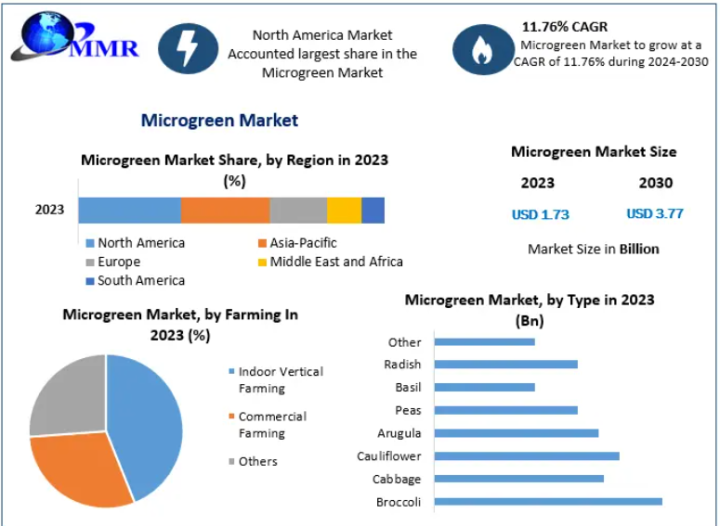
The Global Microgreen Market, valued at USD 1.73 billion in 2023, is projected to grow robustly to USD 3.77 billion by 2030, expanding at an impressive CAGR of 11.76%. This growth is propelled by rising consumer awareness around health and nutrition, increasing culinary adoption of gourmet ingredients, and the rapid expansion of indoor and vertical farming technologies.
Microgreen Market Overview
Microgreens—tiny, nutrient-rich shoots harvested shortly after germination—have transitioned from high-end restaurant garnishes to mainstream health foods. Typically 2.5–7.6 cm in size, these tender greens offer intense flavors, vivid colors, and concentrated vitamins, making them popular in both culinary art and nutrition-focused diets.
Unlike sprouts, microgreens are grown under light, in soil or soil substitutes, minimizing contamination risk and enhancing nutrient density. Their growing popularity is reflected across cuisines—from fine dining to everyday meals such as salads, juices, wraps, smoothies, pizzas, and fusion dishes.
To know the most attractive segments, click here for a free sample of the report:https://www.maximizemarketresearch.com/request-sample/221008/
Market Dynamics
The inclusion of microgreens in modern cuisine is a primary driver of market expansion. Chefs worldwide prefer microgreens for their flavor complexity, texture, visual appeal, and nutrition.
Health-conscious consumers increasingly seek foods rich in:
Polyphenol-rich microgreens, for instance, help reduce risks of heart disease and neurodegenerative illnesses such as Alzheimer’s.
Microgreens like broccoli, cauliflower, cabbage, basil, peas, and radish are widely used in home kitchens, boosting retail sales.
Despite their benefits, microgreens:
Producers must invest in controlled environments, further increasing production costs.
Rapid technological advancements—such as hydroponics, aeroponics, LED lighting, and automated climate control—are revolutionizing microgreen cultivation.
Vertical farming allows:
Countries adopting controlled environment agriculture (CEA) are driving significant market growth.
The microgreen industry lacks standardized labeling rules, causing consumer confusion. Production costs and prices also fluctuate due to:
Fungal issues such as mold vs. root-hair misidentification also create challenges for new growers.
Microgreen Market Segment Analysis
By Type
Broccoli microgreens dominate the market, owing to:
Broccoli microgreens support cardiovascular health, anti-aging benefits, and enhanced brain function.
Other key types include:
Colors also indicate phytochemical content:
By Farming Method
By Distribution Channel
By End Use
Microgreen Market Regional Analysis
North America leads global microgreen consumption due to:
The U.S. dominates production, with California producing 92% of North America’s broccoli microgreens.
Canada leads in producing cabbage microgreens.
European growth is supported by:
Key contributors:
European Food Safety Authority (EFSA) ensures strict quality and hygiene standards.
APAC’s demand is propelled by:
Countries like China, Japan, South Korea, and India show rapid adoption of microgreens in both retail and food services.
To know the most attractive segments, click here for a free sample of the report:https://www.maximizemarketresearch.com/request-sample/221008/
Competitive Landscape
The market is highly competitive, with over 200 players worldwide. However, a few global leaders maintain a significant share by leveraging technology, controlled-environment agriculture, and strategic expansions.
Key Companies
Recent Development:
In October 2021, Aero Farms expanded its Northeast U.S. distribution through over 350 Stop & Shop stores, offering nutrient-dense microgreens produced in advanced vertical farms.
Future Outlook
The microgreens industry is set for transformative growth as consumers embrace nutritional eating and restaurants continue to innovate with fresh ingredients. Growing investment in vertical farming, coupled with expanding retail availability and e-commerce penetration, will further strengthen the global market.
By 2030, microgreens will shift firmly from a gourmet garnish to a mainstream functional food, adding value across culinary, wellness, and agricultural sectors.