x




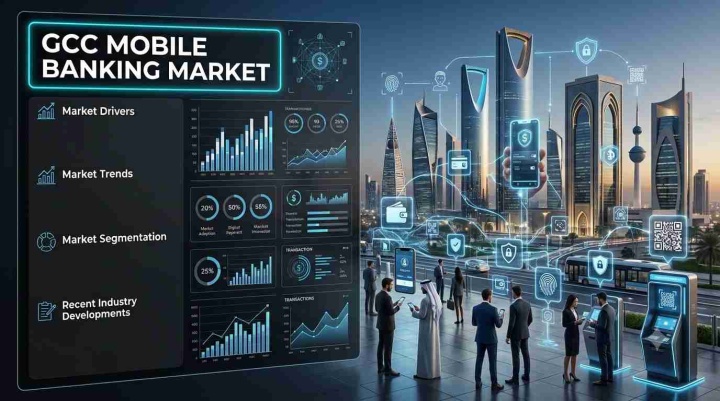
IMARC Group, a leading global market research and management consulting firm, has published its latest market intelligence report on the GCC Mobile Banking Market. The GCC mobile banking market size reached USD 28.6 Million in 2025 and is projected to reach USD 81.7 Million by 2034, exhibiting a CAGR of 11.98% during 2026-2034. Growth is being driven by rising smartphone penetration, high-speed internet connectivity, increasing adoption of digital banking services, the expansion of financial technology (FinTech), and supportive government initiatives promoting digital financial transactions.
Mobile banking is transforming the way consumers and businesses across the Gulf Cooperation Council (GCC) access financial services, enabling users to manage accounts, transfer funds, pay bills, access investment services and receive customer support through smartphones and tablets. The market is benefiting from widespread digitalization across Saudi Arabia, the UAE, Qatar, Bahrain, Oman, and Kuwait, where banks are investing in advanced mobile applications and convenient self-service banking solutions. Growing demand for real-time transactions, personalized financial services and secure digital experiences is encouraging financial institutions to enhance their mobile banking platforms. At the same time, technologies such as artificial intelligence (AI), blockchain, biometric authentication and cloud computing are supporting improved service delivery, fraud prevention and operational efficiency. Government initiatives promoting cashless transactions and digital financial inclusion are further encouraging adoption, while cybersecurity concerns, data privacy requirements and the need to maintain customer trust remain important considerations shaping the market's long-term growth.
GCC Mobile Banking Market at a Glance:
How AI is Reshaping the Future of the GCC Mobile Banking Market
Grab a sample PDF of this report: https://www.imarcgroup.com/gcc-mobile-banking-market/requestsample
GCC Mobile Banking Market Trends and Drivers:
The increasing penetration of smartphones and high-speed internet connectivity represents one of the primary factors driving the GCC mobile banking market. Consumers are increasingly using mobile devices to access banking services, transfer money, pay bills, review account balances and manage their finances without visiting physical bank branches. The region's digitally connected population and growing preference for convenient, on-demand financial services are encouraging banks to improve their mobile applications and expand self-service capabilities. In addition, younger consumers and digitally active customers are showing increasing preference for seamless banking experiences, prompting financial institutions to invest in intuitive interfaces, real-time transaction processing and personalized digital services.
The growing digital transformation of the banking, financial services and insurance (BFSI) sector is another major driver. Financial institutions across the GCC are upgrading legacy banking systems and integrating advanced technologies to improve operational efficiency, streamline transactions and strengthen customer relationships. Mobile banking platforms increasingly support services such as customer-to-customer and customer-to-business transfers, account information, investment management and digital customer support. The expansion of FinTech solutions and the integration of mobile banking with broader digital financial ecosystems are further encouraging adoption. These developments are enabling banks to deliver more accessible and responsive services while strengthening their competitiveness in an increasingly digital financial environment.
Government initiatives promoting digital transformation and cashless financial transactions are also supporting market growth. Countries such as Saudi Arabia and the UAE are advancing digital economy strategies and financial technology development, encouraging financial institutions to modernize their services and expand digital access. Regulatory efforts to improve transaction transparency, strengthen financial security and mitigate money laundering risks are further shaping mobile banking development. At the same time, AI, blockchain, biometric authentication and cloud-based technologies are helping banks improve personalization, transaction monitoring and service reliability. However, cybersecurity threats, data privacy concerns and the need to maintain customer confidence remain important considerations as mobile banking adoption expands across the region.
Government Schemes and National Digital Banking Programs Driving Demand:
GCC Mobile Banking Market Industry Segmentation:
The report has segmented the market into the following categories:
Breakup By Type:
The report provides a detailed breakup and analysis of the market by type, covering wireless application protocol (WAP), standalone mobile applications, SMS banking, unstructured supplementary service data (USSD), and other mobile banking solutions. Standalone mobile applications support a broad range of digital banking activities through smartphone interfaces, while SMS banking and USSD provide access to selected services through messaging and network-based interfaces. WAP and other solutions contribute to the wider mobile banking ecosystem by enabling customers to access financial information and services through mobile devices.
Breakup By Service:
The report provides a detailed breakup and analysis of the market by service, covering transactions, account information, investments, support services and other banking services. Transaction services facilitate digital fund transfers between individuals and payments to businesses, while account information services allow users to review balances and transaction histories. Investment-related services support access to financial products, and digital support services help customers obtain assistance through mobile banking platforms. The growing demand for convenient, real-time financial management is encouraging banks to expand the range of services available through mobile applications.
Breakup By Platform:
The report provides a detailed breakup and analysis of the market by platform, covering Android, iOS and other platforms. Android and iOS applications enable customers to access banking services through smartphones and other compatible devices, supporting digital transactions, account management and customer support. Banks are investing in platform optimization, user-friendly interfaces and enhanced authentication mechanisms to improve accessibility, service reliability and customer experience across different mobile operating systems.
Breakup By Deployment:
The report provides a detailed breakup and analysis of the market by deployment, covering on-cloud and on-premises solutions. Cloud-based deployment enables financial institutions to scale digital banking services, improve system flexibility and support the integration of advanced technologies, while on-premises deployment allows banks to maintain greater direct control over their infrastructure and data environments. Deployment decisions are influenced by security requirements, regulatory compliance, operational needs and the growing demand for reliable mobile banking services.
Breakup By End User:
The report provides a detailed breakup and analysis of the market by end user, covering individual and enterprise customers. Individual users increasingly rely on mobile banking for daily transactions, account monitoring, bill payments and personal financial management, while enterprises use digital banking services to manage business accounts, facilitate payments and monitor financial transactions. The growing preference for accessible, time-efficient banking solutions is supporting adoption across both customer groups.
Breakup By Country:
The report provides a comprehensive country-wise analysis of the GCC mobile banking market, covering Saudi Arabia, the UAE, Qatar, Bahrain, Oman and Kuwait. These markets are benefiting from digital transformation initiatives, expanding smartphone usage and investments in financial technology. Differences in banking infrastructure, regulatory frameworks, consumer preferences and digital financial ecosystems influence adoption patterns across the region, while continued investment in secure and accessible banking platforms supports market development.
Competitive Landscape:
The report provides a comprehensive analysis of the competitive landscape, with detailed profiles of all major companies. Some of the major players in the GCC mobile banking industry include:
This is a partial list of the key players, and the complete list is provided in the report. Businesses are investing in mobile application upgrades, digital transaction capabilities, personalized financial services and enhanced authentication systems to strengthen customer engagement and improve service delivery. Financial institutions are also adopting advanced analytics, AI-enabled support tools and modern digital infrastructure to streamline operations, strengthen fraud prevention and maintain competitiveness as customers increasingly expect convenient and secure mobile banking experiences.
Market Concentration Analysis:
What Does The Full Report Cover?
Recent News and Developments in the GCC Mobile Banking Market
Note: If you require specific details, data, or insights that are not currently included in the scope of this report, we are happy to accommodate your request. As part of our customization service, we will gather and provide the additional information you need, tailored to your specific requirements. Please let us know your exact needs, and we will ensure the report is updated accordingly to meet your expectations.
Key Questions This Report Answers
About Us
IMARC Group is a global management consulting firm that helps the world's most ambitious changemakers to create a lasting impact. The company provides a comprehensive suite of market entry and expansion services. IMARC offerings include thorough market assessment, feasibility studies, company incorporation assistance, factory setup support, regulatory approvals and licensing navigation, branding, marketing and sales strategies, competitive landscape and benchmarking analyses, pricing and cost research, and procurement research.
Media and Sales Contact
IMARC Group
Email: sales@imarcgroup.com
United States: +1-201-971-6302
India: +91-120-433-0800
United Kingdom: +44-753-714-6104