x





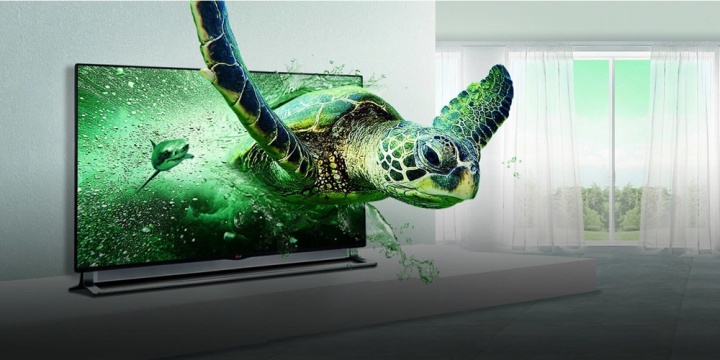
Japan 3D Display Market Size and Growth Overview (2025-2033)
Market Size in 2024: USD 11,366.9 Million
Market Forecast in 2033: USD 44,313.1 Million
Market Growth Rate 2025-2033: 16.3%
According to the latest report by IMARC Group, the Japan 3D display market size reached USD 11,366.9 Million in 2024. Looking forward, IMARC Group expects the market to reach USD 44,313.1 Million by 2033, exhibiting a growth rate (CAGR) of 16.3% during 2025-2033.
Download a sample PDF of this report: https://www.imarcgroup.com/japan-3d-display-market/requestsample
Artificial intelligence is fundamentally transforming the Japan 3D display market by enabling sophisticated content optimization and real-time rendering capabilities that dramatically enhance visual quality and immersive experiences. Advanced AI algorithms powered by deep learning can automatically convert conventional 2D content into high-quality 3D formats, analyzing depth cues, object relationships, and scene composition to generate realistic three-dimensional representations without requiring specialized 3D cameras or production equipment. This capability is particularly valuable for Japan's extensive media and entertainment industry, allowing broadcasters, streaming platforms, and content creators to leverage their vast 2D content libraries on next-generation 3D displays. Machine learning models also optimize 3D rendering performance, predicting which visual elements require the highest resolution and detail based on viewer attention patterns tracked through eye-tracking technologies, allocating computational resources efficiently to deliver stunning visuals while minimizing power consumption and processing demands.
The integration of AI in 3D display calibration and personalization is revolutionizing user experiences across gaming, entertainment, and professional applications in Japan. Intelligent systems analyze individual viewer characteristics, including interpupillary distance, viewing angle preferences, and visual acuity to automatically adjust stereoscopic parameters, ensuring optimal 3D perception for each user without manual configuration. AI-powered gaze tracking technologies enable glasses-free autostereoscopic displays to dynamically adjust the 3D viewing zone in real-time, following the viewer's eyes to maintain perfect 3D imagery even as users move naturally, eliminating the restrictive "sweet spot" limitation that has historically constrained autostereoscopic display adoption. In gaming applications, AI algorithms predict player movements and intentions, pre-rendering 3D scenes to minimize latency and maintain immersive experiences during fast-paced action, which is critical for Japan's massive gaming market, where performance and responsiveness are paramount.
AI is also driving innovation in holographic and volumetric display technologies that represent the cutting edge of Japan's 3D display market. Machine learning algorithms process complex light field data to generate realistic holographic images that can be viewed from multiple angles simultaneously without glasses or headsets, enabling applications in medical imaging, industrial design, telecommunications, and entertainment that were previously impossible. AI-enhanced computational holography techniques dramatically reduce the massive processing requirements traditionally needed for holographic displays, making real-time holographic content feasible for commercial applications. Natural language processing and computer vision enable intuitive interaction with 3D content through voice commands and gesture recognition, allowing users to manipulate three-dimensional data, designs, and visualizations naturally without specialized controllers. As Japan continues to lead global innovation in display technologies, robotics, and human-computer interaction, AI-powered 3D displays are becoming essential tools for scientific research, medical visualization, automotive design, aerospace engineering, and immersive entertainment experiences that position the country at the forefront of spatial computing.
The Japanese 3D display market is experiencing robust growth driven primarily by rapid technological advancements that have propelled demand for immersive visual experiences across multiple industries. Innovations in display technologies, including organic light-emitting diode (OLED) and light-emitting diode (LED) have enabled the creation of more vibrant, energy-efficient, and compelling 3D visuals with enhanced color accuracy, contrast ratios, and viewing angles. The increasing adoption of 3D displays across diverse sectors, including gaming, entertainment, healthcare, automotive, and education, has significantly contributed to market expansion, as these industries recognize the value of three-dimensional visualization for enhancing user experiences, improving decision-making, and enabling new capabilities previously impossible with traditional 2D displays.
The market is further accelerated by explosive growth in augmented reality (AR) and virtual reality (VR) applications, which rely fundamentally on high-quality 3D visuals to provide users with truly immersive experiences that blur the boundaries between digital and physical worlds. This technological convergence has acted as a powerful catalyst for 3D display adoption, spurring demand for advanced display solutions that deliver the visual fidelity, refresh rates, and low latency required for compelling AR/VR experiences. The automotive industry's integration of 3D displays for enhanced navigation systems, entertainment platforms, and advanced driver assistance systems (ADAS) has further fueled market growth, with Japanese automakers leading global innovation in digital cockpit technologies that leverage three-dimensional visualization for improved safety and user experience. Additionally, the rising demand for 3D displays in education and professional training applications, where they facilitate interactive learning experiences, surgical training simulations, architectural visualization, and scientific data analysis, has augmented market momentum. Japan's position as a global technology leader, combined with strong consumer interest in cutting-edge electronics, robust research and development infrastructure, and supportive government policies promoting digital innovation, creates an exceptionally favorable environment for sustained 3D display market expansion throughout the forecast period.
Japan 3D Display Industry Segmentation
The report has segmented the market into the following categories:
Breakup by Type:
Breakup by Technology:
Breakup by Access Method:
Breakup by Application:
Breakup by Region:
Request a Customized Version of This Report for Deeper Insights: https://www.imarcgroup.com/request?type=report&id=19460&flag=E
Competitive Landscape:
The market research report offers an in-depth analysis of the competitive landscape, covering market structure, key player positioning, top winning strategies, a competitive dashboard, and a company evaluation quadrant. Additionally, detailed profiles of all major companies are included. Major players include Sony Corporation, Panasonic Holdings Corporation, LG Display Co., Ltd., Samsung Electronics, Sharp Corporation, Toshiba Corporation, Mitsubishi Electric Corporation, and others.
The Japan 3D display market is positioned for exceptional growth through 2033, driven by continued technological innovation, expanding applications across diverse industries, and Japan's leadership in display manufacturing and consumer electronics. The market will benefit from breakthrough advances in glasses-free autostereoscopic displays, holographic technologies, and AI-enhanced rendering systems that deliver increasingly immersive and accessible 3D experiences. As virtual reality, augmented reality, and mixed reality applications become mainstream across gaming, enterprise, education, and healthcare sectors, demand for high-performance 3D displays will accelerate dramatically. Japan's strong ecosystem of technology companies, research institutions, and innovative startups, combined with government support for digital transformation and next-generation display technologies, will sustain the country's position as a global leader in 3D display innovation and commercialization.
Key highlights of the Report:
Note: If you require specific details, data, or insights that are not currently included in the scope of this report, we are happy to accommodate your request. As part of our customization service, we will gather and provide the additional information you need, tailored to your specific requirements. Please let us know your exact needs, and we will ensure the report is updated accordingly to meet your expectations.
About Us:
IMARC Group is a global management consulting firm that helps the world's most ambitious changemakers to create a lasting impact. The company provides a comprehensive suite of market entry and expansion services. IMARC offerings include thorough market assessment, feasibility studies, company incorporation assistance, factory setup support, regulatory approvals and licensing navigation, branding, marketing and sales strategies, competitive landscape and benchmarking analyses, pricing and cost research, and procurement research.
Contact Us:
Street: 563-13 Kamien
Area: Iwata
Country: Tokyo, Japan
Postal Code: 4380111
Email: sales@imarcgroup.com