x





Japan Computer Vision Market Size and Growth Overview (2025-2033)
Market Size in 2024: USD 1.2 Billion
Market Forecast in 2033: USD 2.8 Billion
Market Growth Rate 2025-2033: 9.88%
According to the latest report by IMARC Group, the Japanese computer vision market size reached USD 1.2 billion in 2024. Looking forward, IMARC Group expects the market to reach USD 2.8 billion by 2033, exhibiting a growth rate (CAGR) of 9.88% during 2025-2033.
Download a sample PDF of this report: https://www.imarcgroup.com/japan-computer-vision-market/requestsample
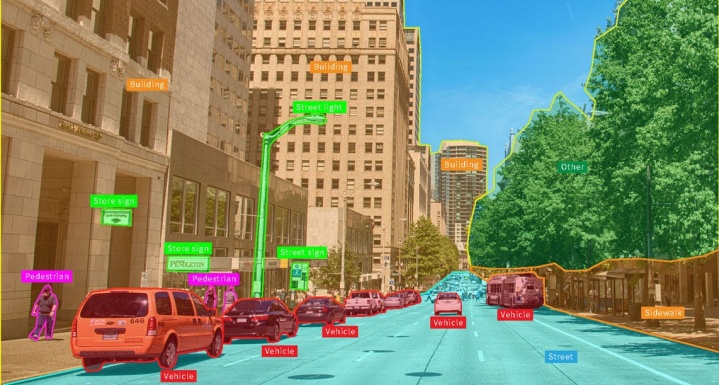
Artificial Intelligence, particularly deep learning and convolutional neural networks (CNNs), has fundamentally transformed computer vision capabilities, enabling unprecedented accuracy in object detection, image recognition, and visual segmentation tasks. Modern AI-powered computer vision systems can process and analyze visual information with precision that rivals or exceeds human capabilities in specific applications, revolutionizing industries from manufacturing to healthcare. Advanced neural network architectures trained on massive datasets can now identify subtle defects in manufactured products, detect early-stage diseases in medical images, recognize faces in crowded environments, and guide autonomous vehicles through complex traffic scenarios. The continuous evolution of AI algorithms, combined with exponentially growing computational power and access to vast training datasets, is driving rapid improvement in computer vision performance, making previously impractical applications economically viable and technically feasible across diverse sectors.
The convergence of AI with edge computing and Internet of Things (IoT) technologies is creating intelligent distributed vision systems that process visual data locally rather than relying solely on cloud infrastructure. This architectural shift enables real-time decision-making in latency-sensitive applications such as industrial quality control, autonomous navigation, and security surveillance while addressing data privacy concerns by processing sensitive visual information on-device. AI-optimized edge processors and specialized vision chips are being deployed in smart cameras, robots, drones, and connected devices throughout Japan's manufacturing facilities, transportation networks, and retail establishments. These intelligent systems continuously learn and adapt to changing conditions, improving their accuracy and reliability over time while reducing bandwidth requirements and operational costs associated with cloud-based processing.
Furthermore, generative AI and large vision-language models are opening entirely new application domains for computer vision technology. These advanced systems can not only analyze and classify visual content but also generate synthetic images, provide natural language descriptions of visual scenes, answer questions about image content, and even create novel visual concepts based on textual descriptions. In Japan, these capabilities are being leveraged for applications including automated content creation for e-commerce, virtual product visualization, enhanced accessibility services for visually impaired individuals, and training data generation for specialized computer vision models. As AI continues advancing—with multimodal models that seamlessly integrate vision, language, and reasoning capabilities—computer vision is evolving from a narrow task-specific technology into a foundational capability enabling machines to perceive, understand, and interact with the visual world in increasingly human-like ways, fundamentally reshaping how businesses operate and how people interact with technology throughout Japan's highly digitized society.
The computer vision market in Japan is experiencing unprecedented growth driven by increasing demand for automation and operational efficiency across diverse industries. Manufacturing sectors, where Japan maintains global leadership, are rapidly adopting computer vision systems for quality assurance, defect detection, process monitoring, and robotic guidance. These applications reduce human error, improve product consistency, accelerate production cycles, and lower operational costs while addressing labor shortage challenges facing Japanese industries. The automotive sector is particularly aggressive in deploying computer vision for autonomous vehicle development, driver assistance systems, and manufacturing quality control. Healthcare institutions are implementing medical image analysis systems powered by computer vision to enhance diagnostic accuracy, support radiologists in identifying abnormalities, and enable early disease detection. Retail environments are utilizing vision systems for automated checkout, inventory management, customer behavior analysis, and personalized shopping experiences.
The proliferation of smart devices—including smartphones equipped with advanced cameras, IoT sensors, surveillance systems, and industrial cameras—has generated massive amounts of visual data requiring sophisticated analysis capabilities. This data explosion necessitates advanced computer vision solutions capable of extracting meaningful insights from images and videos at scale. The rise of artificial intelligence and machine learning has significantly enhanced computer vision system capabilities, enabling machines to process visual information with remarkable accuracy and supporting applications previously considered impractical. The escalating need for contactless solutions across retail, healthcare, and logistics sectors—accelerated by COVID-19 pandemic experiences—is further boosting computer vision adoption. Systems enabling touchless interfaces, automated temperature screening, social distancing monitoring, and contactless payment verification have become essential infrastructure components. The integration of computer vision in surveillance and security applications continues to expand as public and private organizations prioritize safety, loss prevention, and regulatory compliance. Government and regulatory bodies in Japan recognize computer vision's potential benefits for public safety, transportation efficiency, and smart city development, fostering a conducive regulatory environment supporting market growth while addressing privacy concerns through appropriate frameworks and guidelines throughout the forecast period.
Japan Computer Vision Industry Segmentation:
The report has segmented the market into the following categories:
Breakup by Component:
Breakup by Product Type:
Breakup by Application:
Breakup by Vertical:
Breakup by Region:
Request a Customized Version of This Report for Deeper Insights: https://www.imarcgroup.com/request?type=report&id=18688&flag=E
Competitive Landscape:
The market research report offers an in-depth analysis of the competitive landscape, covering market structure, key player positioning, top winning strategies, a competitive dashboard, and a company evaluation quadrant. Additionally, detailed profiles of all major companies are included.
Future Outlook
The Japan computer vision market is positioned for robust growth as the technology becomes increasingly integral to the nation's digital transformation strategy across manufacturing, healthcare, transportation, retail, and public infrastructure sectors. Continued advancements in AI algorithms, edge computing capabilities, and sensor technologies will enhance computer vision performance while reducing implementation costs, making the technology accessible to small and medium enterprises alongside large corporations. The convergence of computer vision with 5G networks, IoT platforms, and cloud infrastructure will enable new applications requiring real-time processing, massive scalability, and seamless integration across distributed systems. Japan's commitment to developing smart cities, autonomous mobility solutions, and Industry 4.0 manufacturing will drive sustained investment in computer vision infrastructure and expertise.
Key highlights of the Report:
Note: If you require specific details, data, or insights that are not currently included in the scope of this report, we are happy to accommodate your request. As part of our customization service, we will gather and provide the additional information you need, tailored to your specific requirements. Please let us know your exact needs, and we will ensure the report is updated accordingly to meet your expectations.
About Us:
IMARC Group is a global management consulting firm that helps the world's most ambitious changemakers to create a lasting impact. The company provides a comprehensive suite of market entry and expansion services. IMARC offerings include thorough market assessment, feasibility studies, company incorporation assistance, factory setup support, regulatory approvals and licensing navigation, branding, marketing and sales strategies, competitive landscape and benchmarking analyses, pricing and cost research, and procurement research.
Contact Us:
Street: 563-13 Kamien
Area: Iwata
Country: Tokyo, Japan
Postal Code: 4380111
Email: sales@imarcgroup.com