x





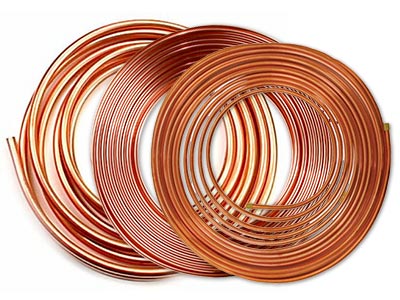
Japan Copper Pipes and Tubes Market Size and Growth Overview (2025-2033)
Market Size in 2024: 296.89 Thousand Tons
Market Forecast in 2033: 388.73 Thousand Tons
Market Growth Rate 2025-2033: 3.04%
According to the latest report by IMARC Group, the Japan copper pipes and tubes market size reached 296.89 Thousand Tons in 2024. Looking forward, IMARC Group expects the market to reach 388.73 Thousand Tons by 2033, exhibiting a growth rate (CAGR) of 3.04% during 2025-2033.
Download a sample PDF of this report: https://www.imarcgroup.com/japan-copper-pipes-tubes-market/requestsample
Artificial intelligence is transforming the Japan copper pipes and tubes market by revolutionizing manufacturing precision and quality assurance processes throughout production operations. Advanced machine learning algorithms analyze real-time sensor data from extrusion equipment, drawing machines, and annealing furnaces to optimize processing parameters dynamically, ensuring consistent dimensional accuracy, wall thickness uniformity, and material properties that meet exacting Japanese industrial standards. AI-powered computer vision systems inspect copper pipes and tubes with microscopic precision, detecting surface defects, internal inconsistencies, corrosion indicators, and dimensional deviations that would be impossible for human inspectors to identify consistently across high-volume production runs. These intelligent quality control systems significantly reduce defect rates, minimize material waste, and ensure that only products meeting stringent specifications reach customers in HVAC, electronics, and automotive sectors, where reliability is absolutely critical.
The integration of AI in predictive maintenance and operational efficiency is dramatically reducing downtime and optimizing resource utilization throughout Japan's copper pipes and tubes manufacturing infrastructure. Machine learning models analyze historical maintenance records, equipment vibration patterns, temperature fluctuations, and performance metrics to predict equipment failures before they occur, enabling proactive maintenance scheduling that minimizes production interruptions. AI-driven energy management systems optimize power consumption across manufacturing facilities by analyzing production schedules, equipment requirements, and electricity pricing patterns to reduce operational costs while supporting Japan's energy efficiency and carbon reduction objectives. Intelligent inventory management algorithms forecast demand patterns based on construction activity, HVAC installations, electric vehicle production trends, and seasonal factors, enabling manufacturers to maintain optimal stock levels while minimizing working capital requirements and storage costs.
AI is also revolutionizing supply chain resilience and market intelligence capabilities that are increasingly important in Japan's strategic shift toward domestic production and supply chain security. Advanced analytics platforms process data from global copper markets, geopolitical developments, logistics networks, and domestic demand indicators to provide actionable insights for procurement strategies and production planning. Natural language processing algorithms monitor trade publications, regulatory announcements, technology developments, and industry news to identify emerging opportunities and potential disruptions in real-time. AI-powered demand forecasting systems analyze construction permits, infrastructure investment announcements, electric vehicle production forecasts, and HVAC replacement cycles to predict future market requirements with unprecedented accuracy, enabling manufacturers to align capacity investments and technology upgrades with anticipated demand. As Japan continues its transition toward greater self-sufficiency in critical industrial materials, AI technologies are proving indispensable for optimizing production efficiency, ensuring product quality, and maintaining competitive advantages in high-value applications serving domestic and export markets.
The Japan copper pipes and tubes market is experiencing steady growth driven primarily by rising demand from the heating, ventilation, and air conditioning (HVAC) and electronics sectors that form the backbone of Japan's industrial economy. The country's aging infrastructure and the intensifying push for greater energy efficiency are fueling substantial installation of new HVAC systems in both residential and commercial settings, creating sustained demand for high-quality copper piping that leverages the material's superior thermal conductivity and reliability. Copper's exceptional thermal and electrical conductivity make it indispensable in electronics manufacturing, where precision and performance are paramount. The rise of electric vehicles, fifth-generation (5G) telecommunications networks, and advanced consumer electronics has generated surging demand for precision-engineered copper components. Japan recorded one of the highest per capita consumption rates of copper pipes and fittings in the Asia-Pacific region in 2024 at 2.1 kilograms per person, reflecting the dual-sector growth that is fostering continuous innovation as manufacturers adapt to increasingly specialized application requirements and evolving technology demands.
The market is further propelled by Japan's strategic shift toward domestic production and enhanced supply chain resilience in response to global disruptions and national security considerations. In 2023, Japan imported $26.15 million worth of refined copper pipe and tube fittings primarily from China and Thailand, but the country is gradually strengthening domestic production to reduce reliance on foreign suppliers and mitigate vulnerability to supply chain interruptions. This transformation is driven by ongoing global supply chain challenges and broader national initiatives to enhance industrial resilience across critical sectors. By investing in local production capabilities, Japanese companies aim to secure stable supply chains, reduce lead times, and maintain the stringent quality standards demanded by domestic industries. Notably, in November 2024, Japan and Peru signed a strategic 10-year roadmap to strengthen the copper supply chain, including joint research on efficient mining operations and annual meetings for mining and energy investment, as Japan seeks to boost its base metal self-sufficiency to 80% by 2030. The expansion of domestic production capacity is also driving technological upgrades to manufacturing facilities and fostering enhanced collaboration across the regional industrial ecosystem. Concurrently, advanced manufacturing technologies and sustainability commitments are reshaping the market landscape, as manufacturers adopt lightweight, corrosion-resistant, and highly conductive copper tubes ideal for clean energy and electric mobility applications. Furukawa Electric's achievement of UL2809 certification for 100% recycled copper foil, significantly reducing CO₂ emissions across the value chain, exemplifies the industry's commitment to environmental sustainability that supports Japan's national climate goals while enabling manufacturers to serve increasingly environmentally conscious markets with high-performance, sustainable materials.
Japan Copper Pipes and Tubes Industry Segmentation
The report has segmented the market into the following categories:
Breakup by Finish Type:
Breakup by Outer Diameter:
Breakup by End User:
Breakup by Region:
Request a Customized Version of This Report for Deeper Insights: https://www.imarcgroup.com/request?type=report&id=32784&flag=E
Competitive Landscape:
The market research report offers an in-depth analysis of the competitive landscape, covering market structure, key player positioning, top winning strategies, a competitive dashboard, and a company evaluation quadrant. Additionally, detailed profiles of all major companies are included. Major players include Furukawa Electric Co., Ltd., Sumitomo Metal Mining Co., Ltd., Mitsubishi Materials Corporation, and others.
The Japan copper pipes and tubes market is positioned for sustained growth through 2033, driven by continued expansion in HVAC installations, electric vehicle production, 5G infrastructure deployment, and clean energy systems that all require high-performance copper components. The market will benefit from Japan's strategic emphasis on supply chain resilience, with increased domestic production capacity and diversified international sourcing partnerships reducing vulnerability to global disruptions. As the country advances toward carbon neutrality by 2050, demand for energy-efficient HVAC systems, renewable energy infrastructure, and electric mobility solutions will accelerate copper consumption.
Key highlights of the Report:
Note: If you require specific details, data, or insights that are not currently included in the scope of this report, we are happy to accommodate your request. As part of our customization service, we will gather and provide the additional information you need, tailored to your specific requirements. Please let us know your exact needs, and we will ensure the report is updated accordingly to meet your expectations.
About Us:
IMARC Group is a global management consulting firm that helps the world's most ambitious changemakers to create a lasting impact. The company provides a comprehensive suite of market entry and expansion services. IMARC offerings include thorough market assessment, feasibility studies, company incorporation assistance, factory setup support, regulatory approvals and licensing navigation, branding, marketing and sales strategies, competitive landscape and benchmarking analyses, pricing and cost research, and procurement research.
Contact Us:
Street: 563-13 Kamien
Area: Iwata
Country: Tokyo, Japan
Postal Code: 4380111
Email: sales@imarcgroup.com