x





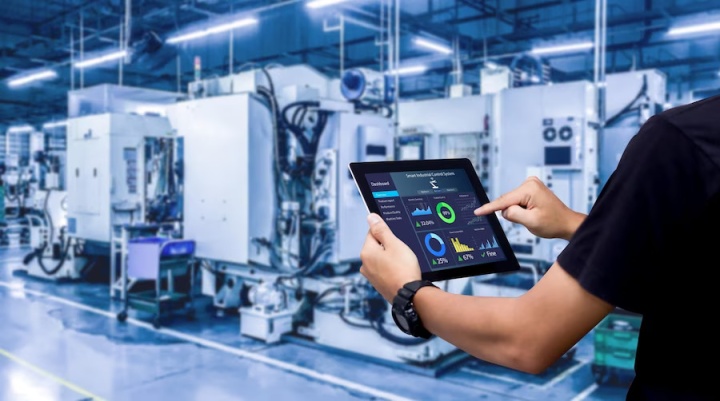
Japan Factory Automation Market Size and Growth Overview (2025-2033)
Market Size in 2024: USD 13.84 Million
Market Forecast in 2033: USD 26.41 Million
Market Growth Rate 2025-2033: 7.45%
According to the latest report by IMARC Group, the Japan factory automation market size reached USD 13.84 Million in 2024. Looking forward, IMARC Group expects the market to reach USD 26.41 Million by 2033, exhibiting a growth rate (CAGR) of 7.45% during 2025-2033.
Grab a sample PDF of this report: https://www.imarcgroup.com/japan-factory-automation-market/requestsample
Grab a sample PDF of this report:
The market is consolidated by technological advancements and the adoption of Industry 4.0. Japan adopted automation, robotics, IoT, and AI in the manufacturing industry prior to other countries. New technology use is the aim of Japanese manufacturers. They want to make production more efficient. They want to lower costs. They want to raise quality. Smart factories where machines network and control operations are increasing efficiency and flexibility. ABB's latest automation contract is a reflection of developments in technology, increased government support, and improved visibility of energy used throughout the system.
Labor costs are rising, the population is aging, and the workforce is declining in Japan, pushing companies to adopt factory automation led by labor shortages in jobs manually done by people, who are replaced by automation technology that does not depend on people. Automation can also perform repetitive and dangerous tasks otherwise performed by human workers, allowing companies to recruit humans for more calculated activities. Warehouse automation and mobile robots can increase productivity in logistics, providing solutions to labor shortages and rising labor costs.
The government is providing financial support to the automation market. Furthermore, government policies that encourage companies to globally adopt advanced automated systems, including artificial intelligence, robotics, and other automated systems to solve labor shortages and remain globally competitive, are also driving the automation market. The example of DENSO shows how next-generation factory automation plants aim to develop unmanned 24-hour operations and digital twin technologies. In particular, the government supports advanced and sustainable manufacturing and seeks to lead the world with sustainable, efficient new factory systems.
Market Segmentation
Component Insights:
System Type Insights:
Industry Vertical Insights:
Regional Insights:
Request a Customized Report for Deeper Insights: https://www.imarcgroup.com/request?type=report&id=35745&flag=E
If you require any specific information that is not covered currently within the scope of the report, we will provide the same as part of the customization.
About Us
IMARC Group is a global management consulting firm that helps the world’s most ambitious changemakers to create a lasting impact. The company provides a comprehensive suite of market entry and expansion services. IMARC offerings include thorough market assessment, feasibility studies, company incorporation assistance, factory setup support, regulatory approvals and licensing navigation, branding, marketing and sales strategies, competitive landscape and benchmarking analyses, pricing and cost research, and procurement research.
Contact Us:
Street: 563-13 Kamien
Area: Iwata
Country: Tokyo, Japan
Postal Code: 4380111
Email: sales@imarcgroup.com