x





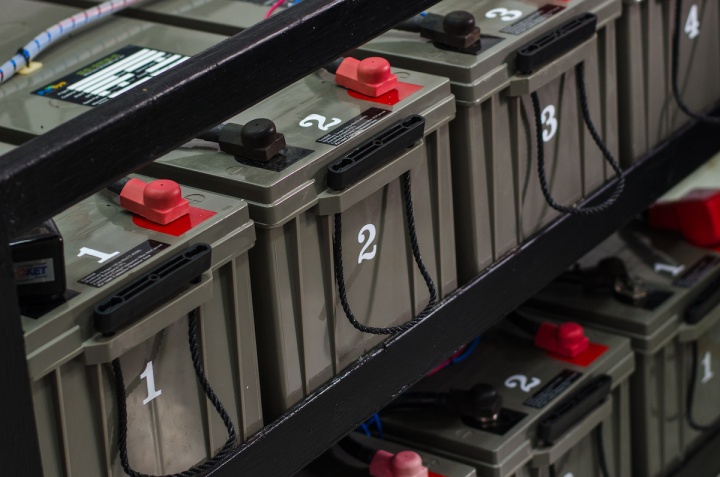
Japan Lead Acid Battery Market Size and Growth Overview (2025-2033)
Market Size in 2024: USD 2,105 Million
Market Forecast in 2033: USD 3,005 Million
Market Growth Rate 2025-2033: 4%
According to the latest report by IMARC Group, Japan's lead acid battery market size reached USD 2,105 Million in 2024. Looking forward, IMARC Group expects the market to reach USD 3,005 Million by 2033, exhibiting a growth rate (CAGR) of 4% during 2025-2033.
Download a sample PDF of this report: https://www.imarcgroup.com/japan-lead-acid-battery-market/requestsample
The integration of artificial intelligence and smart monitoring technologies is fundamentally transforming the Japan lead-acid battery industry by introducing unprecedented levels of predictive maintenance, performance optimization, and lifecycle management capabilities. Advanced AI-powered battery management systems are emerging with sophisticated algorithms that continuously monitor critical parameters, including voltage levels, temperature fluctuations, charge-discharge cycles, and internal resistance patterns to predict potential failures before they occur. These intelligent monitoring solutions leverage machine learning models trained on vast datasets from thousands of batteries to identify subtle performance degradation patterns that human operators might overlook, enabling proactive maintenance interventions that extend battery lifespan and prevent costly unexpected failures. The data analytics capabilities embedded in these smart systems are creating new opportunities for battery manufacturers and industrial users to optimize charging protocols, adjust operational parameters in real-time, and implement condition-based replacement strategies rather than relying on traditional time-based maintenance schedules.
The proliferation of IoT-enabled lead-acid battery systems is revolutionizing how industrial facilities, data centers, telecommunications infrastructure, and automotive applications manage their energy storage assets through cloud-connected monitoring platforms that provide comprehensive visibility into battery health across distributed installations. These intelligent battery systems continuously transmit operational data to centralized analytics platforms where AI algorithms process information from multiple battery banks simultaneously, identifying systemic issues, optimizing load distribution, and recommending configuration adjustments that maximize efficiency while minimizing energy waste. This technological advancement is particularly valuable for organizations operating critical infrastructure requiring uninterruptible power supply systems, as AI-driven predictive analytics can forecast remaining useful life with remarkable accuracy, allowing operators to schedule replacements during planned maintenance windows rather than experiencing emergency failures during peak demand periods. The convergence of artificial intelligence with battery monitoring hardware is establishing new industry benchmarks for reliability and operational efficiency in energy storage applications.
The democratization of AI-powered battery management technologies is making advanced monitoring capabilities accessible to organizations of all sizes, from large industrial facilities to small businesses that previously relied on manual inspection routines and reactive maintenance approaches. Cloud-based battery management platforms are eliminating the need for expensive on-premises infrastructure while providing scalable solutions that deliver actionable insights through intuitive dashboards and automated alert systems. As machine learning algorithms continue improving through the accumulation of operational data from diverse applications and environmental conditions, the accuracy of performance predictions and effectiveness of optimization recommendations will only increase, driving widespread adoption of intelligent battery systems. The integration of AI technology with lead acid batteries is extending beyond simple monitoring to encompass sophisticated energy management strategies that dynamically adjust charging and discharging parameters based on predicted usage patterns, electricity pricing fluctuations, and renewable energy availability, transforming traditional batteries into intelligent components of smart grid ecosystems that optimize both performance and economic returns.
The Japan lead-acid battery market is experiencing steady growth driven by increasing demand for uninterruptible power supply systems crucial for ensuring continuous power to critical facilities, including hospitals, data centers, and financial institutions, where even brief interruptions can result in substantial operational disruptions and financial losses. The automotive industry represents a significant driver as conventional vehicles continue requiring reliable starting, lighting, and ignition batteries, while the emergence of hybrid and electric vehicles has created additional demand for auxiliary battery systems that power essential electronic components and safety systems. The growing need for energy storage solutions in both grid management and renewable energy integration applications is fueling market expansion, as lead acid batteries offer cost-effective options for storing excess energy generated from solar and wind installations for later use during periods of peak demand or insufficient generation. These batteries are preferred in applications requiring robust and reliable power sources due to their proven track record, well-established manufacturing infrastructure, and comprehensive recycling systems that recover materials for reuse.
The ongoing development of innovative lead acid battery technologies is driving market evolution through the introduction of enhanced designs including advanced lead-calcium grids and absorbent glass mat constructions that improve efficiency, extend operational lifespans, and reduce maintenance requirements compared to traditional flooded battery configurations. The telecommunications sector maintains a strong demand for stationary lead-acid batteries that provide backup power for cell towers, switching stations, and network infrastructure, ensuring communication services remain operational during grid outages or emergency situations. Industrial applications across manufacturing facilities, warehouses, and material handling operations continue driving market growth as lead acid batteries power forklifts, pallet jacks, and other material handling equipment that form the backbone of logistics operations. The increasing focus on energy security and resilience is prompting organizations across diverse sectors to invest in backup power systems, while the relatively low initial cost of lead acid batteries compared to alternative technologies makes them attractive options for price-sensitive applications where upfront investment considerations outweigh long-term operational cost factors.
Japan Lead Acid Battery Industry Segmentation:
The report has segmented the industry into the following categories:
Breakup by Product:
Breakup by Construction Method:
Breakup by Sales Channel:
Breakup by Application:
Breakup by Region:
Request a Customized Version of This Report for Deeper Insights: https://www.imarcgroup.com/request?type=report&id=18696&flag=E
Competitive Landscape:
The market research report offers an in-depth analysis of the competitive landscape, covering market structure, key player positioning, top winning strategies, a competitive dashboard, and a company evaluation quadrant. Additionally, detailed profiles of all major companies are included.
The Japan lead-acid battery market is positioned for sustained growth through 2033, supported by continued demand from automotive, industrial, telecommunications, and uninterruptible power supply applications where proven reliability and cost-effectiveness remain paramount considerations. The ongoing technological advancements in battery design, including improvements in absorbent glass mat and valve-regulated configurations, will drive performance enhancements that extend operational lifespans and reduce maintenance requirements, making lead acid batteries increasingly competitive against alternative energy storage technologies.
Key highlights of the Report:
Note: If you require specific details, data, or insights that are not currently included in the scope of this report, we are happy to accommodate your request. As part of our customization service, we will gather and provide the additional information you need, tailored to your specific requirements. Please let us know your exact needs, and we will ensure the report is updated accordingly to meet your expectations.
About Us:
IMARC Group is a global management consulting firm that helps the world's most ambitious changemakers to create a lasting impact. The company provides a comprehensive suite of market entry and expansion services. IMARC offerings include thorough market assessment, feasibility studies, company incorporation assistance, factory setup support, regulatory approvals and licensing navigation, branding, marketing and sales strategies, competitive landscape and benchmarking analyses, pricing and cost research, and procurement research.
Contact Us:
Street: 563-13 Kamien
Area: Iwata
Country: Tokyo, Japan
Postal Code: 4380111
Email: sales@imarcgroup.com