x




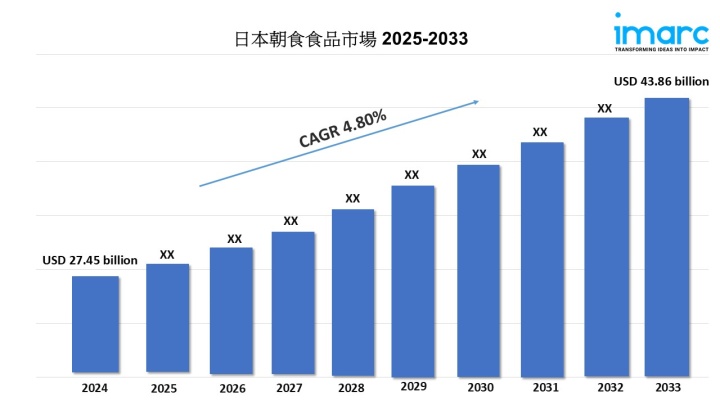
Japan Breakfast Foods Market Size and Growth Overview (2025-2033)
Market Size in 2024: USD 27.45 Billion
Market Forecast in 2033: USD 43.86 Billion
Market Growth Rate 2025-2033: 4.80%
According to the latest report by IMARC Group, "The Japan breakfast foods market size reached USD 27.45 Billion in 2024. Looking forward, IMARC Group expects the market to reach USD 43.86 Billion by 2033, exhibiting a growth rate (CAGR) of 4.80% during 2025-2033."
Download a sample PDF of this report: https://www.imarcgroup.com/japan-breakfast-foods-market/requestsample
How AI is Reshaping the Future of the Japan Breakfast Foods Market
Artificial Intelligence is transforming the breakfast foods industry in Japan by revolutionizing product development, manufacturing processes, supply chain management, and consumer engagement strategies that enhance convenience, nutrition, and personalization across this essential meal category. AI-powered nutrition analysis systems are enabling food manufacturers to create breakfast products optimized for specific dietary needs, health goals, and taste preferences by analyzing vast databases of nutritional information, ingredient combinations, and consumer feedback to identify formulations that deliver superior nutritional profiles while maintaining appealing taste, texture, and convenience characteristics that Japanese consumers expect. Machine learning algorithms can predict how different ingredient ratios, processing methods, and fortification strategies will affect product attributes including digestibility, glycemic response, satiety, and nutrient bioavailability, helping manufacturers develop breakfast cereals, bread products, and ready-to-eat meals that support health and wellness objectives while satisfying diverse consumer preferences ranging from traditional rice-based breakfasts to Western-style cereal and toast meals that have become increasingly popular in urban Japan.
AI is revolutionizing manufacturing operations in breakfast food production facilities through intelligent process control, quality assurance, and operational optimization systems that ensure consistent product quality while maximizing efficiency and sustainability. Computer vision systems integrated with AI analyze products on production lines at speeds far exceeding human capability, detecting defects, verifying ingredient distribution, assessing color and texture characteristics, and ensuring packaging integrity with accuracy that minimizes waste and ensures only premium-quality products reach consumers. Predictive maintenance algorithms monitor equipment performance across mixing, baking, extrusion, and packaging systems, identifying potential failures before they occur and scheduling maintenance activities during planned downtime to minimize production disruptions, particularly critical for high-volume manufacturing operations producing popular breakfast cereals and bread products that must maintain consistent supply to retailers throughout Japan. AI-powered demand forecasting systems analyze complex patterns including seasonal trends, weather conditions, promotional activities, and emerging consumer preferences to optimize production planning and inventory management, reducing food waste while ensuring adequate product availability across diverse retail channels serving Japan's 125 million consumers with varying breakfast habits and preferences.
Consumer engagement and personalization capabilities enabled by AI are creating new opportunities for breakfast food brands to build loyalty and drive consumption among health-conscious and time-pressed Japanese consumers. AI-powered recommendation engines deployed through e-commerce platforms and mobile applications analyze individual purchasing patterns, dietary restrictions, health goals, and taste preferences to suggest personalized breakfast product selections and meal combinations that meet specific nutritional needs while introducing consumers to new products aligned with their interests. Natural language processing technology enables conversational interfaces where consumers can ask questions about product ingredients, nutritional content, preparation methods, and serving suggestions in Japanese, receiving instant, accurate responses that build confidence and trust in product choices. Sentiment analysis tools monitor social media conversations, product reviews, and online forums to identify emerging trends, consumer concerns, and product improvement opportunities, providing manufacturers with real-time market intelligence that informs product development, marketing strategies, and customer service initiatives that resonate with evolving consumer expectations and lifestyle changes in modern Japan where breakfast consumption patterns are shifting toward more convenient, nutritious, and internationally influenced food choices.
Japan Breakfast Foods Market Trends & Drivers
There is a consistent growth in the Japan breakfast foods market due to the changing lifestyle trends and changing demographic situations, which are altering the traditional breakfast consumption trend in the Japanese society. The rising demand of convenient and ready to eat breakfast items that can fit in the busy morning schedules has been induced by urbanization and the growing number of dual-income families creating a high demand to substitute traditional time-consuming breakfast of grilled fish, rice, miso soup, and pickled vegetables with faster breakfast options such as cereals, bread, yogurt and packaged breakfast products that can be cooked and eaten within a relatively short period of time before traveling to work or school. The trend of increased acceptance of Western dietary patterns by young generations has increased market opportunities in cereal products, granola, oatmeal, breakfast bars, and other internationally-influenced breakfast formats which were traditional to Japanese diets but now widely seen and more popular among urban millennials and Gen Z consumers that are more welcoming to dietary diversity and international food trends, which are being exported to the Japanese retail market through travel, media, and international brand presence in Japanese retail markets.
Consumer buying behavior and product development in the breakfast foods category is being transformed by health consciousness and nutritional awareness which is an effective force. Consumers in Japan are becoming more interested in breakfast products that can provide certain health benefits such as sustained release of energy, digestive health promotion through dietary fiber and probiotics, protein content to provide satiety and muscle maintenance, vitamin and mineral fortification to correct nutritional gaps and whole grain content relating to cardiovascular health and diabetes prevention and the manufacturers are redefining current products and developing new products that can meet these nutritional expectations and maintain the taste and convenience attributes. The aging Japanese population, containing the largest percentage of the population over 65 years old in the world, and increasing demand in the breakfast products that are designed to meet the nutritional requirements of aging, such as bone health, cognitive functioning, and muscle mass maintenance through protein consumption and those that are specifically designed to meet the nutritional needs of elderly consumers, such as cereals fortified with calcium, breakfast bars that support brain health by including omega-3 fatty acids and antioxidants, and breakfast products that are tailored to meet nutritional demands by providing seniors with nutritional
Japan Breakfast Foods Industry Segmentation:
The report has segmented the market into the following categories:
Source Insights:
Packaging Type Insights:
Distribution Channel Insights:
Breakup by Region:
Request a Customized Version of This Report for Deeper Insights: https://www.imarcgroup.com/request?type=report&id=35488&flag=E
Competitive Landscape:
The market research report offers an in-depth analysis of the competitive landscape, covering market structure, key player positioning, top winning strategies, a competitive dashboard, and a company evaluation quadrant. Additionally, detailed profiles of all major companies are included.
Recent News and Developments in Japan Breakfast Foods Market
January 2025: Rise of Nutrient-Dense and Functional Breakfasts
Consumers increasingly prioritized breakfasts that support energy levels, gut health, and overall wellness, leading to higher demand for products fortified with fiber, protein, probiotics, and vitamins. Food brands introduced oatmeal, yogurt-based parfaits, and functional breads enriched with ingredients like barley, fermented extracts, and plant-based proteins. This trend was particularly strong among working professionals and older adults seeking to maintain health through diet .
June 2025: Expansion of On-the-Go and Convenience Formats
With urban lifestyles becoming faster-paced, demand grew for portable breakfast solutions such as breakfast bars, ready-to-drink smoothies, and pre-packaged rice balls (onigiri) with balanced nutritional profiles. Retailers and convenience stores expanded their premium breakfast sections, offering options that combine traditional Japanese elements—like miso soup or grilled fish—with modern convenience. These products catered to commuters and students who value time efficiency without compromising on taste or nutrition .
October 2025: Fusion of Western and Japanese Breakfast Elements
The market saw a growing blend of Western and Japanese breakfast concepts, with products like matcha-infused pancakes, miso-flavored toast spreads, and soy-based breakfast sausages gaining popularity. This fusion trend reflected a cultural openness to global flavors while maintaining a preference for lighter, less greasy meals. Foodservice chains and packaged food manufacturers leveraged this shift by launching limited-edition breakfast menus and seasonal product lines, enhancing consumer engagement .Future Outlook
The future of Japan's breakfast foods market appears positive with sustained growth anticipated through 2033 driven by ongoing lifestyle evolution, health consciousness, and product innovation that expands consumer choice and convenience. Continued development of functional breakfast products incorporating probiotics, plant-based proteins, ancient grains, and superfoods will attract health-focused consumers seeking nutritional benefits beyond basic sustenance. Personalization trends enabled by digital technology and AI-powered nutrition guidance will create opportunities for customized breakfast solutions tailored to individual dietary needs, preferences, and health goals. Sustainability initiatives including recyclable packaging, organic ingredients, and transparent supply chains will resonate with environmentally conscious consumers and support premium positioning for responsible brands. The potential reemergence of traditional Japanese breakfast elements reimagined for modern convenience could create hybrid product categories that honor culinary heritage while accommodating contemporary lifestyles, appealing to consumers seeking cultural authenticity alongside practicality in their morning meals.
Key highlights of the Report:
Note: If you require specific details, data, or insights that are not currently included in the scope of this report, we are happy to accommodate your request. As part of our customization service, we will gather and provide the additional information you need, tailored to your specific requirements. Please let us know your exact needs, and we will ensure the report is updated accordingly to meet your expectations.
About Us:
IMARC Group is a global management consulting firm that helps the world's most ambitious changemakers to create a lasting impact. The company provides a comprehensive suite of market entry and expansion services. IMARC offerings include thorough market assessment, feasibility studies, company incorporation assistance, factory setup support, regulatory approvals and licensing navigation, branding, marketing and sales strategies, competitive landscape and benchmarking analyses, pricing and cost research, and procurement research.
Contact Us:
IMARC Group
563-13 Kamien, Iwata City Country, SHIZUOKA, JP, 4380111
+1-631-791-1145