x




Introduction
In today’s complex transportation landscape, managing freight expenses efficiently is more important than ever. As shipment volumes increase and carrier pricing structures become more dynamic, companies must ensure that payments are accurate, timely, and compliant. Consequently, Freight payment processing has become a strategic function within logistics and finance departments.
Moreover, manual payment systems often struggle to keep pace with modern supply chain demands. Therefore, organizations are increasingly modernizing their accounts payable services to create streamlined and automated freight payment workflows.
Understanding Freight Payment Processing
At its core, Freight payment processing involves validating carrier invoices, matching them against contracts or shipment data, approving payments, and maintaining proper financial records. Traditionally, many businesses handled this process manually. However, as rate structures grew more complex, manual reviews became inefficient and error-prone.
As a result, digital platforms now automate invoice validation and payment authorization. In addition, integrated systems allow freight data to sync directly with accounts payable services, thereby reducing administrative delays.
Why Accurate Freight Payment Processing Matters
Over time, even small billing errors can accumulate into significant financial losses. For instance, duplicate charges, incorrect fuel surcharges, or misapplied accessorial fees may go unnoticed without structured oversight. Because of these risks, companies must strengthen their Freight payment processing controls.
Furthermore, delayed payments can strain relationships with carriers and suppliers. Consequently, efficient payment workflows are essential not only for cost control but also for maintaining reliable logistics partnerships.
Therefore, freight payment management is no longer just a transactional task, it is a strategic component of supply chain performance.
Key Benefits of Optimized Freight Payment Processing
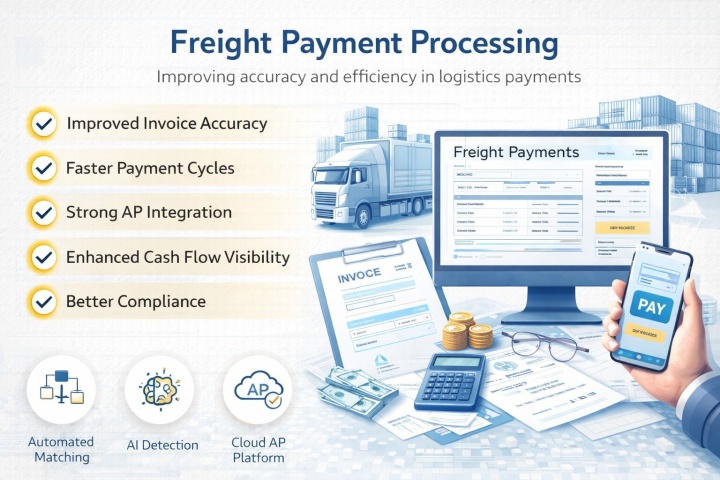
Improved Invoice Accuracy
First and foremost, structured Freight payment processing ensures that invoices are validated against agreed-upon rates. Since discrepancies are flagged early, organizations prevent overpayments and financial leakage.
Faster Payment Cycles
In addition, automated workflows significantly reduce approval times. Instead of manually routing documents between departments, digital systems process invoices quickly and efficiently. As a result, businesses can meet payment deadlines consistently.
Stronger Integration with Accounts Payable Services
Equally important, modern freight systems integrate seamlessly with accounts payable services. Because financial data flows automatically between systems, reconciliation becomes more accurate and transparent.
Enhanced Cash Flow Visibility
Moreover, real-time dashboards allow finance leaders to monitor outstanding freight liabilities. Consequently, companies can forecast cash requirements more effectively and plan budgets with greater precision.
Better Compliance and Audit Readiness
Finally, digital documentation creates clear audit trails. Therefore, organizations remain compliant with internal policies and external regulatory standards.
The Role of Automation in Freight Payment Processing
Notably, technology is transforming how logistics companies manage payments. Today, many businesses deploy:
As these technologies mature, Freight payment processing becomes faster and more reliable. Furthermore, automation minimizes human errors and reduces operational risk.
Common Challenges in Freight Payment Processing
However, despite technological advancements, certain obstacles may still arise. For example:
Because of these challenges, organizations must adopt structured implementation strategies to optimize their payment workflows.
Best Practices for Effective Freight Payment Processing
To maximize efficiency, companies should follow proven best practices. First, ensure accurate rate contract documentation and system integration. Next, establish clear approval hierarchies and exception handling workflows.
Additionally, businesses should:
By implementing these measures, organizations can significantly improve payment accuracy and operational performance.
The Strategic Impact of Modern Accounts Payable Services
While freight payment may seem operational, it directly affects financial health. Efficient accounts payable services enhance visibility, reduce errors, and strengthen internal controls. Moreover, streamlined payment systems free finance teams to focus on cost analysis and strategic planning.
Consequently, companies that modernize their payment infrastructure often gain a measurable competitive advantage.
The Future of Freight Payment Processing
Looking ahead, Freight payment processing will continue to evolve through predictive analytics and artificial intelligence. In particular, systems will increasingly detect irregular billing patterns before payments are approved.
Furthermore, deeper integration between transportation management systems and accounts payable services will enable fully automated, end-to-end financial workflows. Therefore, organizations that invest early in digital transformation will be better positioned to manage logistics costs effectively.
Final Thoughts
In an era defined by supply chain complexity and cost pressure, Freight payment processing plays a pivotal role in financial stability. By strengthening internal controls and integrating with modern accounts payable services, businesses can improve accuracy, accelerate payments, and maintain strong carrier relationships.
Ultimately, organizations that optimize their freight payment operations today will be better equipped to safeguard margins, enhance operational efficiency, and support sustainable growth in a rapidly evolving logistics environment.