x




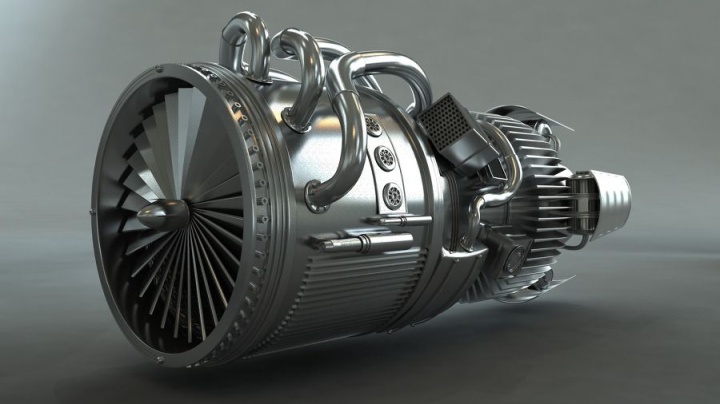
Market Overview:
The Aircraft Engine Market is experiencing steady expansion, driven by Rising Air Passenger Traffic and Fleet Expansion, Digitalization and Predictive Analytics, and Defense Modernization and Military Procurement. According to IMARC Group's latest research publication, "Aircraft Engine Market: Global Industry Trends, Share, Size, Growth, Opportunity and Forecast 2025-2033", The global aircraft engine market size reached USD 101.2 Billion in 2024. Looking forward, IMARC Group expects the market to reach USD 169.7 Billion by 2033, exhibiting a growth rate (CAGR) of 5.87% during 2025-2033.
This detailed analysis primarily encompasses industry size, business trends, market share, key growth factors, and regional forecasts. The report offers a comprehensive overview and integrates research findings, market assessments, and data from different sources. It also includes pivotal market dynamics like drivers and challenges, while also highlighting growth opportunities, financial insights, technological improvements, emerging trends, and innovations. Besides this, the report provides regional market evaluation, along with a competitive landscape analysis.
Download a sample PDF of this report: https://www.imarcgroup.com/aircraft-engine-market/requestsample
Our Report Includes:
Growth Factors in the Aircraft Engine Market Industry:
The consistent increase in worldwide air travel is generating significant opportunities for airlines to grow and upgrade their fleets. Enhanced connectivity between cities and nations, combined with lower airfare prices in many areas, is encouraging an increasing number of travelers to select air travel as their favored means of transport. In response to this demand, airlines are investing in narrow-body and wide-body planes, driving the need for dependable and efficient engines. Fleet renewal efforts enhance this momentum, as carriers embrace newer models that provide better fuel efficiency and meet strict environmental regulations. In addition, the growing flow of cargo is catalyzing the demand for specialized freighter planes equipped with high-efficiency engines intended for extended operational life. Together, these trends are fostering an optimistic perspective for engine producers, with rise in passenger and cargo traffic acting as primary contributors to the market growth.
The integration of digital technologies into engine management is bolstering the market growth, with predictive analytics and artificial intelligence (AI) transforming how airlines manage fleet performance. Real-time monitoring enables more accurate assessment of engine health, allowing operators to anticipate maintenance needs and schedule interventions with minimal disruption. This not only reduces downtime and operational risks but also extends engine lifespan, making digitally enabled solutions increasingly attractive in procurement decisions. In 2025, GE Aerospace introduced an AI-driven inspection tool specifically designed to extend narrowbody aircraft engines' "time on wing" by predicting and preventing maintenance issues. By leveraging machine learning (ML) to improve inspection precision and reduce costs, the technology demonstrated proven results in real-world applications. Such innovations highlight the growing reliance on connected systems, reinforcing digital compatibility as a decisive factor in modern engine strategies and establishing new benchmarks for reliability, efficiency, and long-term value creation.
Rising defense budgets are driving significant investment in the modernization of air forces, creating consistent demand for advanced aircraft engines. Governing bodies are prioritizing new fighter jets, transport aircraft, and unmanned systems to strengthen national security and strategic capabilities, which in turn requires engines with high thrust-to-weight ratios, resilience in extreme conditions, and seamless integration with cutting-edge avionics. This process is reinforced by the replacement of aging fleets, ensuring steady procurement cycles across global defense markets. In 2025, Mach Industries advanced this trend by launching Mach Propulsion, a dedicated division for developing high-performance jet engines tailored for UAVs and defense applications. With plans to produce up to 12,000 engines annually, supported by rapid prototyping and supply chain expansion, the initiative underscores how military demand is shaping the aircraft engine industry. Combined with lifecycle maintenance and upgrade contracts, these developments position defense as a stable, long-term driver of market growth.
Key Trends in the Aircraft Engine Market:
Engine leasing is gaining prominence as airlines seek cost-effective ways to manage fleet operations while avoiding the heavy capital expenditure associated with outright purchases. Leasing arrangements provide carriers with access to modern, fuel-efficient engines that enhance operational flexibility and reduce financial risk. Apart from this, the aftermarket segment, including spare parts supply, overhaul services, and component upgrades, continues to represent a critical revenue stream, as engine maintenance remains one of the largest recurring expenses for operators. This trend is reinforced by collaborative ventures aimed at expanding leasing options. For instance, in 2025, BeauTech Power Systems LLC and JALUX Inc. formed BVJ Engine Holdings LLC to lease IAE V2500-A5 and Pratt & Whitney GTF PW1100G engines, powering Airbus A320 families. The joint venture aims to offer flexible, cost-effective engine leasing solutions to airlines and MROs, enhancing fleet efficiency and minimizing downtime. Initial acquisitions will total up to $150 million, combining expertise and market reach from both partners.
The increasing adoption of advanced simulation and training platforms is bolstering the market growth by accelerating the integration of next-generation propulsion technologies. These tools enable engineers to test engine designs, optimize performance, and assess control systems in a virtual environment, reducing development costs and shortening timelines while minimizing technical risks. By facilitating accurate modeling before physical production, simulation technologies encourage innovation and support the development of next-generation propulsion systems. Furthermore, platforms designed to be accessible for both professionals and students are helping to cultivate a skilled talent pipeline, ensuring the industry is equipped with expertise for future growth. In 2025, Controls Research LLC announced the upcoming launch of SimTurbo, a user-friendly and visually powerful jet engine simulation platform created by Paul Hoffman. The tool is designed for both engineers and students to simulate, design, and analyze jet engines and control systems in real time. It aims to bridge the gap between complex industrial tools and educational needs.
Airlines are placing higher importance on evaluating engine purchases based not solely on the initial acquisition cost but on the broader spectrum of lifecycle expenses that directly affect long-term profitability. Factors like fuel efficiency, frequency of scheduled maintenance, and overall overhaul costs are becoming central considerations in procurement strategies. Engines that demonstrate extended on-wing times and reduced maintenance intervals enable carriers to minimize operational disruptions and improve fleet utilization, which translates into measurable cost savings. Furthermore, the integration of advanced digital support systems, such as real-time monitoring and predictive maintenance technologies, provides operators with greater reliability and transparency in performance management. Manufacturers that can deliver these comprehensive value propositions gain a distinct competitive edge, as airlines increasingly prioritize engines that align with both economic and operational sustainability objectives. This focus drives consistent replacement of aging fleets, contributing to the market demand and accelerating innovation across engine design, manufacturing, and aftermarket services.
Leading Companies Operating in the Global Aircraft Engine Market Industry:
Aircraft Engine Market Report Segmentation:
Breakup by Component:
Turbine exhibited a clear dominance in the market due to favorable market conditions and strong consumer demand.
Breakup by Engine Type:
Turbofan Engine exhibited a clear dominance in the market due to favorable market conditions and strong consumer demand.
Breakup by Platform:
Fixed Wing exhibited a clear dominance in the market due to favorable market conditions and strong consumer demand.
Breakup by End User:
Commercial Aviation exhibited a clear dominance in the market due to favorable market conditions and strong consumer demand.
Breakup by Region:
North America dominated the global market due to abundant resources, favorable government initiatives, and well-established infrastructure.
Note: If you require specific details, data, or insights that are not currently included in the scope of this report, we are happy to accommodate your request. As part of our customization service, we will gather and provide the additional information you need, tailored to your specific requirements. Please let us know your exact needs, and we will ensure the report is updated accordingly to meet your expectations.
About Us:
IMARC Group is a global management consulting firm that helps the world's most ambitious changemakers to create a lasting impact. The company provide a comprehensive suite of market entry and expansion services. IMARC offerings include thorough market assessment, feasibility studies, company incorporation assistance, factory setup support, regulatory approvals and licensing navigation, branding, marketing and sales strategies, competitive landscape and benchmarking analyses, pricing and cost research, and procurement research.
Contact Us:
IMARC Group
134 N 4th St. Brooklyn, NY 11249, USA
Email: sales@imarcgroup.com
Tel No:(D) +91 120 433 0800
United States:+1-201-971-6302