x




An In-Depth Resource for Procurement Professionals in Food & Beverage, Pharmaceutical, and Nutraceutical Industries
In the current era of heightened health awareness and consumer demand for reduced-sugar products, artificial sweeteners play a crucial role in formulating sugar-reduced foods and beverages. Among these, Acesulfame Potassium, commonly known as Ace-K or E950, stands out as a highly effective, zero-calorie sweetener used globally across a wide range of applications. Procurement professionals in food and beverage, pharmaceutical, and nutraceutical sectors must understand not only the functional characteristics of Ace-K but also the strategic considerations involved in sourcing, supplier qualification, regulatory compliance, and cost optimization. This detailed procurement guide is designed to address those needs.
Acesulfame Potassium Procurement: - https://www.chemanalyst.com/ProcurementGuides/acesulfame-potassium-procurement-guide-for-professionals-28
1.1 What Is Ace-K?
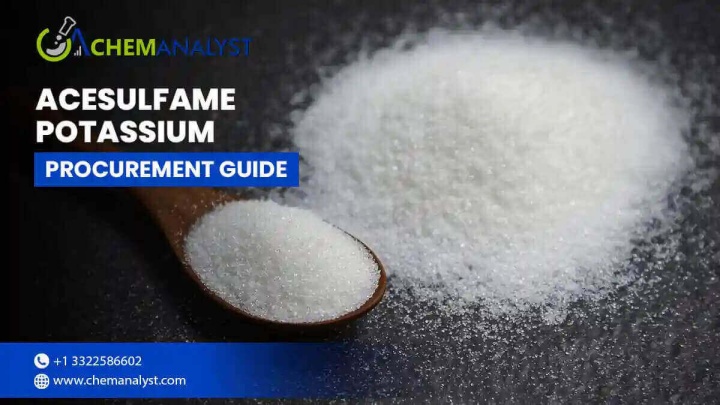
Acesulfame Potassium is an artificial sweetener that is approximately 200 times sweeter than sucrose (table sugar). As a white crystalline powder, it offers excellent stability, high solubility, and long shelf life, making it suitable for diverse food, beverage, pharmaceutical, and nutraceutical formulations. Importantly, Ace-K provides zero calories and does not contribute to glycemic load, making it ideal for health-oriented products.
Unlike some other sweeteners like aspartame—which can break down at high temperatures—Ace-K remains stable under heat and across a range of pH conditions, ensuring consistent sweetness in products such as baked goods, pasteurized beverages, and UHT (Ultra-High Temperature) processed foods.
1.2 Functional Benefits
Key characteristics that make Ace-K attractive to formulators and procurement professionals include:
These functional benefits drive its widespread use in zero-sugar soft drinks, confectionery, baked goods, dairy products, tabletop sweeteners, nutritional supplements, and pharmaceutical syrups.
2.1 Grade Selection & Particle Size
Although chemically uniform, physical form and particle size of Ace-K are critical for production performance and product quality:
Selecting the proper grade upfront ensures smoother production, prevents processing issues, and maintains product stability.
Track Real-Time Acesulfame Potassium Price: - https://www.chemanalyst.com/Pricing-data/acesulfame-potassium-1348
2.2 Regulatory Compliance
Procurement professionals must verify that Ace-K meets relevant global and local regulatory standards. Depending on the application and region, these may include:
Additionally, certifications for non-GMO, allergen-free, Halal, and Kosher status have become increasingly important, especially for products targeting international markets or specific consumer segments.
2.3 Supplier Qualification & Sourcing Regions
Supply availability, quality consistency, and cost efficiency are influenced by the supplier’s capabilities and geographic region. Key sourcing regions include:
A balanced sourcing approach often includes a mix of premium Western suppliers and cost-efficient Asian manufacturers to optimize both supply security and procurement costs.
Smart procurement goes beyond price negotiation. Here are strategies to optimize costs while ensuring quality:
3.1 Blend Optimization
Since Ace-K is often used in combination with other sweeteners, analyzing and optimizing blend ratios can reduce the total cost per sweetness unit without compromising flavor. For instance, combining Ace-K with sucralose or aspartame often delivers a more sucrose-like profile at lower overall cost than single sweeteners alone.
3.2 Strategic Supplier Mix
Leveraging a mix of Western and Asian suppliers helps balance supply security with cost competitiveness. Tier-1 Chinese manufacturers can offer attractive pricing for standard food applications, while Western suppliers may be preferred for highly regulated pharmaceutical uses.
3.3 Long-Term Contracts and Forward Buying
Sweetener prices can fluctuate in relation to the cost of key raw materials like sulfamic acid and diketene. Locking in long-term contracts (6–12 months) during stable market conditions shields against unexpected price volatility and supply disruptions.
Before finalizing any Ace-K purchase, procurement teams should confirm that raw material meets these key quality parameters:
Additionally, verify documentation such as Certificates of Analysis (CoA) and Safety Data Sheets (SDS) for each batch.
Procurement professionals should be aware of common mistakes that can impact product performance and supply reliability:
5.1 Ignoring Flavor Implications
Ordering Ace-K without considering its inherent slightly bitter aftertaste at high use levels can lead to formulation challenges unless properly balanced with other sweeteners.
5.2 Misalignment Between Particle Size and Processing
Using a granular grade in high-speed cold beverage lines without proper dissolution capabilities can lead to undissolved particles and quality issues.
5.3 Incomplete Regulatory Documentation
Failing to secure all appropriate certificates such as Kosher, Halal, or Non-GMO upfront may delay market entry or certification for specific product lines.
To ensure a structured and efficient purchase process:
Acesulfame Potassium remains a cornerstone of modern low-sugar and sugar-free formulations across food, beverage, pharmaceutical, and nutraceutical industries. For procurement professionals, understanding its functional benefits, application requirements, regulatory standards, and sourcing strategies is fundamental to making informed purchasing decisions that support product performance, cost efficiency, and market success.
By aligning procurement practices with product formulation needs—and by leveraging strategic sourcing, long-term contracts, and quality controls—professionals can secure the reliable supply of this indispensable ingredient while minimizing risk and optimizing costs.
Contact US:
Email-id: sales@chemanalyst.com
Phone no: +1-(332) 258 - 6602
Address: 420 Lexington Avenue, Suite 300
New York, NY
United States, 10170