x




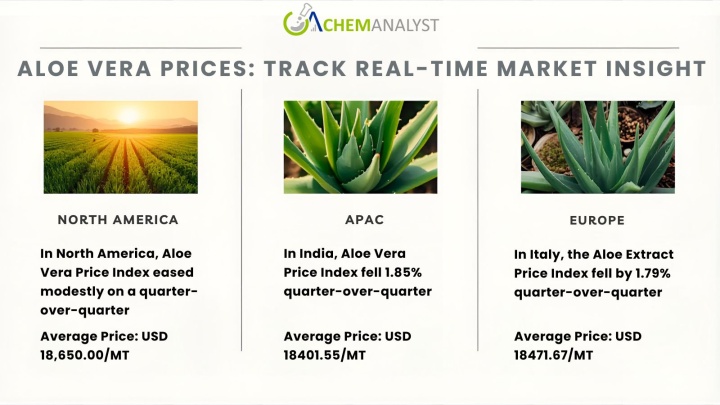
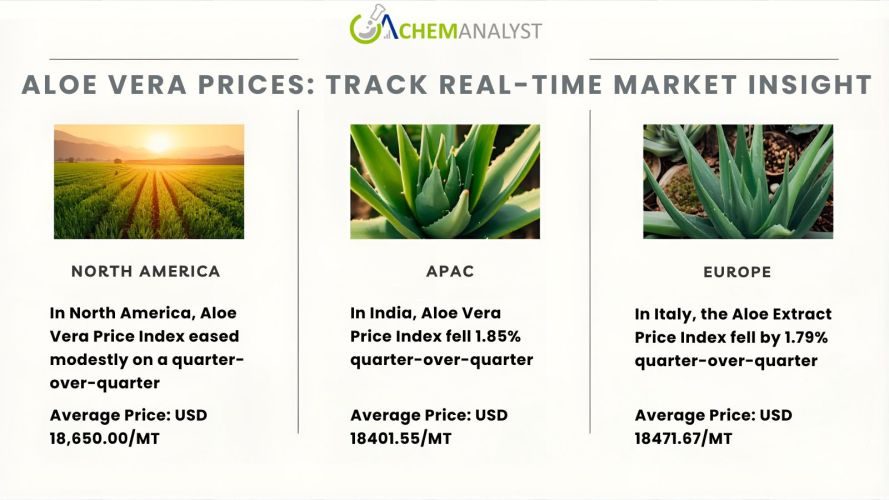
The global aloe vera market witnessed moderate price corrections across key regions during the recent quarter, as cautious procurement strategies and comfortable inventory levels weighed on trading activity. Across North America, APAC, and Europe, Aloe Vera and Aloe Extract price indices registered mild quarter-over-quarter (QoQ) declines, signaling a temporary demand lull rather than any structural weakness in the broader botanical extracts market.
Latest Aloe Vera Prices:- https://www.chemanalyst.com/Pricing-data/aloe-vera-1664
Aloe vera, widely used in cosmetics, pharmaceuticals, nutraceuticals, food & beverages, and personal care formulations, remains a resilient segment within the global plant-based ingredients industry. However, shifting purchasing behavior, inventory normalization, and seasonal demand adjustments influenced pricing dynamics in the latest quarter.
North America: Cautious Procurement Leads to Modest Price Easing
In North America, the Aloe Vera Price Index eased modestly on a quarter-over-quarter basis. While the correction was not steep, it reflected a combination of cautious procurement strategies and comfortable distributor inventories across the region.
Key Market Drivers
Demand-Side Observations
Demand from the cosmetics and skincare sector remained stable but not aggressive. Seasonal transitions often influence aloe vera usage in topical products such as moisturizers, gels, and after-sun care items. However, this quarter lacked strong seasonal pull-through.
Similarly, the functional beverage and nutraceutical segments showed steady but measured growth. Brands continued to incorporate aloe-based ingredients for digestive health and hydration products, yet procurement volumes remained calibrated rather than expansionary.
Outlook for North America
The modest QoQ decline indicates a balanced market rather than oversupply stress. If consumer demand strengthens in upcoming seasonal cycles—particularly in summer skincare and wellness beverages—pricing may stabilize or recover. However, near-term movements will largely depend on inventory drawdowns and replenishment cycles.
APAC: India Sees 1.85% QoQ Decline Amid Subdued Procurement
In the Asia-Pacific region, India experienced a 1.85% quarter-over-quarter decline in the Aloe Vera Price Index. As one of the major aloe cultivation and processing hubs globally, India’s price movements significantly influence regional and international trade patterns.
Aloe Vera Price 2026: - https://www.chemanalyst.com/Pricing-data/aloe-vera-1664
Market Dynamics in India
Industry Segments Impacted
The 1.85% drop reflects a controlled correction rather than distress selling. Processors continued to maintain operational efficiency, and the decline remained within a manageable range.
Broader APAC Considerations
Across wider APAC markets, aloe-based formulations remain popular in K-beauty, J-beauty, and herbal wellness trends. However, procurement pacing suggests that buyers expect continued comfortable supply conditions and are not anticipating immediate price spikes.
Europe: Italy Records 1.79% QoQ Drop in Aloe Extract Prices
In Europe, Italy reported a 1.79% quarter-over-quarter decline in the Aloe Extract Price Index. The movement was primarily driven by ample inventories and stable regional supply chains.
Italy plays a significant role in Europe’s botanical extracts and cosmetic ingredient market, serving as both a manufacturing hub and a distribution center.
Factors Behind the Price Decline
Impact on Downstream Markets
The 1.79% QoQ decline suggests inventory normalization rather than structural oversupply. European buyers appear confident in short-term supply continuity.
Comparative Regional Analysis
Common Influences
Structural Strength of the Aloe Vera Market
Despite short-term price softening, aloe vera maintains strong long-term demand drivers:
Aloe vera’s multifunctional properties—anti-inflammatory, moisturizing, soothing, and digestive benefits—ensure its continued relevance across industries.
Risks and Watchpoints
While the current market reflects stability, certain factors could influence future pricing:
Short-Term Outlook
Given the present conditions:
Market participants are likely to continue adopting short-cycle procurement strategies, minimizing exposure to price volatility.
Conclusion
The recent quarter highlighted a phase of moderate price correction across the global aloe vera market.
These movements reflect a balanced and well-supplied market environment rather than demand erosion or supply stress. Aloe vera continues to benefit from strong structural demand across cosmetics, nutraceuticals, pharmaceuticals, and food applications.
As inventory normalization continues and seasonal demand patterns evolve, pricing may stabilize. For now, the global aloe vera market remains steady, characterized by prudent procurement, adequate supply, and stable downstream consumption.
In summary, the quarter underscored resilience within the aloe industry—even amid mild pricing corrections—reinforcing its position as a dependable and versatile botanical ingredient in global markets.
Contact US:
Email-id: sales@chemanalyst.com
Phone no: +1-(332) 258 - 6602
Address: 420 Lexington Avenue, Suite 300
New York, NY
United States, 10170