x




The global Aluminium Alloy Ingot market has entered 2026 with notable regional divergences, as reflected in recent price trend data, index movements, and supply-demand dynamics. While some regions experienced downward pressure due to weakened downstream demand, others saw price increases driven by raw material constraints and tightening supply chains. This evolving landscape highlights the complexity of the aluminium value chain, where scrap availability, industrial consumption, trade flows, and macroeconomic factors continue to shape pricing patterns.
Latest Aluminium Alloy Ingot Price Trend:- https://www.chemanalyst.com/Pricing-data/aluminium-alloy-ingot-1358
Global Aluminium Alloy Ingot Market Overview
Aluminium alloy ingots are a critical raw material used in a wide range of industries, including automotive, construction, packaging, aerospace, and electronics. Their pricing is highly sensitive to fluctuations in upstream raw materials such as aluminium scrap, energy costs, and primary aluminium, as well as downstream demand from manufacturing sectors.
In 2026, the global market is witnessing a mixed trajectory. Regional disparities have become more pronounced due to varying economic conditions, supply chain disruptions, and policy frameworks. The Aluminium Alloy Ingot Price Index serves as a key indicator of these shifts, offering insights into quarterly changes and broader market sentiment.
North America: Weak Demand Pressures Prices
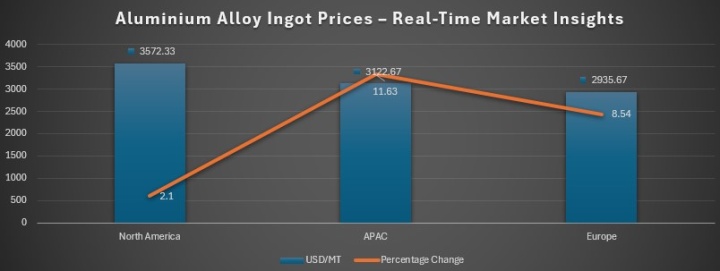
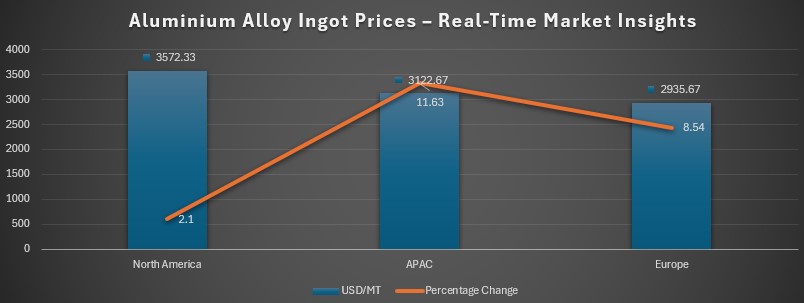
In the United States, the Aluminium Alloy Ingot Price Index declined by 2.10% quarter-over-quarter, signaling a softening market environment. This downward movement reflects weaker demand from downstream industries, particularly in automotive and construction sectors, which have faced slower growth amid economic uncertainties.
The average Aluminium Alloy Ingot price in the U.S. stood at approximately USD 3572.33 per metric ton, based on trade tonnage. Despite relatively stable supply conditions, reduced procurement activity and cautious inventory management strategies among buyers contributed to the price decline.
Key Factors Influencing the U.S. Market:
From a price trend chart perspective, the U.S. market exhibited a gradual downward slope throughout the quarter, reflecting consistent but moderate declines rather than sharp volatility. The index movement suggests a market in correction mode rather than crisis.
Aluminium Alloy Ingot Price Chart 2026:- https://www.chemanalyst.com/Pricing-data/aluminium-alloy-ingot-1358
APAC: Sharp Decline Amid Supply Constraints
In the Asia-Pacific region, Japan experienced a more pronounced downturn, with the Aluminium Alloy Ingot Price Index falling by 11.63% quarter-over-quarter. This significant drop highlights the complex interplay between supply constraints and demand-side weakness.
Interestingly, while scrap supply remained constrained—a factor that typically supports higher prices—the decline in demand outweighed supply limitations, leading to a net decrease in prices.
The average Aluminium Alloy Ingot price in Japan was approximately USD 3122.67 per metric ton, based on nationally reported data.
Key Drivers in the Japanese Market:
The price trend chart for Japan shows a steep downward trajectory, indicating a rapid correction phase. The index movement reflects bearish sentiment, with market participants adopting a cautious stance.
Europe: Supply Tightness Drives Price Increase
In contrast to North America and APAC, Europe—particularly Germany—witnessed a strong upward trend in Aluminium Alloy Ingot prices. The Price Index rose by 8.54% quarter-over-quarter, driven primarily by tightening scrap supply.
The average price in Germany reached approximately USD 2935.67 per metric ton, excluding freight and taxes. This increase underscores the critical role of raw material availability in shaping market dynamics.
Key Factors Supporting the European Market:
The price trend chart in Germany reflects a steady upward movement, with consistent gains throughout the quarter. The index indicates a bullish market sentiment, supported by supply-side constraints rather than demand surges.
Key Market Drivers Shaping 2026 Trends
Scrap availability remains a critical factor across all regions. In Europe, tight scrap supply has driven prices upward, while in Japan, constrained supply has not been sufficient to counter weak demand.
Industries such as automotive, construction, and electronics play a significant role in determining aluminium alloy consumption. Slower growth in these sectors has weighed on prices in North America and APAC.
Energy-intensive production processes make aluminium pricing highly sensitive to energy cost fluctuations. Elevated energy prices in Europe have contributed to higher ingot prices.
Global trade patterns, including import-export dynamics and freight costs, continue to influence regional pricing structures.
Interest rates, inflation, and economic growth rates are shaping industrial activity and, consequently, demand for aluminium alloys.
Price Trend and Chart Insights
Analyzing the price trend charts across regions provides deeper insights into market blocked-
These patterns suggest that while global demand may be moderating, localized supply conditions can significantly alter price trajectories.
Outlook for 2026
Looking ahead, the Aluminium Alloy Ingot market is expected to remain dynamic, with several key trends likely to shape the remainder of 2026:
Short-Term Outlook:
Medium-Term Outlook:
Long-Term Considerations:
Conclusion
The Aluminium Alloy Ingot market in 2026 reflects a complex and regionally fragmented landscape. While North America and APAC are experiencing price declines due to weaker demand, Europe stands out with strong price gains driven by supply constraints.
The Price Index, trend charts, and regional analysis collectively underscore the importance of balancing supply and demand dynamics. As the market continues to evolve, stakeholders must closely monitor key indicators, including scrap availability, industrial activity, and macroeconomic trends.
In this environment, adaptability and strategic sourcing will be critical for market participants aiming to navigate volatility and capitalize on emerging opportunities.
Contact US:
Email-id: sales@chemanalyst.com
Phone no: +1-(332) 258 - 6602
Address: 420 Lexington Avenue, Suite 300
New York, NY
United States, 10170