x






The global corn syrup market in 2026 is experiencing a period of moderate yet regionally diverse price movements, shaped by evolving trade dynamics, currency fluctuations, and shifting supply-demand fundamentals. As a key ingredient in the food and beverage industry—widely used in confectionery, beverages, processed foods, and pharmaceuticals—corn syrup pricing remains a critical indicator for both upstream producers and downstream consumers.
Latest Corn Syrup Price Trend: - https://www.chemanalyst.com/Pricing-data/corn-syrup-1600
Global Overview: A Market Defined by Divergence
In 2026, the corn syrup market reflects a mixed global pricing environment. While some regions are witnessing upward price momentum due to export demand and currency depreciation, others are experiencing price corrections amid ample supply and subdued consumption.
The interplay between agricultural output (primarily corn), energy costs, logistics, and currency movements continues to dictate pricing behavior. Additionally, trade flows and regional policy decisions are contributing to localized price volatility, creating opportunities and challenges for market participants.
North America: Export Strength Supports Price Stability
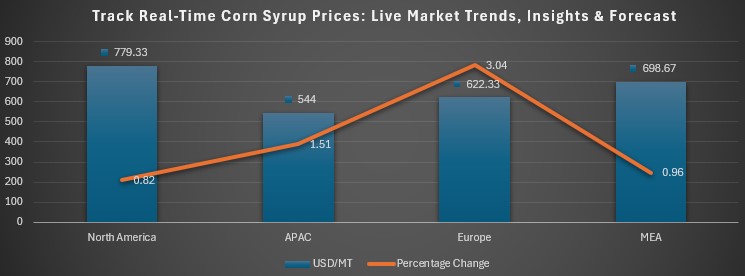
In North America, particularly the United States, corn syrup prices recorded a modest increase during the quarter. The Corn Syrup Price Index rose by 0.82% quarter-over-quarter, signaling a stable yet slightly bullish market environment.
The average price for the quarter stood at approximately USD 779.33 per metric ton (MT), based on FOB (Free on Board) export flows. This pricing trend reflects sustained international demand for U.S. corn syrup, especially from emerging markets where processed food consumption is expanding.
Key Drivers
Corn Syrup Price Chart 2026: - https://www.chemanalyst.com/Pricing-data/corn-syrup-1600
Market Outlook
Looking ahead, North American corn syrup prices are expected to maintain a steady trajectory. However, any disruptions in corn harvests or changes in export policies could introduce volatility in the coming quarters.
Asia-Pacific (APAC): Bearish Sentiment Amid Ample Supply
In contrast to North America, the Asia-Pacific region—represented by South Korea—experienced a decline in corn syrup prices during the same period. The Corn Syrup Price Index fell by 1.51% quarter-over-quarter, reflecting a bearish market sentiment.
The average price in South Korea was approximately USD 544.00/MT, calculated on an import-weighted basis. This decline underscores the impact of oversupply and relatively subdued demand in the region.
Key Drivers
Market Outlook
APAC markets may continue to face downward pressure unless demand rebounds significantly. Seasonal consumption patterns and potential production cuts could help stabilize prices in the near term.
Europe: Currency Depreciation Drives Price Increase
In Europe, Turkey emerged as a notable case of price escalation. The Corn Syrup Price Index rose by 3.04% quarter-over-quarter, marking one of the strongest increases among the regions analyzed.
The average price reached approximately USD 622.33/MT, based on FOB pricing. This upward trend is largely attributed to macroeconomic factors rather than fundamental supply shortages.
Key Drivers
Market Outlook
European corn syrup prices, particularly in currency-sensitive markets like Turkey, are likely to remain volatile. Exchange rate movements will continue to play a pivotal role in determining price direction.
Middle East & Africa (MEA): Gradual Price Growth Amid Currency Pass-Through
In the MEA region, South Africa reported a moderate increase in corn syrup prices. The Price Index rose by 0.96% quarter-over-quarter, indicating a steady but controlled upward trend.
The average price for the quarter was approximately USD 698.67/MT, based on import-weighted costs. This reflects a balanced market environment influenced by both global and local factors.
Key Drivers
Market Outlook
The MEA region is expected to experience moderate price movements, with currency trends and global supply conditions serving as key determinants.
Supply Chain and Trade Dynamics
The corn syrup market is deeply interconnected with global agricultural supply chains. Corn, as the primary feedstock, plays a crucial role in determining production costs. Any disruptions in corn supply—due to weather events, policy changes, or geopolitical tensions—can have a cascading effect on corn syrup prices.
Additionally, freight rates, port congestion, and trade regulations influence the final delivered cost of corn syrup. In 2026, relatively stable logistics conditions have helped mitigate extreme price fluctuations, although localized disruptions remain a risk.
Key Trends Shaping the Market in 2026
Companies are increasingly focusing on regional sourcing strategies to reduce dependency on global trade routes. This trend may lead to more localized pricing structures.
Exchange rate movements are emerging as a dominant factor, particularly in import-dependent regions.
Changing consumer preferences, including reduced sugar consumption and demand for alternative sweeteners, may impact long-term demand for corn syrup.
Environmental concerns and sustainability initiatives are influencing production practices and cost structures.
Future Outlook: What Lies Ahead?
The outlook for corn syrup prices in 2026 remains cautiously optimistic, with expectations of moderate growth in most regions. However, the market will continue to be shaped by:
While North America is likely to maintain its position as a stable exporter, APAC markets may require demand recovery to reverse current bearish trends. MEA regions will remain sensitive to macroeconomic variables, particularly currency movements.
Conclusion
The corn syrup market in 2026 presents a complex and dynamic landscape, characterized by regional disparities and multifaceted drivers. From export-driven growth in North America to supply-induced declines in APAC and currency-led increases in Europe and MEA, each region tells a unique story.
Contact US:
Email-id: sales@chemanalyst.com
Phone no: +1-(332) 258 - 6602
Address: 420 Lexington Avenue, Suite 300
New York, NY
United States, 10170