x




Azithromycin Dihydrate, a widely traded active pharmaceutical ingredient (API) used in the production of macrolide antibiotics, continues to demonstrate relative price stability across major global markets. As a derivative of Azithromycin, this API plays a crucial role in the formulation of antibiotics prescribed for respiratory infections, skin infections, and various bacterial diseases. Given its importance in both branded and generic drug manufacturing, even modest price fluctuations can influence procurement strategies, production planning, and margin management for pharmaceutical manufacturers worldwide.
Latest Azithromycin Dihydrate Prices: - https://www.chemanalyst.com/Pricing-data/azithromycin-1374
In the most recent quarter, pricing trends across Asia-Pacific (APAC), Europe, and North America reflected mild upward momentum. The increases were not driven by demand surges alone, but rather by a combination of logistical adjustments, restocking cycles, and steady import parity dynamics. This article examines regional price performance and the structural factors shaping the global Azithromycin Dihydrate market.
APAC Market Overview: China’s Stable but Slightly Firm Tone
China: Marginal Quarter-on-Quarter Growth
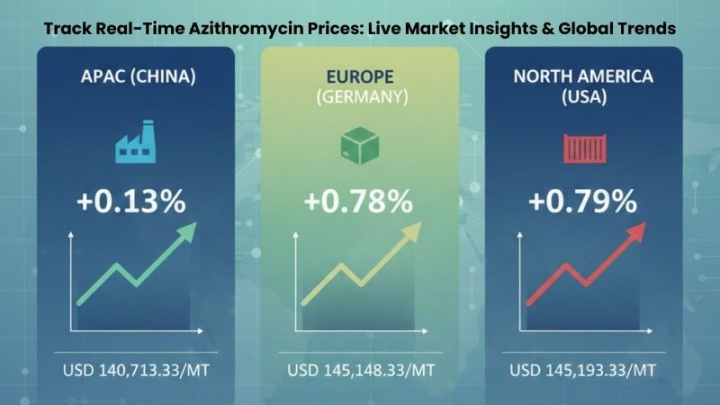
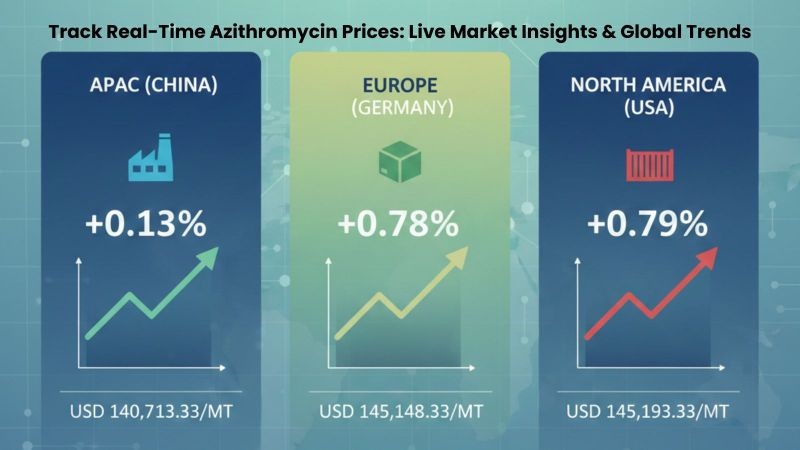
In China, the Azithromycin Dihydrate Price Index rose by 0.13% quarter-over-quarter, signaling a largely stable market environment with minimal volatility. The average quarterly price was approximately USD 140,713.33 per metric ton, based on FOB China assessments.
The slight uptick reflects modest cost pressures rather than aggressive supply tightening. China remains one of the world’s largest producers and exporters of antibiotic APIs, supported by extensive fermentation capacity, established supply chains, and competitive manufacturing economics. As a result, the domestic production base tends to cushion extreme pricing swings.
Several factors contributed to the incremental rise:
Despite the quarter’s mild upward shift, overall sentiment in China remained steady. There were no significant production disruptions or regulatory interventions affecting large-scale output. This suggests that China’s Azithromycin Dihydrate market is currently operating within a stable equilibrium.
From a procurement perspective, buyers sourcing on an FOB China basis experienced predictable pricing, enabling forward contract planning with limited volatility exposure.
European Market: Germany Reflects Restocking Support
Germany: Moderate Price Firmness
In Europe, and particularly in Germany, the Azithromycin Dihydrate Price Index rose by 0.78% quarter-over-quarter, marking a more pronounced increase compared to APAC. The average quarterly price stood at approximately USD 145,148.33 per metric ton, reflecting steady import parity conditions.
Azithromycin Dihydrate Price 2026: - https://www.chemanalyst.com/Pricing-data/azithromycin-1374
Germany serves as a key pharmaceutical manufacturing and distribution hub within the European Union. The regional market is heavily dependent on imported APIs from Asia, especially China and India. Consequently, European pricing is often influenced by freight rates, currency fluctuations, and supply chain logistics.
The quarter’s price increase was primarily supported by:
While demand remained steady rather than surging, precautionary inventory rebuilding played a significant role in shaping pricing momentum. In regulated markets such as Germany, pharmaceutical manufacturers prioritize supply continuity, especially for widely prescribed antibiotics. Even marginal uncertainty in upstream supply can trigger proactive procurement.
Importantly, the German market did not witness sharp volatility. The 0.78% rise reflects measured adjustments rather than structural shifts in supply-demand balance.
North American Market: U.S. Pricing Mirrors European Trends
United States: Logistics and CFR Pricing Support
In North America, the United States recorded a 0.79% quarter-over-quarter increase in the Azithromycin Dihydrate Price Index. The average price reached approximately USD 145,193.33 per metric ton, based on import totals and CFR New York transactions.
The U.S. market shares structural similarities with Europe, particularly in its reliance on imported APIs. Domestic large-scale fermentation production of macrolide antibiotics is limited compared to Asia, making North America sensitive to global trade flows.
The price increase was supported by:
Unlike emergency-driven spikes observed during pandemic periods, the current increase reflects normalized market conditions. There was no evidence of supply shortages or abrupt regulatory disruptions. Instead, the market demonstrated controlled firmness driven by operational cost factors.
For U.S. buyers, the near parity with European pricing highlights the globalized nature of Azithromycin Dihydrate trade. Differences between Germany and the U.S. were marginal, underscoring integrated supply chains and synchronized import pricing mechanisms.
Key Observations:
The roughly USD 4,400–4,500 per metric ton differential between China and Western markets primarily reflects freight, insurance, and logistics-related costs rather than structural shortages.
Supply-Side Considerations
Azithromycin Dihydrate production relies on fermentation processes, intermediate chemical synthesis, and strict regulatory compliance. Key supply-side factors include:
At present, no significant regulatory shutdowns or export restrictions have materially disrupted supply flows. Production discipline in China and consistent export pipelines have supported global stability.
Demand-Side Fundamentals
Demand for Azithromycin Dihydrate is influenced by:
The quarter under review did not reflect pandemic-style spikes. Instead, demand remained steady and predictable. Antibiotics such as those derived from Azithromycin continue to form part of essential medicine lists across many countries, sustaining baseline demand.
Logistics and Trade Flow Impact
The divergence between FOB China pricing and CFR/Import parity pricing in Europe and North America illustrates the ongoing role of logistics in pharmaceutical cost structures.
Even small changes in:
can influence landed cost assessments. The quarter’s modest increases in Germany and the U.S. align with incremental logistics normalization rather than severe bottlenecks.
Outlook: Stability with Mild Upward Bias
Looking ahead, the Azithromycin Dihydrate market appears poised for continued stability. Several factors support this outlook:
However, potential risks include:
Absent these shocks, price movements are likely to remain incremental rather than dramatic.
Strategic Takeaways for Procurement and Pharma Leaders
For procurement managers, supply chain heads, and financial planners, several actionable insights emerge:
The narrow gap between European and U.S. pricing also suggests synchronized purchasing strategies across Western markets could yield efficiency gains.
Conclusion
The latest quarter underscores a global Azithromycin Dihydrate market defined by stability rather than volatility. China continues to anchor global supply with competitive FOB pricing, while Germany and the United States reflect moderate firmness driven by logistics and restocking activity.
Quarter-over-quarter increases of 0.13% in China, 0.78% in Germany, and 0.79% in the United States point to incremental cost pressures rather than structural imbalance. With average prices hovering around USD 140,700–145,200 per metric ton across regions, the market remains well-supported by steady production and predictable demand.
For stakeholders across the pharmaceutical value chain, disciplined monitoring and proactive procurement strategies will remain essential. In an environment where even sub-1% movements can influence large-volume contracts, data-driven decision-making continues to define competitive advantage in the global antibiotic API market.
Contact US:
Email-id: sales@chemanalyst.com
Phone no: +1-(332) 258 - 6602
Address: 420 Lexington Avenue, Suite 300
New York, NY
United States, 10170