x




Potassium sorbate is one of the most widely used preservatives in the global food, beverage, pharmaceutical, and personal care industries. Known for its ability to inhibit mold, yeast, and certain bacteria, the compound helps extend shelf life in products such as dairy items, bakery products, fruit beverages, and processed foods. It is also widely used in cosmetics and pharmaceuticals to prevent microbial growth and maintain product stability.
Latest Potassium Sorbate Price Trend: - https://www.chemanalyst.com/Pricing-data/potassium-sorbate-1342
As global food processing, packaged food consumption, and personal care product demand continue to rise, the potassium sorbate market has experienced steady growth. Industry forecasts suggest that the global market size could exceed USD 300 million by the next decade, supported by a compound annual growth rate (CAGR) of around 5%.
However, despite steady long-term demand fundamentals, the short-term price outlook in 2026 has been shaped by a combination of export dynamics, inventory adjustments, logistics conditions, and cautious procurement activity across major regions. The Potassium Sorbate Price Index in 2026 shows a generally downward trend across North America, Asia-Pacific, and Europe, reflecting balanced supply conditions and moderate downstream demand.
Global Market Overview
Potassium sorbate is chemically the potassium salt of sorbic acid and is widely used as a preservative due to its antimicrobial effectiveness and compatibility with various formulations. It has minimal impact on taste or odor, making it a preferred preservative in food processing, beverages, and personal care products.
In recent years, demand has expanded across multiple sectors:
Although structural demand remains stable, pricing in 2026 reflects supply chain adjustments and shifting global trade flows.
Potassium Sorbate Price Trend 2026
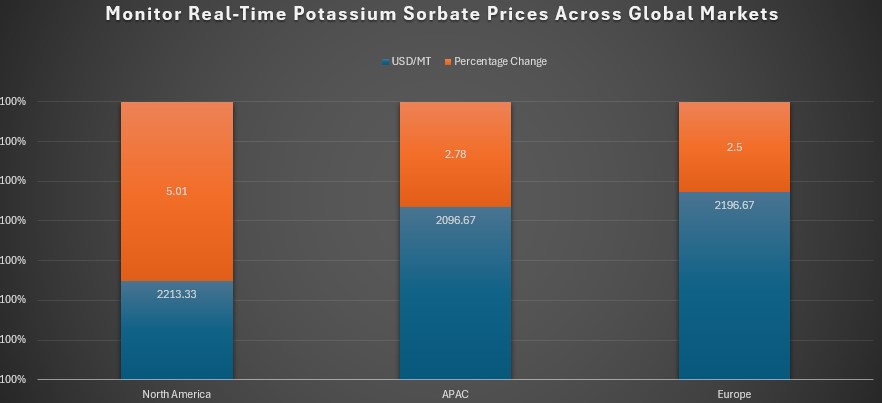
The 2026 price movement indicates a moderate decline across major markets, largely due to sufficient supply availability, weak export demand in Asia, and stable production costs.
Overall, the global potassium sorbate price trend during the analyzed quarter showed downward pressure but limited volatility, suggesting a balanced market rather than a demand collapse.
North America Price Trend
In North America, the potassium sorbate market experienced a notable price correction during the quarter.
The price decline was primarily driven by several factors:
Global suppliers maintained consistent export volumes, resulting in sufficient supply availability in the U.S. market. Importers were able to access competitively priced shipments, reducing the need for aggressive restocking.
Ocean freight costs stabilized compared to earlier periods when shipping disruptions pushed logistics costs higher. Lower freight volatility helped keep landed costs steady and contributed to the softer pricing environment.
Demand from food processing and pharmaceutical manufacturers remained stable but did not accelerate enough to support price increases. Buyers maintained cautious procurement strategies, purchasing according to immediate requirements rather than building inventories.
Many distributors held adequate inventories, allowing them to meet routine consumption without aggressively competing for new supply.
Overall, the North American market displayed stable fundamentals but soft pricing, reflecting adequate supply coverage and cautious buying behavior.
Potassium Sorbate Price Chart 2026: - https://www.chemanalyst.com/Pricing-data/potassium-sorbate-1342
Asia-Pacific Price Trend
The Asia-Pacific region, particularly China, remains one of the most important production and export hubs for potassium sorbate. During the analyzed quarter, the region experienced moderate price declines.
Several key factors shaped the regional pricing dynamics.
International buyers slowed procurement during the quarter, leading to reduced export momentum. This soft export activity encouraged Chinese producers to offer discounts to maintain shipment volumes.
Manufacturers and traders focused on reducing inventory levels, particularly after earlier periods of elevated stockpiles. Destocking strategies placed downward pressure on market quotations.
Chinese production remained stable, and exporters maintained regular shipments to global markets. Adequate supply availability limited the potential for price spikes.
China faces increasing competition from producers in other Asian markets. To maintain global market share, suppliers adopted competitive pricing strategies.
Despite the price decline, China continues to dominate global exports due to its extensive manufacturing infrastructure and cost advantages.
Europe Price Trend
The European potassium sorbate market also experienced modest price reductions during the quarter, although the decline was smaller than in North America.
European market conditions were influenced by the following factors.
Transportation and logistics constraints continued to influence import pricing. Although supply remained available, distribution costs affected market stability.
Europe’s strong food processing sector sustained steady demand for preservatives such as potassium sorbate. However, buyers maintained disciplined purchasing patterns, limiting price increases.
Europe relies heavily on imports for potassium sorbate supply. Changes in currency exchange rates and shipping costs influenced landed prices and market sentiment.
Feedstock and energy costs remained relatively stable, preventing dramatic fluctuations in producer pricing.
Overall, the European market remained relatively stable with mild downward pressure, reflecting balanced supply-demand conditions.
Potassium Sorbate Price Index Analysis
The global Potassium Sorbate Price Index in 2026 shows a synchronized decline across major regions, indicating that macro-level supply factors are influencing the market.
Market Drivers Influencing Potassium Sorbate Prices
Several structural factors continue to influence global potassium sorbate pricing.
Growing Demand for Preservatives
The increasing consumption of packaged foods and ready-to-eat meals continues to support demand for preservatives. Potassium sorbate remains a preferred solution due to its effectiveness and regulatory approval in many countries.
Expansion of Personal Care Industry
Rising demand for cosmetics and personal care products has expanded the use of potassium sorbate as a preservative in formulations such as lotions, shampoos, and creams.
Pharmaceutical Applications
The compound is also used in pharmaceutical syrups and liquid medicines to prevent microbial contamination, supporting steady industrial consumption.
Supply Chain and Logistics
Freight rates, container availability, and shipping routes continue to influence global pricing. When logistics costs decline, landed import prices also decrease, as observed in the North American market.
Production and Supply Outlook
Potassium sorbate production is concentrated in a few major regions, with China being the dominant global exporter due to its manufacturing scale and cost advantages.
Key supply-side considerations include:
Stable feedstock prices and efficient manufacturing processes have helped maintain steady production costs in recent quarters, contributing to limited price volatility.
Potassium Sorbate Price Forecast 2026
Looking ahead, the potassium sorbate market is expected to experience moderate price stability with potential upside during seasonal demand cycles.
Key expectations for the upcoming quarters include:
Food and beverage manufacturers may increase procurement during peak production seasons, potentially supporting short-term price recovery.
The expanding global processed food industry will continue to drive long-term demand for preservatives.
If feedstock and energy costs remain stable, producers are unlikely to significantly raise prices.
Adequate export availability from Asia will likely keep global supply sufficient, limiting sharp price increases.
Overall, the potassium sorbate market is expected to remain fundamentally stable, with moderate price fluctuations rather than extreme volatility.
Conclusion
The global potassium sorbate market in 2026 reflects a period of balanced supply conditions and cautious demand growth, leading to moderate price corrections across major regions.
Despite short-term fluctuations, long-term demand for potassium sorbate remains strong, supported by expanding applications in food preservation, pharmaceuticals, and personal care products. As the global packaged food industry continues to grow and consumers demand longer shelf life for processed products, potassium sorbate will remain a critical ingredient in modern manufacturing.
Contact US:
Email-id: sales@chemanalyst.com
Phone no: +1-(332) 258 - 6602
Address: 420 Lexington Avenue, Suite 300
New York, NY
United States, 10170