x




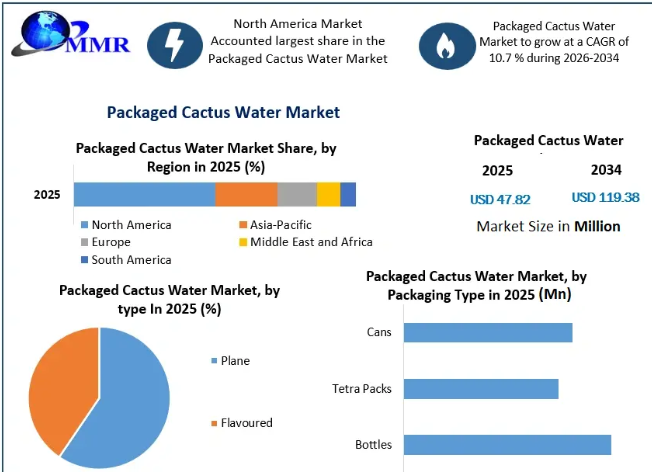
The Global Packaged Cactus Water Market is gaining momentum as consumers increasingly explore natural, plant-based, and functional beverage options. Packaged cactus water, generally extracted from prickly pear cactus, is gaining attention for its refreshing taste and naturally occurring nutrients, including electrolytes, minerals, and antioxidants. According to Maximize Market Research, the market was valued at USD 47.82 million in 2025 and is projected to reach nearly USD 119.38 million by 2034, growing at a CAGR of 10.7% during the forecast period of 2026–2034. Growing health and wellness awareness, rising interest in plant-based beverages, and demand for alternatives to conventional sugary drinks are supporting market expansion.
MAXIMIZE MARKET RESEARCH
Global Industry Analysis and Forecast
Get a sample of the report:
https://www.maximizemarketresearch.com/request-sample/273490/
The Packaged Cactus Water Market is evolving through product development, improved processing methods, packaging innovation, and changing consumer preferences. Manufacturers are focusing on making cactus water more accessible and appealing by introducing different flavours, convenient packaging formats, and products suited to health-conscious lifestyles.
Flavour Development: Manufacturers are introducing fruit-inspired flavours and innovative combinations to attract consumers who prefer refreshing beverages with distinctive taste profiles.
Processing Improvements: Improved extraction, filtration, and processing techniques help manufacturers maintain product quality, consistency, and flavour.
Convenient Packaging: Bottles, tetra packs, and cans provide different consumption options for retail customers and people seeking beverages on the go.
Product Diversification: Companies are developing both flavoured and plain cactus water to address different taste preferences and consumer requirements.
Natural Ingredient Positioning: Brands are highlighting plant-based ingredients and naturally occurring nutrients to appeal to consumers interested in functional beverages.
Branding and Digital Marketing: Social media campaigns, influencer partnerships, and wellness-focused promotions are helping brands increase awareness and reach new customer groups.
The Packaged Cactus Water Market is segmented by type into flavoured and plain products. According to the report, the flavoured segment dominated the market in 2025, accounting for more than 60% of the total market share. Its leading position is supported by consumer interest in refreshing beverages with appealing taste profiles. Fruit-based flavours and product variations help manufacturers attract consumers who are exploring alternatives to traditional soft drinks and other packaged beverages.
The plain segment also represents an important part of the market, particularly among consumers who prefer beverages with a simpler taste and fewer flavour additions. Growing interest in natural beverage options provides opportunities for manufacturers to expand plain cactus water offerings and strengthen their presence among health-conscious customers.
The market also includes different packaging formats, such as bottles, tetra packs, and cans. These formats allow companies to address varied retail requirements, consumer preferences, and convenience needs. End-user categories include adults, athletes, and health enthusiasts, reflecting the expanding appeal of cactus water across different consumer groups.
The Packaged Cactus Water Market offers significant opportunities through product innovation, geographical expansion, and wider distribution networks. Manufacturers can introduce new flavours, product variants, and packaging options to attract consumers with different preferences. The development of differentiated beverages can also help brands establish stronger positions within the growing functional beverage category.
Strategic collaborations with health food stores, cafes, wellness brands, and retail distributors provide another important opportunity. These partnerships can improve product visibility, expand availability, and introduce cactus water to consumers who may not be familiar with the category. Online retail platforms and direct-to-consumer channels can further support market reach by helping brands communicate product features and connect with new audiences.
Branding and marketing strategies are also expected to influence future growth. Companies can strengthen consumer awareness through digital campaigns, influencer collaborations, wellness events, and product sampling initiatives. Expanding into geographical markets with increasing disposable incomes and growing interest in health-conscious beverages can create additional opportunities for the industry.
The Packaged Cactus Water Market is analysed across North America, Europe, Asia Pacific, the Middle East and Africa, and South America. Regional growth is influenced by consumer awareness, beverage preferences, retail infrastructure, product availability, and the development of functional beverage categories.
North America represents an important market for packaged cactus water, supported by the presence of established brands and consumer interest in innovative hydration products. The region offers opportunities through supermarkets, specialty beverage stores, online retail, and wellness-focused distribution channels. Product launches and brand collaborations can further improve consumer awareness and market penetration.
Europe offers growth potential through increasing interest in natural ingredients, plant-based products, and differentiated beverage choices. Manufacturers can strengthen their presence through specialty retailers, health food stores, and online platforms. Product quality, packaging, and brand positioning are important factors influencing consumer acceptance.
Asia Pacific presents opportunities as the beverage industry expands and consumer preferences continue to diversify. Rising disposable incomes, urbanisation, and growing interest in functional drinks can support demand for packaged cactus water. Companies can explore regional distribution partnerships and product variations suited to local consumer preferences.
The Middle East and Africa market offers opportunities through expanding retail networks and increasing availability of international beverage products. Consumer awareness, product accessibility, and effective marketing strategies will influence the adoption of packaged cactus water across the region.
South America also provides opportunities for market development through the expansion of modern retail channels and growing interest in alternative beverage products. Manufacturers can focus on product innovation, distribution partnerships, and brand awareness to strengthen their regional presence.
The Packaged Cactus Water Market includes established beverage companies and emerging brands competing through product innovation, flavour development, distribution expansion, and marketing strategies. Companies are focusing on increasing brand recognition and differentiating their products through natural ingredients, convenient packaging, and wellness-oriented positioning. Partnerships with retailers, fitness communities, and wellness brands are also helping market participants improve visibility and reach new consumers.
Caliwater LLC
True Nopal Ventures LLC
Pricklee LLC
Steaz (The Healthy Beverage Company)
The Cactus Water Co. LLC
Cawston Press Ltd
The Lauro Company LLC
Evissi USA LLC
Green-Go
BetterDays (Australia)
Oka Products LLC
H2coco Pty Ltd
Greenleaf Foods, SPC (Maple Leaf Foods Inc.)
Mamma Chia, LLC
Desert King International
Cactus Botanics Ltd
Saudi Nopal Water Co.
Nature's Oasis Beverages
BioCactus Natural Drinks
Cactus Fresh Brazil
Increasing health and wellness awareness is a major driver of the Packaged Cactus Water Market. Consumers are paying greater attention to beverage ingredients and exploring alternatives to conventional sugary and carbonated drinks. Cactus water benefits from its plant-based positioning and naturally occurring nutrients, making it relevant to consumers seeking variety within the functional beverage category.
The growing popularity of plant-based and vegan lifestyles is also supporting market demand. Consumers interested in beverages derived from natural sources are creating opportunities for cactus water manufacturers to expand their product offerings. Its association with hydration and wellness further strengthens its appeal among adults, athletes, and health enthusiasts.
Strategic partnerships and influencer marketing are providing additional growth support. Collaborations between beverage brands, wellness companies, retailers, and social media personalities help increase product visibility and introduce cactus water to wider audiences. These promotional activities can improve consumer familiarity and encourage product trials.
Competition from established beverage categories remains a major challenge for the Packaged Cactus Water Market. Products such as coconut water, flavoured water, sports drinks, and other functional beverages already have stronger consumer familiarity and established distribution networks. New and emerging cactus water brands must therefore invest in marketing and product differentiation to attract customers.
Limited consumer awareness also creates challenges for market expansion. Many consumers may not be familiar with cactus water, its ingredients, or its taste profile. Companies need to communicate product information clearly and build consumer confidence through effective branding, sampling, and retail promotions.
A significant trend in the Packaged Cactus Water Market is the growing introduction of flavoured beverage varieties. Manufacturers are exploring different flavour combinations to make cactus water more appealing to consumers who prefer refreshing and distinctive drinks. These product innovations help brands differentiate themselves in an increasingly competitive beverage industry.
Another emerging trend is the use of strategic brand partnerships and social media marketing. Collaborations with wellness businesses, sports-related platforms, and influencers help companies reach targeted consumer groups. Digital promotions and lifestyle-focused campaigns are also creating opportunities to position cactus water within the broader functional beverage market.
Packaging diversification is another important development. Bottles, tetra packs, and cans allow brands to serve different consumption occasions and retail requirements. Companies are focusing on convenient formats and attractive product presentation to improve shelf visibility and consumer interest.
Future opportunities in the Packaged Cactus Water Market include expanding product portfolios, entering new geographical markets, and strengthening distribution partnerships. Manufacturers can introduce additional flavours, plain variants, and differentiated beverage formats to address changing consumer preferences. Product development that focuses on taste, quality, and convenient packaging can help brands reach a wider audience.
Companies can also benefit from collaborations with health food stores, cafes, wellness brands, and retail distributors. These partnerships can increase product accessibility and strengthen brand recognition. Expanding online sales channels and direct-to-consumer platforms can further help manufacturers reach consumers in markets where cactus water is still developing.
Building a strong brand identity through targeted marketing, product education, and consumer engagement will remain important for long-term growth. As interest in natural and functional beverages continues to develop, the Packaged Cactus Water Market is positioned to create opportunities for established companies and emerging brands across product innovation, retail expansion, and international distribution.
Get access to the full description of the report:
https://www.maximizemarketresearch.com/market-report/packaged-cactus-water-market/273490/
Maximize Market Research Pvt. Ltd. provides market research, competitive intelligence, and strategic business insights across healthcare, agriculture, biotechnology, veterinary care, technology, industrial, energy, and consumer sectors.