x




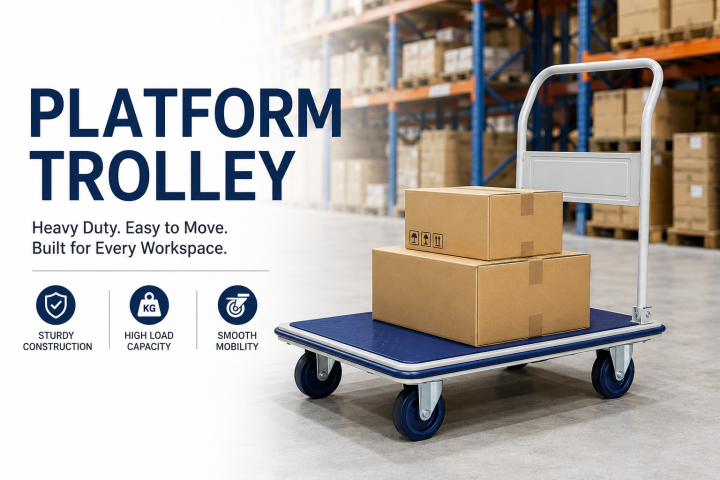
According to industry resources, a platform trolley is a practical material handling tool designed to move heavy goods safely and efficiently in warehouses, factories, retail stores, and offices. Choosing the right trolley can improve productivity, reduce manual effort, and increase workplace safety.
When buying a platform trolley, many people focus only on price. However, the right choice depends on several important factors, including load capacity, material quality, wheel type, and safety features. This guide will explain everything you need to know before making a purchase, helping you choose a reliable trolley that matches your needs.
A platform trolley is a wheeled transportation device with a flat surface designed for carrying and moving different types of items. It is commonly used in warehouses, supermarkets, manufacturing units, hospitals, and commercial spaces.
The main purpose of a platform trolley is to reduce the physical effort required to transport heavy loads. Instead of lifting and carrying products manually, workers can place items on the platform and move them smoothly from one place to another.
These trolleys come in different sizes, designs, and weight capacities. Therefore, selecting the right model is important for achieving better efficiency and ensuring long-term durability.
Firstly, consider the maximum weight you need to move regularly. Every trolley has a specific load capacity, and exceeding that limit can damage the structure and create safety risks.
For example, small businesses may need a lightweight trolley, while warehouses often require heavy-duty models that can carry hundreds of kilograms.
The construction material determines the strength and lifespan of the trolley. High-quality steel trolleys provide excellent durability and are suitable for demanding industrial environments.
Additionally, powder-coated surfaces help protect the trolley from rust, scratches, and regular wear.
The size of the platform should match the products you plan to transport. A larger platform can carry bigger items, but it may require more storage space.
Choose a design that allows easy loading and unloading to improve daily operations.
Wheels play a major role in the overall performance of a platform trolley. Rubber, polyurethane, and nylon wheels are common options available in the market.
For example, rubber wheels offer quieter movement, while heavy-duty wheels are suitable for rough industrial floors. Also, choose swivel wheels for better turning and easier handling.
A comfortable handle makes pushing and pulling easier. Ergonomic handles reduce stress on the hands and improve worker comfort during long working hours.
Foldable handles can also be beneficial because they save space when the trolley is not in use.
Before purchasing, think about where the trolley will be used. Different floors require different wheel materials.
Smooth indoor floors work well with standard wheels, whereas rough surfaces need stronger wheels with better shock absorption.
Safety should always be a priority. Look for features such as anti-slip platforms, wheel brakes, and strong locking mechanisms.
These features prevent accidents and help keep both workers and goods secure during transportation.
A good trolley should require minimal maintenance. Choose models with corrosion-resistant coatings and high-quality components.
Regular cleaning and checking the wheels will help maintain smooth performance and extend the life of the equipment.
Additionally, consider the available storage area in your workplace. Some platform trolley models have foldable designs that make storage easier.
This feature is especially useful for small shops, offices, and businesses with limited space.
Finally, compare the price with the quality and features offered. A cheaper trolley may seem attractive at first, but it may require frequent repairs or replacement.
Investing in a durable and well-designed trolley provides better value and reduces long-term operating costs.
Many buyers make the mistake of selecting a trolley without checking their actual requirements. Choosing the wrong capacity or poor-quality materials can lead to faster damage.
Another common mistake is ignoring wheel quality. Even a strong trolley can become difficult to use if the wheels do not match the floor conditions.
Moreover, many people overlook safety features. Selecting a trolley with proper brakes and a stable design can prevent workplace accidents.
Before purchasing, research trusted manufacturers and suppliers that provide detailed specifications, quality certifications, and customer support.
You can also explore industrial equipment websites, manufacturer catalogs, and user reviews to compare different models. With modern advancements, many companies now offer ergonomic and heavy-duty designs that improve efficiency and workplace safety.
Selecting the right platform trolley requires careful planning. Factors such as load capacity, material, wheel type, safety features, and storage should all be considered before making a decision.
By understanding these important points, you can invest in a trolley that offers better performance, durability, and value for years. Take time to compare options and choose a solution that perfectly fits your business needs.
The ideal capacity depends on your application. Small businesses may need lower capacities, while warehouses and factories often require heavy-duty trolleys capable of handling larger loads.
Steel is considered one of the best materials because it offers high strength, durability, and resistance to daily wear.
Regularly clean the surface, inspect the wheels, tighten loose parts, and avoid exceeding the recommended weight limit to maintain smooth operation.