x



Electrical safety is essential in industrial facilities, construction projects, and live events. A poor electrical connection can lead to overheating, equipment damage, and unexpected power interruptions. This is where Powersafe Powerlock Connectors can play an important role. Designed for high-current power distribution applications, these connectors help create secure connections when correctly selected and installed. In this guide, we explore their features, benefits, applications, and important safety checks before use.
Powerlock connectors are heavy-duty, single-pole electrical connectors commonly used in applications requiring high-current power connections. They are designed to connect compatible cables, generators, distribution panels, and industrial equipment.
Unlike ordinary electrical plugs, single-pole connectors use separate connections for individual conductors. This makes them useful in temporary power systems, industrial installations, and large event setups.
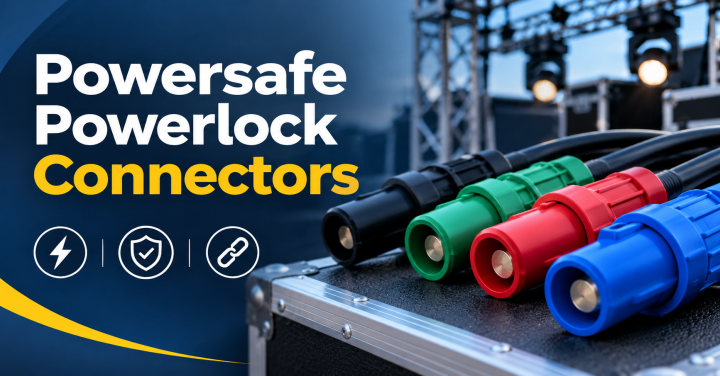
Powersafe Powerlock Connectors are used in demanding power distribution environments where secure connections and suitable electrical ratings are important. Their design can include features such as mechanical locking arrangements, insulated housings, and colour coding.
Colour coding helps technicians identify different electrical connections during installation. However, users must always follow the manufacturer's identification system and verify every connection before energising the equipment.
These connectors are commonly used in generators, temporary power distribution boards, construction sites, and professional event installations.
Loose electrical connections can create resistance and heat. Over time, this may damage equipment or increase the risk of electrical failure.
Powerlock systems use dedicated connection mechanisms to help maintain secure connections between compatible components. Proper installation and inspection are still necessary to prevent connection problems.
For industrial users, secure connections help support dependable power distribution during demanding operations.
Industrial machinery, generators, and event equipment often require high electrical loads. Standard connectors may not be suitable for these demanding applications.
Powerlock connectors are available in different current ratings and configurations. Selecting the correct model helps ensure the connection matches the electrical requirements.
Always check voltage, current, conductor size, and temperature limits before choosing a connector.
Electrical installations can involve several cables and connection points. Confusing phases or conductors can create serious safety problems.
Many Powerlock systems use colour-coded housings to help technicians identify connections. This makes cable organisation easier and can reduce connection errors.
However, colour coding should never replace proper testing, labelling, and electrical verification.
Construction projects, outdoor events, and industrial facilities often need temporary or flexible power distribution systems.
Powersafe Powerlock Connectors can support these applications when the connectors, cables, and distribution equipment are correctly matched.
Their suitability depends on the manufacturer's specifications, environmental conditions, and installation requirements.
Choosing the correct connector is essential for safety and performance. Follow these steps before purchasing.
1: Check the electrical rating. Confirm the required current and voltage. Select a connector that meets the system's electrical requirements.
2: Verify compatibility. Check the connector type, cable size, mating components, and manufacturer specifications. Do not assume similar-looking products are interchangeable.
3: Consider the working environment. Outdoor and industrial installations may face dust, moisture, heat, and mechanical stress. Check the product's environmental protection rating.
4: Inspect the construction. Look for suitable insulation, durable materials, and secure connection mechanisms. Request technical datasheets from your supplier.
5: Follow installation instructions. Use qualified electrical personnel and the manufacturer's procedures. Ensure that the system is isolated before making or breaking connections unless the exact equipment is specifically rated for operation under load.
Even quality connectors can become unsafe when used incorrectly. Avoid these mistakes:
Ignoring current ratings: Overloading connectors can cause overheating. Always verify the electrical load.
Mixing incompatible brands or models: Confirm that mating components are specifically approved for use together.
Skipping inspections: Check for damaged insulation, worn contacts, corrosion, and loose connections.
Relying only on colour coding: Verify phase identification and connections using approved testing procedures.
Buying unverified products: Choose genuine products from reputable electrical suppliers.
Ignoring environmental conditions: Select products suitable for the installation's temperature, moisture, and dust exposure.
Electrical safety depends on choosing the right equipment and following correct installation practices. Powersafe Powerlock Connectors can support reliable high-current power distribution in industrial, construction, and event applications. However, correct ratings, compatibility, regular inspection, and qualified installation remain essential. Before your next project, review your power requirements and consult a trusted electrical supplier to find suitable connector solutions.
They are used in high-current power distribution applications, including generators, industrial equipment, temporary electrical installations, and professional event power systems.
Some models are designed for outdoor applications. However, environmental protection varies by product. Always check the manufacturer's IP rating and installation instructions.
Powerlock connectors are designed for professional high-current applications. They typically use single-pole connections and dedicated locking arrangements rather than ordinary household plug designs.
Check the current rating, voltage, cable size, compatibility, and working environment. Always review the technical datasheet before purchasing.
Inspect connectors regularly for damaged insulation, corrosion, worn contacts, and loose fittings. Follow manufacturer-approved cleaning and maintenance procedures, and replace damaged components immediately.