x




The irony is that you employ a machine that's exceptional at exactly this — collating a messy week into a clear picture. It just needs to be asked.
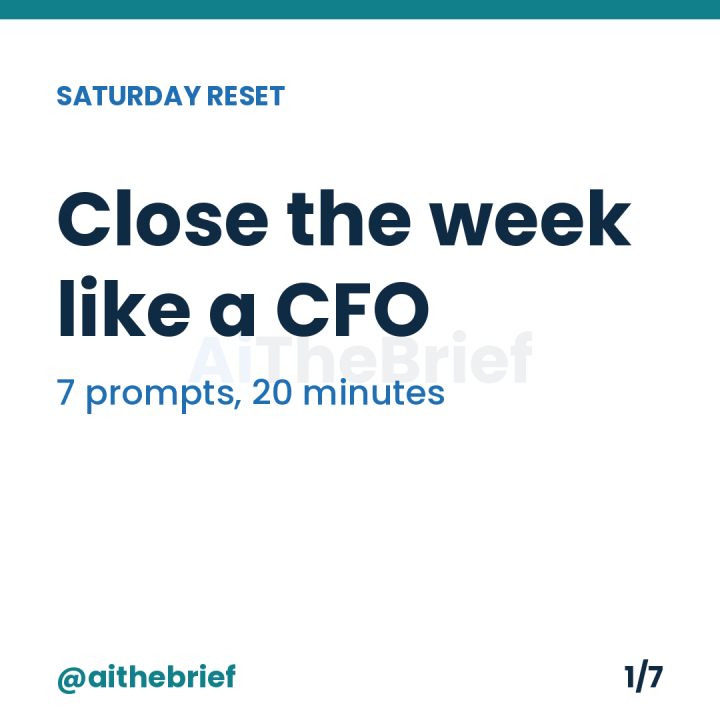
The decoded idea: borrow the discipline without the department. A CFO's weekly close does three things: states what happened, checks the money, and sets what happens next. With your notes and an AI tool, that's a 20-minute Saturday ritual — tea in hand, seven questions, done before the kettle's cold a second time.
The practical move: the seven-question close. Paste your week's notes, task list and messages into your AI tool, then work through these in order:
Look back. 1) What actually shipped this week — completed and delivered, not merely started? 2) What stalled, and what was the specific blocker: waiting on someone, missing information, or avoidance?
The money. 3) Which invoices are unpaid or unsent, and how overdue is each? 4) Looking at where the time went: what made money, and what merely ate hours? Two lists, no diplomacy.
The people. 5) Which clients have gone quiet for two weeks or more — and what would a two-line check-in say? Which promises come due next week? Who deserves a thank-you?
Next week. 6) Based on all of the above, what is the ONE priority for Monday that would most change next week? 7) Which three tasks should be deleted outright rather than deferred again?
The AI collates; the last two questions you answer with it, not from it. Deciding is the founder's job — the reset just makes sure you're deciding from facts rather than Friday fog.
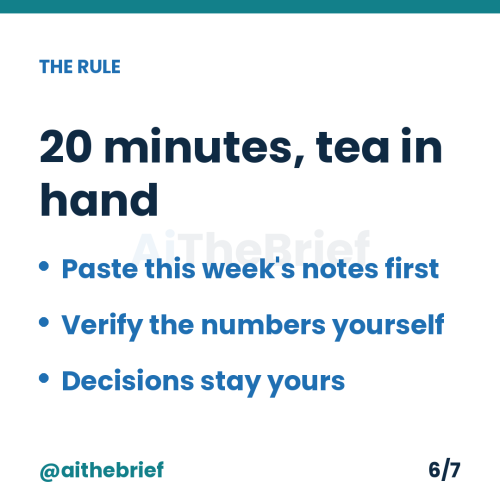
From this week's carousel — start the close with the truth.
The responsible-AI note (vet → disclose → verify). Two guardrails keep this ritual honest. First, verify the numbers yourself: an AI summary of your invoices is a prompt to check the source, never a substitute for it — money decisions run on verified figures only. Second, mind what you paste: the reset needs your notes, not your clients' private details. Names and last-contact dates are enough for question five; contracts and confidences stay out of the chat box. And treat the tool's tidy summary with mild suspicion — it will occasionally file something under "shipped" that you merely talked about shipping. The close is yours; the clerk is digital.
Where founders get this wrong. Doing it Monday morning — by then the reset competes with the inbox and loses; Saturday's distance is the feature. Skipping the deletion question — question seven is the compounding one, because a task deferred four times is a decision you're refusing to make, and it costs attention every single week it survives. And turning 20 minutes into 90 — the reset reviews the week; it doesn't relive it. When the timer sounds, decide and close.
What this looks like after a month. Four resets in, the patterns surface: the same client always pays late (fix the terms, not the reminder), the same task category always stalls (delegate it, delete it, or automate it), and your "what made money" list is shorter and more consistent than you'd have guessed — which quietly tells you what the business actually is. Monday stops being archaeology. And the week gains the thing it never had: an ending.
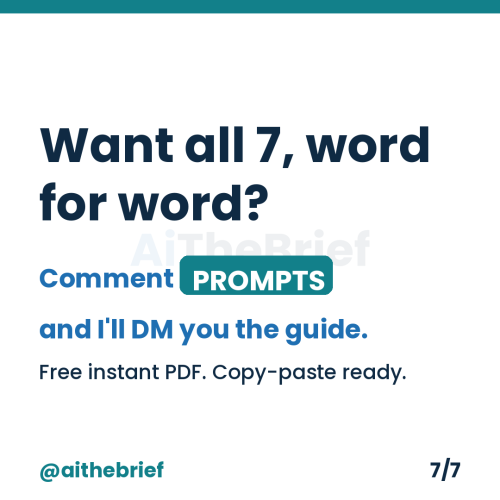
The rule slide — the reset in one image.
One decoded AI move, every week. Follow @aithebrief on Instagram for the daily version, or subscribe free on Substack for the deep one.