x




That's not a coincidence. Impressive automations optimise for novelty, which decays. Boring ones optimise for repetition, which compounds. If it would make a dull screenshot, it probably makes money.
The decoded idea: automate the five conversations your business has every week whether you show up or not. Each one below passes the three filters that make automation safe and worthwhile — it repeats weekly, it needs no judgement, and it can run with a human check where it touches people.
The practical move: pick ONE this week.
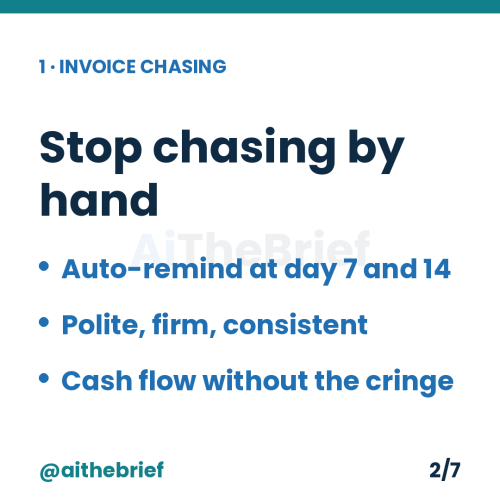
1. Invoice nudges. Polite reminder at day 7, firmer at day 14, automatically. Consistency does what awkwardness never could — and the tone, written once on a calm day, beats anything you'd compose while annoyed. Disclosure line included: "this is an automated reminder".
2. Review requests. Three days after delivery, one template with a personalised first line. Social proof compounds while you sleep; the founders with fifty reviews aren't better — they ask more reliably.
3. FAQ replies. Save your ten real answers; let AI draft the reply from them ("answer using only my saved FAQ; flag anything not covered"). Inbox minutes become seconds, and the flag rule keeps novel questions human.
4. Meeting notes → actions. Every call ends with a summary in your template: actions, owners, dates — sent before you forget what was agreed. Nothing agreed gets lost; nothing lost gets awkward.
5. The weekly numbers pulse. One sheet, auto-filled: revenue in, pipeline, hours sold, invoices outstanding. Five minutes to read on a Sunday. Decisions beat vibes, and this is the cheapest vibe-ectomy available.
Order them by which leak costs you most (last week's audit already told you), and install one per week — not five in a weekend.
Slide from this week's carousel — start with the leak that costs most.
The responsible-AI note (vet → disclose → verify). The fortnight rule governs all five: every new automation runs supervised for two weeks — you approve each output before it sends — and only earns autonomy after a clean run. Keep client-facing judgement human (a nudge template is automation; a fee dispute is not). Vet whichever tool runs the automation for data handling before it touches invoices or client emails. Disclose automation where a person receives it. And schedule the verify: a monthly spot-check that the thing still works, because silent failure is automation's only real sin — a broken invoice nudge costs actual cash flow. Money-adjacent as this all is: not financial advice, just operating hygiene.
Where founders get this wrong. Building the fanciest version first — a forty-node workflow you can't debug loses to a dumb reminder that fires every time; add sophistication only when the simple version earns it. Automating apologies — anything with emotional stakes (late delivery, a mistake, bad news) is human work forever. And installing five at once — each automation needs its supervised fortnight; parallel launches mean nothing gets properly checked.
What this looks like after a month. One or two automations live, trusted, and invisible — which is the goal; good automation disappears into the routine. Cash arrives a little sooner, reviews accumulate a little faster, Sunday's numbers take five minutes instead of a guilty evening. None of it demos well. All of it compounds.
This week's closer.
One decoded AI move, every week. Follow @aithebrief on Instagram for the daily version, or subscribe free on Substack for the deep one.