x



Think about how you'd brief a freelancer on day one: who we serve, what we sell, how we sound, what we never say. Skip that conversation and even a brilliant freelancer produces polished irrelevance. AI is the same colleague with the same need — except founders skip the briefing every single chat, then grade the results as if they hadn't.
The decoded idea: context is the multiplier on everything you ask. One page of business context, pasted at the top of a chat before the actual question, upgrades every draft the tool produces — in your voice, for your buyer, priced like your offer. Twenty minutes to write, reusable forever, and it works in any AI tool you'll ever use, which makes it a better investment than any subscription.
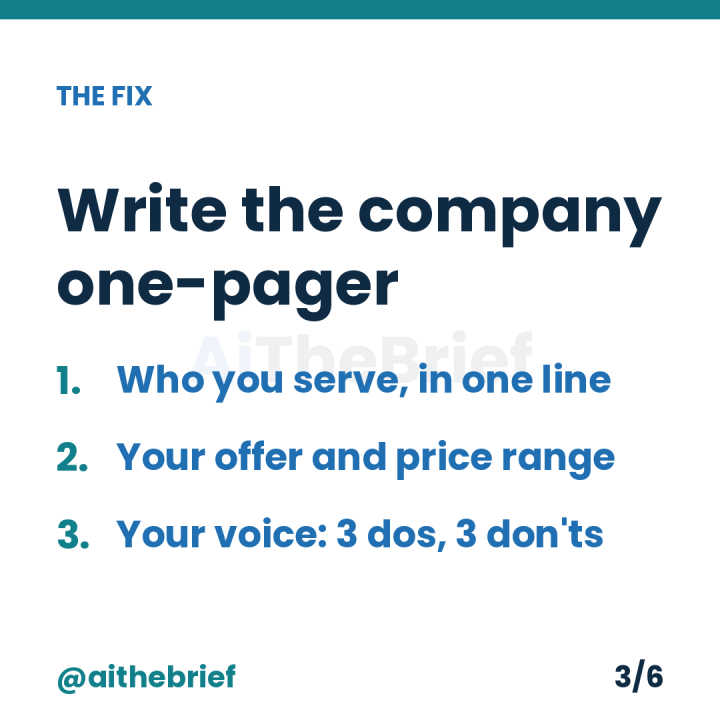
The practical move: write the company one-pager. Four short blocks, under 300 words total:
1. Who we serve — one line. "[Audience] who struggle with [problem] and want [outcome]." Specific beats flattering: "time-starved trades businesses under 10 staff" briefs better than "SMEs".
2. What we sell. Offers, rough price points, what's included, what's deliberately not. This stops AI inventing services you don't provide.
3. How we sound. Three dos, three don'ts. "Do: plain English, short sentences, concrete examples. Don't: hype words, exclamation marks, jargon."
4. Standing facts. The things you retype constantly — your process, your turnaround times, your guarantee, your one-line origin story.
Save it wherever you'll actually find it, then build the habit: one-pager first, question second. For tools with custom instructions or memory, install it once and it briefs every chat automatically.
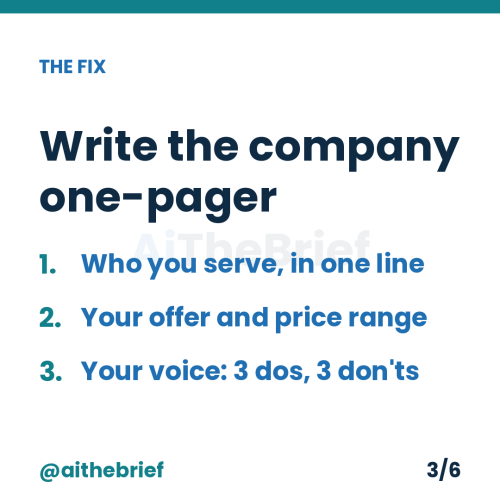
Slide from this week's carousel — the 20-minute write-up.
The responsible-AI note (vet → disclose → verify). The one-pager has a hard boundary, and it's the rule that makes the whole practice safe: context in, secrets out. Everything on the page should be information you'd happily put on your website — audience, offers, voice, public facts. Client names, contract terms, margins, logins, anything under NDA: never, because a context document gets pasted often and remembered by tools whose retention you don't fully control. Vet where the one-pager lives (training off, retention set), and re-read it quarterly so the tool isn't being briefed with last year's prices — a confidently outdated answer is its own kind of hallucination.
Where founders get this wrong. Writing an essay — past one page the model starts averaging your context away, and you'll stop pasting it anyway; brevity is compliance. Making it aspirational — brief the business you run, not the one you're manifesting, or every draft quietly overpromises. And treating it as done — the one-pager is a living document; each time you correct the same thing twice in outputs, that correction earns a line on the page.
What this looks like after a month. Drafts start sounding like you on the first pass, so editing time halves. The quality gap between your tools narrows — because the briefing, not the model, was the bottleneck. And you notice the compounding trick hiding inside the habit: every improvement you make to one page now improves every AI answer you'll get for the rest of the year.
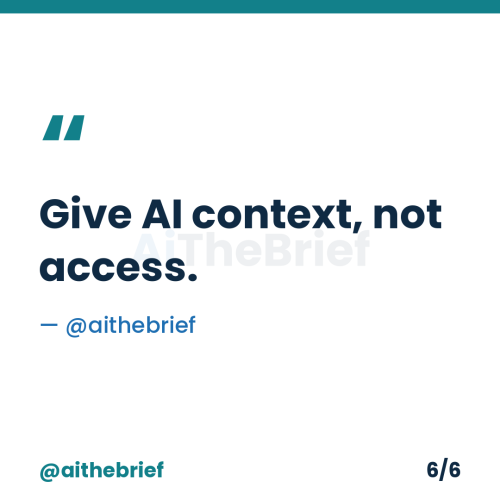
The rule that keeps the one-pager safe.
One decoded AI move, every week. Follow @aithebrief on Instagram for the daily version, or subscribe free on Substack for the deep one.