x




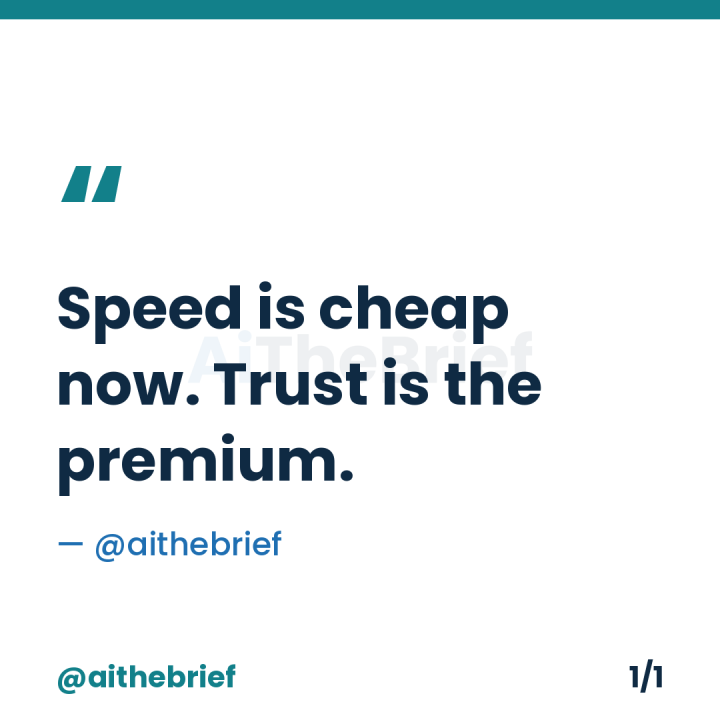 Everyone's fast now. That's the problem.
Watch what happens to any market when a quality becomes universal — it stops commanding a premium and starts being assumed. Nobody pays extra for a website that loads or an email that arrives. And from this year, nobody pays extra for fast. So the question that decides your pricing power is: what's still scarce?
The decoded idea: trust is the premium now, and it's structurally scarce — because it can't be generated, only earned and evidenced. When every deliverable might be thirty seconds of AI polish, buyers quietly re-rank what they'll pay for: numbers that have been verified against source. Methods that are disclosed rather than mysterious. Claims someone will personally stand behind when it matters. Work with a name on it that means something. The same AI wave that commoditised speed made its opposite — demonstrated care — more valuable than it's ever been. That's not nostalgia; it's supply and demand doing exactly what it always does.
The practical move: make your trust visible. Scarcity only prices in if buyers can see it. Three moves this week:
1. Add a verification line. Where you deliver numbers or research, say how they were checked: "figures verified against [source]". One sentence, enormous signal — almost nobody's sending it.
2. Disclose your method, on your terms. A plain line — "we use AI for drafting and research; every deliverable is reviewed, verified and signed off by us" — turns a question clients were quietly wondering about into evidence of professionalism. Say it before they ask; the disclosure is the differentiation.
3. Stand behind something concrete. A revision promise, a "we fix our errors free" line, a named person accountable. Skin in the game is the one thing a model can't offer.
Then let your prices reflect it. If your market's rate for "fast" is falling — it is — the answer isn't matching the discount; it's charging for the layer the discounters can't fake.
The responsible-AI note (vet → disclose → verify). This whole thesis only works if the trust is real, so the standard behind the claims is non-negotiable: vet the tools you build on, disclose where AI touches client work, verify every fact and figure before it ships. The moment a "verified" number turns out unchecked, the premium inverts — trust claimed but not kept prices below commodity, because now you're fast and doubted. Integrity isn't the constraint on this strategy; it's the product. (And as ever, where this touches your pricing decisions: not financial advice.)
Where founders get this wrong. Performing trust instead of building it — badges, buzzwords and "100% human" theatre read as marketing; a verification line only works because it's checkable. Hiding the AI — clients increasingly assume it's there; discovered concealment costs more than disclosure ever would. And competing on speed anyway — winning a race to the bottom still leaves you at the bottom; the founders who thrive from here are the ones who stopped entering.
What this looks like after a month. Your proposals read differently — same speed as everyone, plus evidence of care nobody else is showing. A client forwards your disclosure line internally as a reason to choose you. And pricing conversations shift a degree: less "can you do it cheaper?", more "talk me through how you check things" — which is the sound of a buyer paying attention to the thing you actually sell now.
This week's Sunday card — the thesis in one image.
One decoded AI move, every week. Follow @aithebrief on Instagram for the daily version, or subscribe free on Substack for the deep one.