x




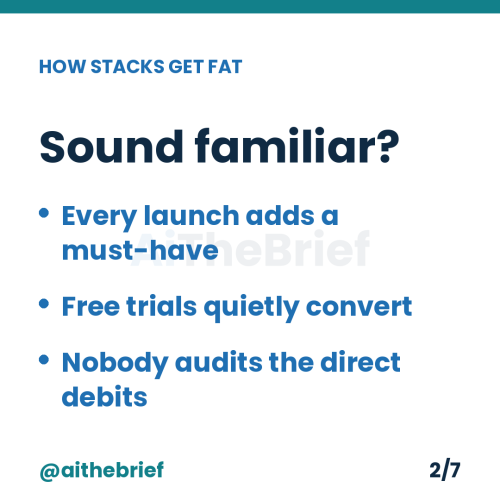
Somewhere in your bank statement is an AI tool you forgot you pay for.
You're not careless — you're normal. Eighteen months of weekly "game-changer" launches trained founders to add tools the way browsers accumulate tabs. But the market just turned a corner: the smart money has stopped stacking subscriptions and started squeezing the ones it has. Model prices keep falling, the newest releases ship in cheap-to-premium tiers, and the advantage has quietly moved from access to usage. Everyone can rent the same intelligence now. Not everyone runs it well.
The decoded idea: July is the perfect audit month — half a year of receipts behind you, half a year of margin ahead. One sitting, three moves: cancel, keep, compound.
Move one: the cull (15 minutes). List every AI subscription, then ask three questions per tool. Did it save time this month — not in theory, this month? Would you re-buy it today at full price? Does something you already pay for do the same job? Two or three noes and it goes. Cut the "someday" subscriptions, the two-tools-one-job duplicates, and the demos you loved once and never opened again. No guilt — a cancelled tool isn't a failed experiment, it's a completed one.
Move two: the score (10 minutes). For everything that survives, run the one-number test: minutes back per pound. Estimate the minutes each tool honestly saved you last month, divide by its cost, rank the stack. High scorers earn deeper use; low scorers get retrained or replaced; zeros join the cull. Two traps to dodge: novelty feels like saving but isn't, and the time you spend checking a tool's output counts against its score, not for it. Some value isn't minutes — fewer errors, calmer weeks — record it truthfully, but don't use vibes to rescue a tool the numbers condemn.
Move three: compound what's left. The savings aren't the prize; the focus is. Take the two or three tools that earned their place and go deeper instead of wider. Open the settings page nobody opens: custom instructions that state who you are, who you serve and how you sound, so every chat stops starting from zero. Match the model tier to the job — this month's launches make the middle tier genuinely capable, and paying flagship prices for email drafts is the new leaving-the-lights-on. And put a habit around each tool: the same weekly review, the same brief pasted first, the same verify step before anything ships. New models launch weekly; habits compound daily.
The responsible-AI note (vet → disclose → verify): an audit is also a security review. As you cull, check what each surviving tool can access and what it trains on — then close what you don't need. As you cancel, export and delete your data rather than abandoning it. And keep the scoring honest: if you can't verify a tool's claimed saving in your own week, it doesn't count. We recommend nothing we haven't tested or credibly sourced, and none of this is financial advice — it's an operating discipline.
Do this tonight: open your bank statement, list the AI line items, and ask the three questions of the first tool on the list. The whole review fits in one quiet hour — and it usually pays for itself before the direct debits do.
🔒 FOUNDING MEMBERS (paid bonus - subscribe above): the Stack Review Scoresheet (a filled one-page template that runs the cull and the minutes-per-pound ranking for you) + the 7 Saturday reset prompts, word for word.
Free readers: our vetted 10-tool shortlist is the TOOLS guide on Instagram this week — free instant PDF, tested, not sponsored.
Not financial advice.