x




Here's an uncomfortable exercise: open your homepage and pretend you've never met your business. Within five seconds, can a stranger tell who the page is for? Within ten, can they tell the ONE thing you want them to do? Most founder websites fail both — not because the writing is bad, but because the writer knows too much. You can't un-know your business, so you can't read your own page like a stranger.
The decoded idea: AI can. A model has no idea how hard you worked on that headline and no politeness about saying so. Pasted your homepage and asked the right three questions, it reads like the cold visitor you can never again be — and it does it in ten minutes, with no new tools and no agency invoice.
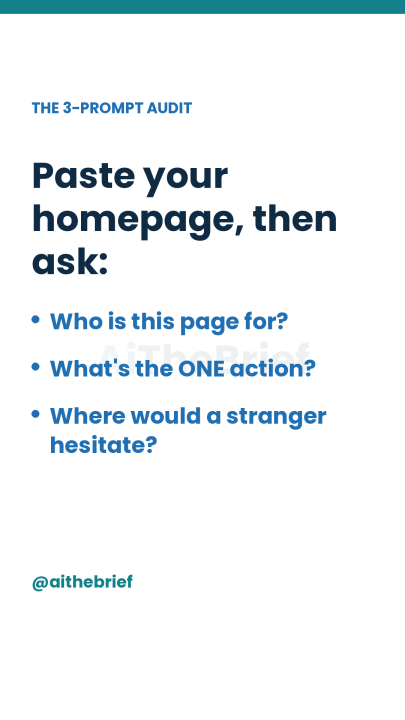
The practical move: the three-prompt audit. Copy your homepage text (just the words — headlines, subheads, buttons, body) into your AI tool and run these in order:
1. "Read this homepage as a first-time visitor. In one line: who is this page for, and how confident are you?"
2. "What is the ONE action this page wants me to take? If you can't tell, list the competing actions you see."
3. "Walk through the page top to bottom and mark every point where a sceptical stranger would hesitate, get confused, or stop reading — and say why."
The answers write your fix list. Then make the edits earn their place: rewrite the headline five ways and pick the one a stranger would understand fastest; cut every vague line (if a sentence could sit on any competitor's site, it isn't yours); and reduce the page to one primary action — a homepage asking for a call, a newsletter signup, a download and a follow is asking for nothing.
Read the result out loud once. If a sentence embarrasses you slightly, it's probably the honest one. Keep it.
From this week's video of the week — the full demo below.
The responsible-AI note (vet → disclose → verify). The audit is safe by design — homepage copy is already public — but the rewrite carries the risk. AI polish drifts toward confident claims: "the leading", "guaranteed", numbers that sound plausible but aren't yours. So before anything ships, run the trust check: every claim still true, every number verifiable, every promise one you'd defend on a bad day? And keep your voice in the final pass — the tool tightens; it shouldn't ventriloquise. A homepage that converts by overstating buys you customers you'll disappoint, which is the most expensive traffic there is.
Where founders get this wrong. Auditing everything at once — the homepage is the front door; fix it before touching the other nine pages, or you'll polish corridors nobody walks. Accepting the first rewrite — the model's initial suggestion is competent and bland; the five-headline drill exists because option four is usually the keeper. And skipping the stranger test after edits — re-run prompt three on the new copy; fixes have a habit of introducing their own hesitations.
What this looks like after a month. You'll ship a clearer page within the week — that's the visible win. The durable one is the habit: every piece of copy you write afterwards gets the stranger's read before it goes live, because the three prompts work on sales emails, service pages and proposals just as well. Ten minutes, once a month, and the front door stays clear while competitors' pages quietly silt up.
One decoded AI move, every week. Follow @aithebrief on Instagram for the daily version, or subscribe free on Substack for the deep one.