x



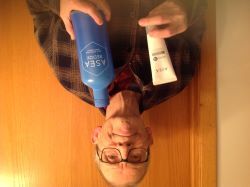
Some people say that they do not have any pain with Multiple Sclerosis. I can tell you that I have had pain all the time with my Multiple Sclerosis. The pain is not in the same place all the time but it is very pain full when it strikes. I have been on the same meds for a long time and the side effect of the medicne is rough. So my new neurologist Dr. is trying me on something new for a month. I can not take any of the new meds that have come on the market to treat MS because
I can not walk and have been in a wheelchair since 1989. I had very bad tremors and I gained weight and got up over 300 lbs. So back in April of 2007 I started a program and have lost over 110 lbs and have kept it off. You might not think that is good but remember I can not walk so the only exercise I can do is ride a stationary bike and I have worn out 12 of them. I try to do at least 30+ miles a day. That is jsut an update of my condition. I have to be watched very close these next few weeks and months to see how this new meds work. Because with MS it strikes a person differently so not all meds work the same.
So now I would like to share some articles I found on the subject of Treating Multiple Sclerosis Pain. Many options are available to treat pain in patients with multiple sclerosis. But the big question is will they help you manage your pain.
Anticonvulsant Drugs Offer Relief
For the most part, however, acute MS pain can't be effectively treated with aspirin, ibuprofen, or other common OTC pain reliever medications or treatments. "Since most MS pain originates in the central nervous system, it makes it a lot more difficult to control than joint or muscle pain," says Kathleen Hawker, MD, an assistant professor of neurology in the multiple sclerosis program at the University of Texas Southwestern Medical Center in Dallas (UTSW).
So what's the alternative? In many cases, the treatment of choice is one of a range of anticonvulsant medications, such as Neurontin and Tegretol. "The main thing that links them all up is that we're not quite sure how they work -- either for seizures or for pain," says Hawker. Since the FDA hasn't officially approved these anticonvulsants for the treatment of pain, they're all being used "off-label," but Neurontin, for example, is prescribed five times more often for pain than for seizures, says Hawker.
Recommended Related to Multiple Sclerosis
Multiple Sclerosis Medications
"In the vast majority of patients, these medications do work," says George Kraft, who directs the Multiple Sclerosis Rehabilitation, Research, and Training Center and the Western Multiple Sclerosis Center at the University of Washington in Seattle. "There's a problem, though, in that most of them can make people sleepy, groggy, or fatigued, and MS patients have a lot of fatigue anyway."
The good news:
Most pain in MS can be treated. There are more than half a dozen of these anticonvulsants, and they all have a slightly different mechanism of action and different side effects. The side effects of these drugs can also include low blood pressure, possible seizures, and dry mouth.
They can also cause some weight gain. "Some drugs are so similar to each other that if one drug in the class fails, another is unlikely to work," says Hawker. "That's not the case with these. Which one you use for which patient depends on the side effect profile."
Finding the right anticonvulsant is all about trial and error, says Bethoux. "We'll start them at the lowest possible dose of one medication and increase it until the person feels comfortable or until side effects aren't tolerable. If one medication doesn't work, we'll try another," he says. "It's a process that can take a long time, but it's the only way we have to do this."
New Frontiers in Treatment
Some patients, however, still haven't found the right drug and the right dosage to control their pain. "About 1% to 2% of patients have extremely refractory pain that's very hard to manage," says Kraft. MS experts are still looking for options to add to their treatment arsenal. One intriguing possibility: Botox. The anti-wrinkle injections popular with Park Avenue socialites have shown promise in helping to control some types of MS pain. Botox, which acts locally to temporarily paralyze a nerve or muscle, has been used for years at some multiple sclerosis clinics, including Hawker's, to manage spasticity and bladder problems. "Serendipitously, we found that it also seemed to have an effect on pain," she says. "It's far from being a known treatment for pain in MS at this point, but it's an exciting possibility." http://www.youtube.com/watch?v=mdIUqZ-2p18&feature=colike http://www.youtube.com/watch?v=SaqbQAVNLTo&feature=colike
UTSW, along with two other centers, will soon be launching a small study involving about 40 patients with MS to assess whether Botox can indeed relieve the stabbing pain of trigeminal neuralgia.
"There are no systemic side effects, only mild local facial weakness. The biggest drawback is that you can only inject it in a limited area, so even if we do find that it's effective against MS pain, Botox will certainly not replace any of the medications we currently have. But it may be used in very specific conditions like trigeminal neuralgia," Hawker says.
Kraft, meanwhile, has recently begun a study looking at a very different approach to MS pain: hypnosis. "It's well known that there is a 'gating' mechanism in the higher cognitive parts of the brain to let signals come through to the consciousness. There can be all kinds of mischief in the pain fibers in the spinal cord, but it has to get through to the cortex before it's painful," he says.
"With hypnosis, we hope to block or at least reduce the interpretation of that stimulus as a painful stimulus. It looks promising so far, and obviously it doesn't have the problem of medication side effects."
James Eckburg
Senior Health and Wellness Strategist
114 E. Franklin St.
Lanark, Illinois 61046
joeckburg@gmail.com