x






Under new proposals, ministerial intervention would be limited to projects where national security is at stake.

Researchers at Australian universities have previously criticized political interference in the grant-assessment process.Credit: Martin Berry/Alamy
Researchers in Australia have welcomed a proposal to limit government ministers’ power to veto the grant-awarding decisions of one of the country’s major research funders. Under these rules, a minister would be able to intervene only in rare cases that involve national-security concerns, and would need to justify the decision to Parliament.
“The proposed changes would create stronger guardrails to prevent future political interference in the awarding of grants,” said Misha Schubert, chief executive of Science & Technology Australia — an organization based in Canberra, representing more than 105,000 science and technology professionals — in a press statement.
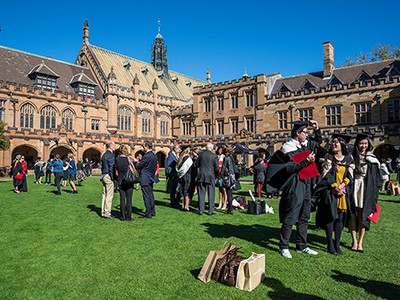
Australian researchers push to end politicians’ power to veto grants
The changes were recommended on 20 April as part of an independent review into the legislation underpinning the Australian Research Council (ARC) that began last October. Education minister Jason Clare appointed Margaret Sheil, vice-chancellor of Queensland University of Technology in Brisbane, Australia, and former chief executive of the ARC, to lead the review, following an earlier parliamentary inquiry into political interference in research funding.
That inquiry was sparked by outrage in the research community when the acting education minister Stuart Robert vetoed six ARC projects in December 2021. Sheil says that the review’s recommendations would prevent such political interference in individual grant decisions.
The proposals vetoed by Robert, all in the humanities, included two research projects on modern China, one on student climate activism and another on friendship in early English literature. Robert said that the projects — which typically receive between Aus$200,000 (US$135,000) and Aus$500,000 — did not represent value for taxpayers nor contribute to the national interest.
Andrea Witcomb, a historian at Deakin University in Geelong, Australia, welcomes the proposed changes. “This review is certainly making a strong recommendation to guard against that kind of behaviour,” she says.
After the ministerial veto, Witcomb co-authored an open letter decrying Robert’s intervention, which was signed by 141 members of the ARC’s college of experts, who review grant applications.
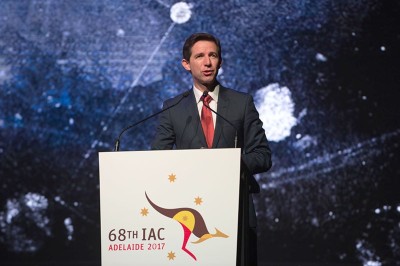
Australia plans ‘national-interest’ test for research grants
Restricting ministerial intervention to cases where there are national-security concerns “will provide certainty that research proposals will be assessed by experts on their scientific and research merits”, says Kylie Walker, chief executive of the Australian Academy of Technological Sciences and Engineering (ATSE), based in Melbourne.
The government must now decide whether to adopt the review’s recommendations. “Provided all the feedback to the minister is supportive, I suspect that he’ll be inclined to implement it,” says Sheil.
Sven Rogge, dean of science at the University of New South Wales in Sydney, says that the report is balanced and doesn’t make any unreasonable recommendations. “I’m very hopeful that this will be implemented,” he says.
“The government will consider the findings of the ARC report and respond in due course,” said Clare in a statement.
The ARC review also suggests ending a controversial research-evaluation scheme, known as Excellence in Research for Australia (ERA), which assesses university research across disciplines. The ARC conducted ERA assessments, in 2010, 2012, 2015 and 2018, but suspended the planned 2023 assessment last August.
Sheil says that the ERA assessments no longer serve their intended purpose of encouraging quality over quantity in Australian research. “It’s done its job,” she says, but the investment of time and effort for universities doesn’t match the outcome of the assessments, given that they are not tied to funding.
In its submission to the review, the University of Sydney said that participating in ERA assessments “consumes more than 40,000 hours of staff time and costs the University well in excess of $2 million in salaries alone”.
Witcomb says she breathed a sigh of relief at the recommendation to abandon the ERA. “Nobody has ever quite understood the purpose of it, because there’s never been any funding attached to it,” she says. It also fails to attract international students, who are more likely to rely on global university rankings, she adds.
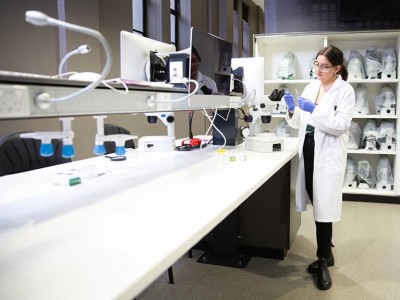
Early-career researchers in Australia are miserable at work
The review recommends further changes to ARC grant applications to save researchers’ time. Instead of the current system in which every applicant submits a full proposal, with most being unsuccessful, the application process should have two stages, the review suggests: an initial round of short, preliminary applications that are peer reviewed, and a second round in which a small number of applicants are invited to submit a full proposal. This change would reduce the burden on researchers and assessors, the report says, while allowing feedback so that unsuccessful applicants — at either stage — can re-apply in subsequent funding rounds.
“Shifting to a two-stage application would be a game changer for productivity, well-being and morale,” says Schubert.
The review also recommends affirming in the legislation the ARC’s commitment to funding basic research, and highlights the need for specific pathways that cater to Aboriginal and Torres Strait Islander people entering academia, as well as extra support for early-career researchers.
In a statement, the ARC’s chief executive, Judi Zielke, said: “While a response to the findings of the review is a matter for the Government, the report is a strong endorsement of the role and positive impact the ARC has had on Australia’s research capability over the last twenty years.”