x






Investigations into the impact of menopause on the brain have yielded a new way to treat troublesome symptoms without hormones.

Fezolinetant offers a way to treat hot flushes without relying on hormone therapy.Credit: SpeedKingsz/Shutterstock
US regulators have approved a first-of-its-kind drug to treat hot flushes — a symptom that affects as many as 80% of people going through menopause — by targeting the neural pathways that give rise to them.
The approval of fezolinetant (Veozah), announced on 12 May by the US Food and Drug Administration (FDA), provides a way to treat hot flushes without relying on hormone therapy. “A lot of us who work in women’s health are really excited,” says JoAnn Pinkerton, a gynaecologist at the University of Virginia Health System in Charlottesville. “Breakthroughs in women’s health are so uncommon.” (This article uses ‘women’ to describe people who experience menopause, while recognizing that not all people who identify as women go through menopause, and not all people who go through menopause identify as women.)
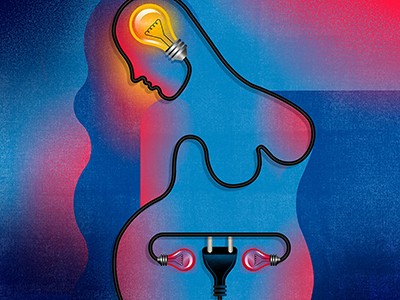
How menopause reshapes the brain
The transition to menopause is a natural process that typically occurs between the ages of 45 and 55, and culminates in the decline of estrogen production and end of menstruation.
That transition can bring a complex constellation of symptoms of varying intensity and duration — including fatigue, anxiety, headaches, and hot flushes, among others. Hot flushes are the most common symptom, and can feel as though a wave of heat has suddenly hit the upper body, leaving women feeling hot, flushed, and sweaty. Some people also feel light-headed and experience heart palpitations.
When hot flushes strike during the day, they can interfere with work, sex, exercise and socializing. At night, hot flushes can cause sleep disruptions that, over time, wreak havoc on a woman’s health. “Hot flashes are not just a nuisance,” says Pinkerton. “This has a profound effect on women’s lives.”
Researchers in the United States have found that hot flushes tend to be more frequent and more severe in Black women compared with white women1.
For decades the most effective treatment for hot flushes has been hormone replacement therapy, which replaces estrogen, and sometimes other hormones, as their natural production slows down. But this isn’t an option for many women, particularly if they have a history of stroke, migraines, or certain breast cancers.
In the 1990s, neuropathologist Naomi Rance at the University of Arizona in Tucson found a group of brain cells that were larger in the brains of post-menopausal women than in those of pre-menopausal women. Rance went on to find that these cells — called KNDy neurons — respond to a molecule called neurokinin B, and that blocking the receptor that allows those neurons to perceive neurokinin B can block symptoms akin to hot flushes in rats.

Women’s health research lacks funding — these charts show how
Later clinical studies showed that a similar pathway was at work in women’s brains. Fezolinetant, which is produced by Tokyo-based Astellas Pharma, works by blocking a protein called neurokinin-3 receptor, which mediates the heat dissipation responses to neurokinin B.
Clinical trials of fezolinetant showed that it can significantly reduce hot flush frequency by about 60% in women experiencing moderate or severe hot flushes each week, compared to a 45% reduction in those who received a placebo2. Participants also reported that the drug reduced the severity of their hot flushes and improved the quality of their sleep.
However, for most women fezolinetant does not entirely eradicate the flushes. Pinkerton is testing a similar drug, which blocks the receptors for both neurokinin 3 and a related molecule called neurokinin 1, which might also improve mood and sleep quality.
At the University of California in Los Angeles, neuroendocrinologist Stephanie Correa is studying how temperature is regulated in rodents, in hopes of designing additional therapies. “Temperature is regulated by a circuit in the brain that has many connections,” she says. “And fezolinetant really focuses in on one of those connections.”
But tracking down those connections is a challenge because much of the research into the basic biology of temperature regulation has historically been performed in male rodents, she notes. How those results will translate to people — and particularly to women — is still an open question.

Why menopause matters in the academic workplace
In the meantime, even partial relief from hot flushes is a significant advance, Correa says. Some of the pivotal clinical trials of fezolinetant were carried out during the height of the COVID-19 pandemic, says Marci English, vice president of biopharma development at Astellas. At first, the company thought trial investigators might struggle, as many others did, to enrol participants at a time when many were staying at home and shying away from healthcare settings.
But demand for a potential therapy remained high. “We had study-site investigators telling us, ‘Oh no, you don’t understand. Everyone still wants to come and participate in this study’,” English says. “It was remarkable.”