x






published 1 day ago
Scientists are taking a closer look at the afterglow left by the brightest gamma-ray burst ever recorded, and what they see doesn't fit with any theoretical models.
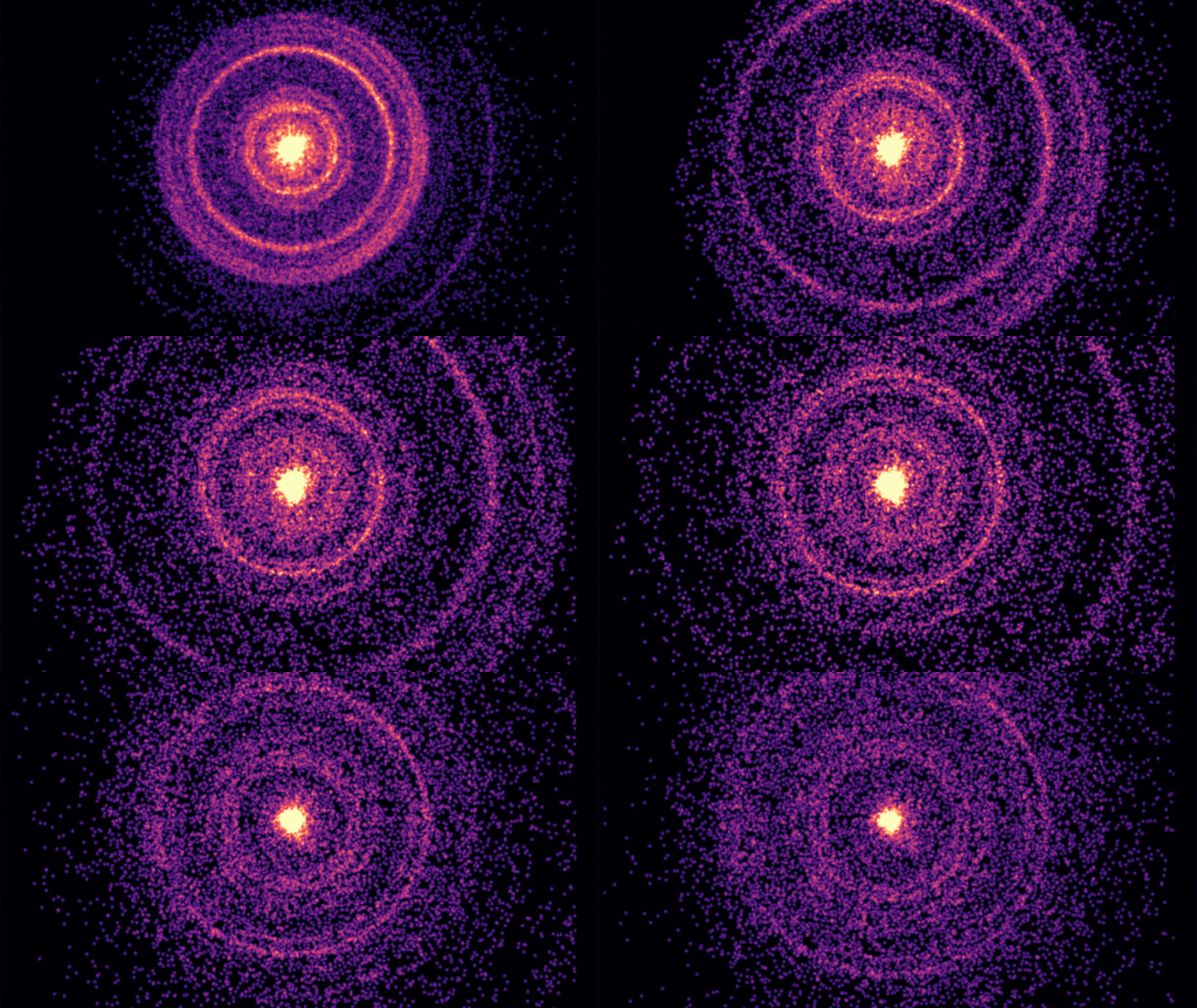
A time-lapse animation made with NASA's Neil Gehrels Swift Observatory shows the brightest gamma-ray burst ever recorded as it evolved over 12 days in October 2022. (Image credit: NASA/Swift/A. Beardmore (University of Leicester ))
The brightest gamma-ray burst ever detected is revealing new mysteries as scientists study it in greater detail.
In two new papers – one published today in The Astrophysical Journal Letters(opens in new tab), and another published on the preprint server arXiv(opens in new tab) and submitted for publication in the journal Nature Astronomy – astronomers found that the evolution of the radio waves released by an enormous stellar explosion seen in 2022 was slower than models predicted, raising questions about how the release of energy evolves during ultra-powerful gamma-ray bursts.
"[I]t is very difficult for existing models to replicate the slow evolution of the energy peaks that we observed," James Leung(opens in new tab), a doctoral student at the University of Sydney who co-authored the Nature Astronomy paper, said in a statement. "This means we have to refine and develop new theoretical models to understand these most extreme explosions in the Universe.