x






Ex-Harvard researcher was among the first academics tried under the now-defunct US China Initiative.

Nanoscience pioneer Charles Lieber received a lighter sentence than the US government requested.Credit: Michael Dwyer/AP/Shutterstock
Charles Lieber, a prominent chemist convicted of hiding his research ties to China, will not serve any more prison time, a federal judge has ruled.
On 26 April, Massachusetts district judge Rya Zobel sentenced Lieber, formerly at Harvard University in Cambridge, Massachusetts, to time already served — which amounted to two days of incarceration — plus two years of supervised release. He will spend the first six months of that release confined to his home. Lieber was also ordered to pay a US$50,000 fine, as well as $34,000 to the Internal Revenue Service (IRS), which he has already submitted.
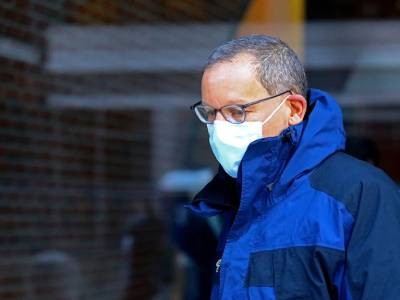
What Charles Lieber’s conviction means for science
Marc Mukasey, Lieber’s lawyer, told Nature in a statement, “We are grateful for the outcome.”
Lieber was found guilty by a jury in December 2021 on six counts of making false statements to federal agents, filing false tax returns and failing to disclose a foreign bank account in China. He told investigators that he was not associated with a Chinese recruitment programme — the Thousand Talents Plan — when in fact he was selected to lead a laboratory at the Wuhan University of Technology (WUT) in China. Participating in a foreign talent-recruitment programme is not illegal, but lying to federal agents about it is.
Between 2012 and 2017, Lieber was paid around $200,000 for his work at the WUT — income that he illegally hid from the IRS, according to the court ruling. At the same time, he led a research team that received millions of US dollars in federal grants from agencies including the US Department of Defense and the National Institutes of Health.
Lieber, who was arrested in January 2020, was one of the first academic researchers tried under the US Department of Justice’s now-defunct China Initiative — a government programme launched in 2018 to safeguard US labs and businesses from espionage. He was one of the few scientists not of Chinese heritage to be charged under the initiative, although his was one of the most-watched cases, given his stature in the research community. Lieber’s lab had developed injectable brain implants, and he won the Wolf Prize in Chemistry in 2012, which some consider a precursor to the Nobel prize.
The US government asked the judge to sentence Lieber to 90 days in prison, with one year of supervised release and a $150,000 fine. Lieber’s legal team requested no prison time, citing his ill health. Lieber, aged 64, has follicular lymphoma, a blood cancer for which there is no cure. In Lieber’s sentencing memorandum, his lawyers stated that for the past three years, the chemist has been mostly confined to his home and to hospitals. After 30 years at Harvard University, including as the chair of its chemistry department, Lieber retired in March, according to student newspaper The Harvard Crimson.
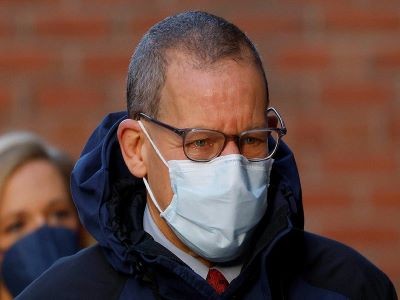
Harvard chemist on trial: a guide to the Charles Lieber case
Former colleagues and students wrote letters of support for Lieber that were submitted in his sentencing memorandum. Daniel Kahne, who researches antibiotic resistance at Harvard, said Lieber put huge effort into supporting and nurturing his students. Another Harvard colleague, Adam Cohen, who develops tools to study electrical signaling in the nervous system, wrote that although Lieber was a widely recognized, brilliant scientist he was also modest.
Frank Wu, a legal specialist on the China Initiative and president of Queens College, City University of New York, told Nature that Lieber’s sentencing is significant and that it will influence similar cases.
“Everyone who cares about the China Initiative should care about this specific case,” he wrote in a statement to Nature.
Wu adds that Lieber’s sentence is consistent with the outcome of other China Initiative cases and similar prosecutions in which judges of all backgrounds have shown scepticism about the US government’s efforts to hold researchers accountable for hiding their ties to China.
Jenny Lee, a social scientist who studies research collaborations at the University of Arizona in Tucson says that the sentence is fair. “Dr Lieber already paid a huge cost in his damaged professional reputation. He was made an example of to the broader scientific community about undisclosed ties with China.”