x






Grassroots initiatives aim to make the discipline more inclusive of researchers from under-represented communities.

Vashan Wright co-founded a programme to improve equity in the geosciences.Credit: Koobakile Kgosiemang
The broad fields of Earth- and geosciences continue to be the least diverse in academic science research. However, the lack of diversity can, in part, be explained by hostile and exclusionary behaviour, according to a February survey by the ADVANCEGeo Partnership, a network of societies that aims to improve workplace conditions in the Earth sciences (E. Marín-Spiotta et al. Earths Future 11, e2022EF002912; 2023). Racism, sexism and ableism continue to be problems in both education and workplace environments. For example, the number of people of colour receiving a PhD in geosciences in the United States has not risen much beyond about 10% in the past 46 years.
During 2019, US-based geoscientists distributed the workplace-climate survey to more than 2,100 members of 5 Earth- and space-science organizations. They found that, whereas most participants experienced positive behaviours, those in historically excluded groups were exposed mainly to negative behaviours. The authors concluded that deeply entrenched historical biases in these workplaces had led to the ongoing patterns of exclusionary conduct, which contributes to the loss of diverse talent.

Collection: Diversity and scientific careers
People of colour, women, scientists with disabilities, non-binary and lesbian, gay, bisexual, queer, pansexual and asexual (LGBQPA+) scientists experienced interpersonal mistreatment, devaluation of work, discriminatory language and sexual harassment more frequently than did people not identifying as part of those groups. Of the 14% who experienced sexual harassment, the vast majority were from historically excluded groups.
More than one-third of those surveyed — notably, half of Black respondents – considered leaving their institution or making a career change. “This is a snapshot. It shows a lot of people leaving disciplines, but the survey doesn’t capture those who already left,” says study co-author Erika Marín-Spiotta, a biogeochemist at the University of Wisconsin– Madison. In recent years, university departments, federal granting agencies and other US institutions have invested tens of millions of dollars in efforts to improve workplace climates throughout the geosciences. Nature spoke to five researchers spearheading programmes that they hope will make geosciences a more welcoming space.
Geophysicist at the University of California, San Diego’s Scripps Institution of Oceanography in La Jolla.
I noticed many people starting book clubs to discuss racism and explore actions that they could take after the 2020 murder of George Floyd, a Black man killed by a police officer in Minneapolis, Minnesota. Unconvinced that a typical book club would be effective at the scale needed to effect change, I contemplated what would have to be done to assemble the national leadership necessary to make policy-level changes. The US National Science Foundation (NSF) funded my proposal to start an international book club that would go beyond reading books to meaningfully centre the voices of geoscientists of colour and explore ways to dismantle the structural barriers that prevent their full participation in the field.
My colleagues and I founded Unlearning Racism in Geoscience (URGE) as a guided effort, across a range of participating institutions, to update the policies that control access to hiring and admissions, the resources available to people of colour and how department demographic data are tracked and made accessible. To do that, URGE invited geoscientists to form participating groups, or pods, associated with an organization or academic unit. Almost 4,000 participants formed pods at 310 university departments, federal agencies and even in industry. The pods discussed a range of journal articles, heard oral presentations of lived experiences and discussed codes of behavioural conduct in advance of drafting anti-racist policies that they plan to adopt at their institutions. Whereas several pods have already instituted their changes, others are still reviewing them.
US geoscience programmes drop controversial admissions test
Some of the policy changes involved removing or lowering graduate admission fees and requirements for high test-scores, which can be barriers to diversity. Others included providing a directory of self-care and mental-health resources for people of colour, adding pronouns to e-mail signatures or on social media and acknowledging stolen Indigenous lands in papers and presentations.
It takes time to do this type of networked, interactive discussion well. It’s important to continually centre people of colour, without worrying about how white people will respond. It’s also important to encourage and invite a wide range of people to share their ideas. I was particularly impressed by the fascinating ideas that early-career researchers brought to the table. For example, at a summit planning an URGE conference, they expressed interest in encouraging presenters to share art, music or dance, so that attendees could bring their whole selves, including their full cultural context, to a conference.
Biogeochemist at the University of Wisconsin–Madison and lead principal investigator of the ADVANCEGeo Partnership.
Our first NSF ADVANCEGeo Partnership grant was funded in 2017 to provide workshops on identifying sexual harassment and on creating, implementing and enforcing ethical codes of conduct. We quickly realized that we would need to address other behaviours as well. Sexual harassment doesn’t happen in a vacuum. Places that allow other harmful behaviours to happen — even if not illegal — can also cause a great deal of damage to workers. When we started offering workshops, we thought we’d deliver around ten. Already, we’ve conducted more than 200 at scientific conferences and university departments. Participants learn to identify sexual harassment and related bullying and microaggressions, and about the health and economic impacts of tolerating them. They are then guided through real-world scenarios to identify and address harms, and explore actions that can be done ahead of time to reduce them.
We are training more people, and have produced a website of resources for academics who want to address these issues. In 2022, we received our second ADVANCEGeo grant, of US$1.2 million, to address broader forms of identity-based harassment, bullying and microaggressions. Expanding the workshops’ scope helped us to connect with wider audiences. For example, men became more interested because they can recognize when people are being bullied.
What’s become clear is that a three-hour, standalone workshop isn’t going to solve the problem. Departments want more. We can’t prevent every exclusionary behaviour, but we can give people the tools to reduce the harm caused when they do happen.
We’re trying to focus on the systems and structures that allow these kinds of behaviour to persist. Places of higher education are competitive. There is a mindset of “if you win, I lose”. As a result, our system doesn’t incentivize treating each other well. In fact, it can be penalizing. It feels silly saying this, but we have to work out how to reward being respectful of each other.
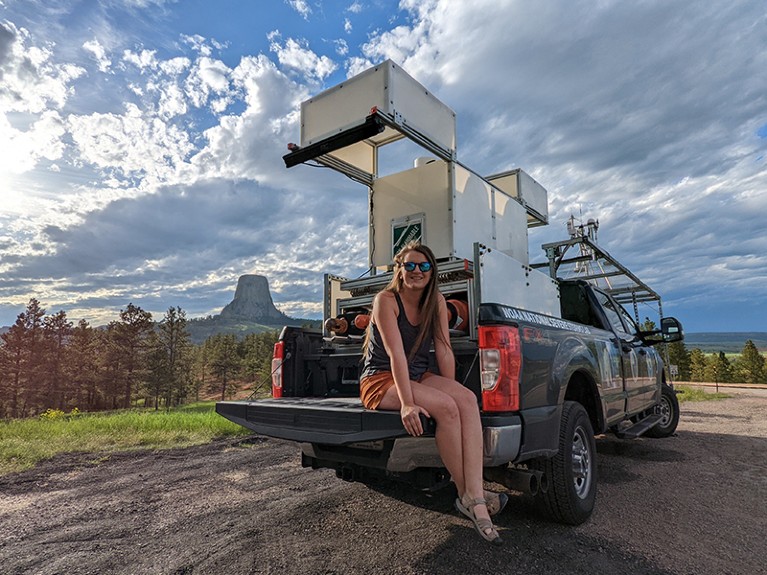
Elizabeth Smith is working to improve accessibility for people conducting fieldwork.Credit: Tyler Bell/OU CIWRO/NOAA/NSSL
Research meteorologist at the National Oceanic and Atmospheric Administration’s National Severe Storms Laboratory in Norman, Oklahoma.
Over the past few years, I have led a series of sessions to collaboratively update the US National Weather Center protocol, including the rules that make fieldwork physically safe. We are now building on that to make fieldwork more accessible for people from different backgrounds. The centre’s building, in Norman, Oklahoma, houses both the National Severe Storms Laboratory, where I work, and the University of Oklahoma School of Meteorology. As a result, we can have a variety of people out in the field together — from first-year university students to senior government-agency scientists. The sessions are now more of a two-way conversation than a sterile one-sided training course that people sit through, often begrudgingly. As a result, people are more engaged. For example, our high-level static field protocol document now includes team-created standards for behaviour, as well as the consequences for engaging in unacceptable actions. The team took ownership as we built this for ourselves.
In 2022, I noticed that student volunteers at the centre were from much more diverse backgrounds than in previous years. For example, the university received an NSF supplement for a hearing-impaired student who needed a sign-language interpreter for multiple weeks in the field. It was great to foster this level of accessibility in the field, which is uncommon.
As a federal agency, the US National Oceanic and Atmospheric Administration, is also actively working on building formal training requirements for fieldwork, which most often takes place, for example, on its research ships and aircraft. Some of our work has informed its effort.
Overall, we’ve had a positive response to this participatory approach, even though discussions can get uncomfortable. As part of the training, we conduct a survey asking, among other things: have you experienced harassment? Have you witnessed harassment? The numbers match the statistics we see in the literature: 20–30% of employees have witnessed harassment. Session attendees are always surprised to see that. They think that these behaviours must only be happening elsewhere. It’s eye-opening to see it is in your own workplace.
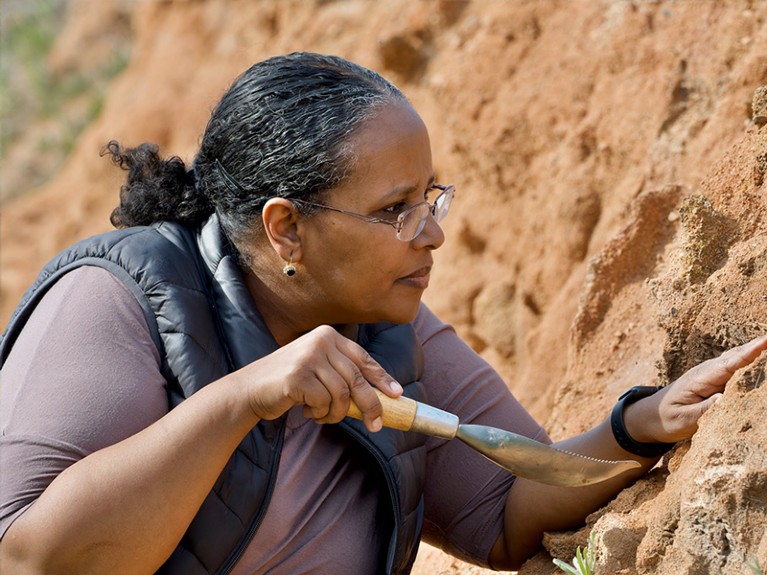
Asmeret Asefaw Berhe has designed programmes to encourage disadvantaged researchers.Credit: Teamrat A. Ghezzehei
Director of the Office of Science for the US Department of Energy in Washington DC.
The US Department of Energy (DOE) is a large funding organization that supports 10 national labs, 28 user facilities and around 300 universities. Our efforts to create a vibrant scientific workforce start by making science more equitable and inclusive. We designed granting programmes to ensure that we are paying attention to groups of people who have been disproportionately disadvantaged in science, technology, engineering and mathematics (STEM) or who historically have received very little of our publicly funded resources.
We have three new programmes to further improve inclusivity and equity. The Reaching a New Energy Workforce training programme, or RENEW, is designed to attract communities that have been historically under-represented or minoritized. We partner with emerging research institutions, including historically Black colleges and universities (HBCUs), other minority-serving institutions, as well as smaller, rural higher-education institutions. In the first year of the RENEW initiative, we gave out 41 awards totalling US$32 million to 37 institutions, including 24 minority-serving ones. The focus is on building lasting partnerships between these institutions and the DOE’s national labs.
Funding for Accelerated Inclusive Research (FAIR) is an initiative that will expand collaborations between emerging institutions, minority-serving organizations and DOE labs and facilities to build research capacity for further DOE missions. Both RENEW and FAIR aim to increase the diversity of research groups and institutions. The third prong, Promoting Inclusive Equitable Research (PIER), requires all DOE grant applicants to submit a PIER plan, outlining, for example, how they will recruit and include individuals from diverse backgrounds, cultivate a safe, respectful work environment and provide equitable access to professional-development opportunities, as part of their proposal.
After holding a series of listening sessions, we raised the DOE Office of Science graduate-student compensation to $45,000 — and we encourage the same from all recipients paid through Office of Science funding. We made the change because if we want an engaged, vibrant scientific workforce, we have to pay people a living wage. In addition, we expanded the eligibility for early-career award proposals, from 10 years to 12 for untenured professors. It was a conscious effort to acknowledge the career impacts of the COVID-19 pandemic. So, either we stand by and watch some people miss their chance to receive these potentially career-altering awards, or we can expand that opportunity for them. Removing barriers that prevent early-career researchers from moving forward in STEM can go a long way.
Geoscientist at the University of Washington in Seattle.
At some point, geology students get out of the classroom to look at rocks in the field. Often, that involves a lot of driving, overnight travel, camping or hiking — and frequently in unfamiliar or uncomfortable outdoor conditions. In recent years, there’s been a community recognition that these field excursions are not always accessible for individuals with physical disabilities, but that is also the case for people without previous outdoor experience or who don’t have the gear to be comfortable in the field.
What Black scientists want from colleagues and their institutions
At the same time, the technology used to turn photographs into accurate, measurable 3D models has become more advanced, as have digital tools for video-game development. As a result, my lab group — notably PhD student Max Needle — created a virtual field-trip experience. The first one was based on exposed folds of bedrock near Shamokin, Pennsylvania, informally called the Whaleback anticline. It’s possible to build high-resolution digital models of landforms and outcrops for research purposes, and it’s also an opportunity to make field representations that students can explore and measure digitally. Max recognized that video-game interfaces would allow students to traverse this particular site in the world. There’s even a jet-pack mode to collect information from locations that would be impossible to access in real life.
We’re not the only ones creating these resources. Groups at the University of Milano-Biccoca in Milan, Italy, have produced similar tools that enable students to interact with digital rock formations, and colleagues at the University of Aberdeen, UK, created eRock, an open-source repository of virtual 3D rock formations from around the world.
One reason geology is not very diverse is this stereotype of rugged geologists who climb mountains. That is unappealing and intimidating to a lot of people. In our department, we are changing the nature of our capstone project requirements, including alternative tracks that emphasize lab science — an increasingly important element of our discipline. Digital field trips are part of a larger cultural shift to illuminate the many paths into geosciences — which do not always require going to remote mountains — to hopefully attract a wider range of prospective students.