x






Clearly communicating baselines for assessing ocean warming is essential for understanding extreme events and how they will affect marine ecosystems and livelihoods in the future.
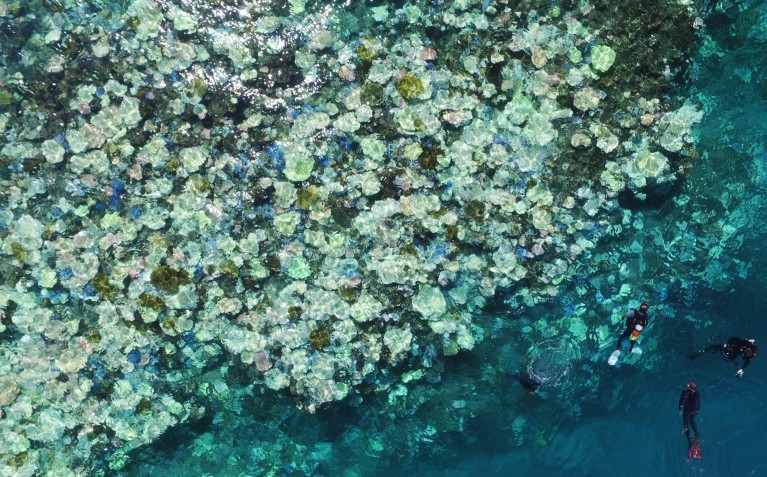
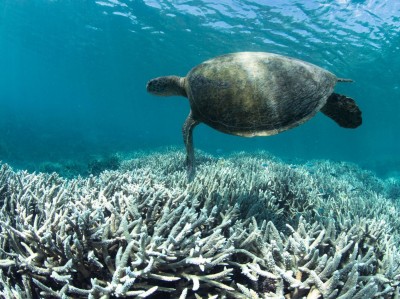
Coral bleaching is developing in Japan’s largest coral reef, Sekiseishoko, which lies between Ishigaki and Iriomote islands. Credit: BJ Warnick/Kyodo/Newscom/Alamy
Marine heatwaves devastate ecosystems and the coastal communities that rely on them. Weeks, months or years of unusually warm waters can bleach corals, spur harmful algal blooms and wipe out seaweeds. They might kill or strand marine animals and disrupt food webs and fisheries1. Billions of US dollars are lost to such events around the world each year2.
For example, in 2013, an area of water in the northeast Pacific Ocean more than three times the size of Texas, known as The Blob, warmed by nearly 3°C. Over 18 months, these warm waters spread across the entire west coast of North America, from the Gulf of Alaska to the tip of the Baja Peninsula in Mexico. Seabirds starved and stocks of Pacific cod collapsed. Tuna moved north, as far as Alaska. Humpback whales drawn towards the coast became entangled in fishing nets. Mysterious creatures, such as glowing tropical sea pickles, or pyrosomes, arrived in northern waters.
Ocean scientists are striving to better understand such phenomena, and whether climate change is making marine heatwaves more frequent and more intense. But right now the field has a problem: the definitions and communications describing what a marine heatwave is are confusing.

Five priorities for a sustainable ocean economy
This is because scientists and the media use the term ‘marine heatwave’ to refer to two different things: extreme conditions compared with historical temperatures, and extreme conditions compared with an evolving ‘new normal’ of rising temperatures owing to climate change. The difference matters. Each definition leads to different estimates of the properties and trends of future marine heatwaves. Coastal communities need to understand what is unfolding if they are to adapt.
Because the precise meaning remains unclear, miscommunication and misunderstanding are rife. Duelling definitions mean that headlines such as ‘marine heatwaves are getting more frequent’ and ‘marine heatwaves are not getting more frequent’ can be simultaneously true, for reasons that are not obvious to the public. This breakdown in communication is having real-world consequences for decision makers tasked with managing oceans in the coming decades.
Here we — the members of the US National Oceanic and Atmospheric Administration (NOAA) Marine Ecosystem Task Force — propose how to define basic terms to clarify what kinds of ocean warming the world has in store. (See Supplementary information for a list of co-signatories.)
At its simplest, a marine heatwave is a period of extreme ocean temperatures. These anomalies can grow and fade rapidly over a few days or weeks, or slowly over months or years. Temperatures are considered extreme if they exceed a threshold (often the 90th percentile, or 90% of expected fluctuations) above ‘normal’ temperatures for that region and season. The question is, what is ‘normal’?
In one definition of marine heatwaves, ‘normal’ refers to typical variations in water temperature for a given area and time of year, based on a set period in the past (often spanning 30 years or more). This makes sense in many ways. But, this fixed baseline approach doesn’t take into account that oceans are getting warmer over time because of climate change. Ocean surface waters have warmed at an average rate of 0.06 °C per decade since pre-industrial times, compared with 0.1 °C per decade for surface air temperature over land; both rates are rising3. Using the fixed baseline definition, over the coming decades, we would see ever-more-frequent and more intense marine heatwaves until the oceans warm so much that they reach a ‘perpetual heatwave’ state (see ‘Marine heatwaves: duelling definitions’).
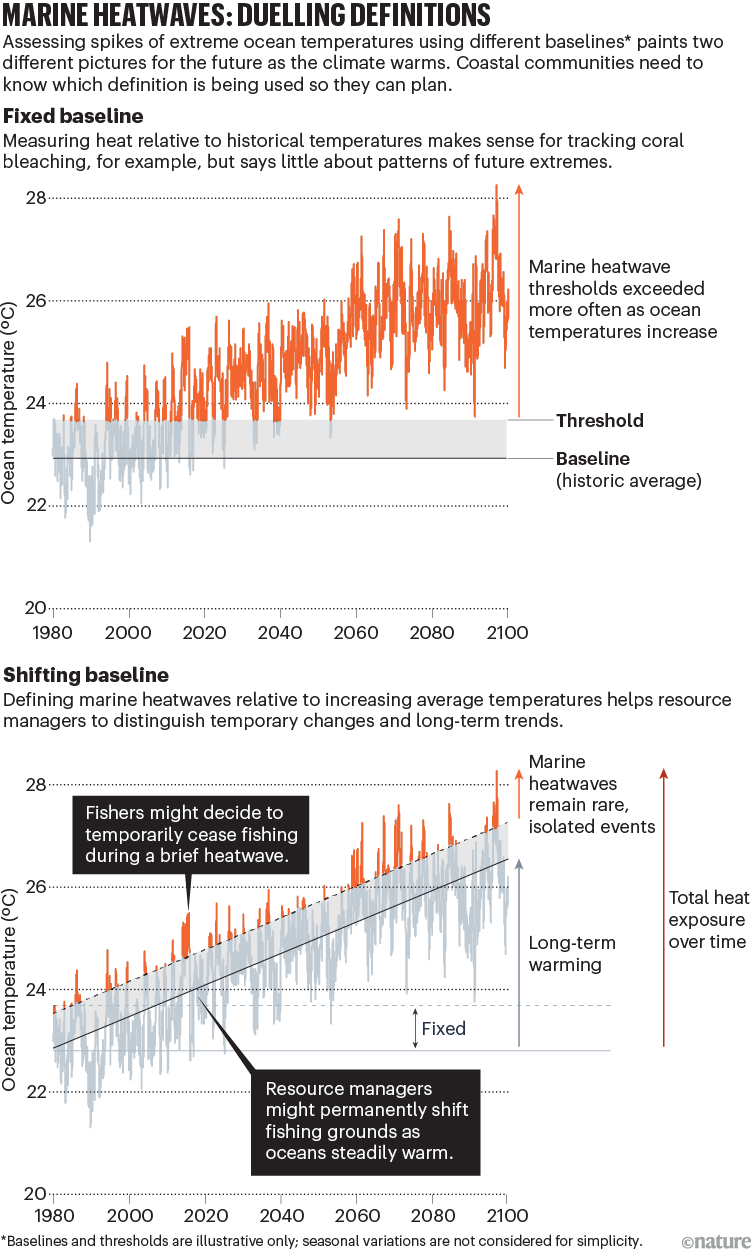
Source: Source: J. E. Kay et al. Bull. Am. Meteorol. Soc. 96, 1333–1349 (2015)
The second definition uses a shifting baseline of ‘normal’ conditions for any given patch of ocean. In other words, it accounts for long-term ocean warming separately and effectively subtracts that from the total. From this perspective, in the future, ocean temperature anomalies would have to be much warmer than those derived from a fixed historic baseline to qualify as a marine heatwave. That might seem unfair. But this definition retains the idea that a heatwave should be an exceptional event in time and space — a central tenet of the original, qualitative definition of marine heatwaves proposed in 20164.

Sustainable small-scale fisheries can help people and the planet
Each definition results in different interpretations of frequency, intensity, duration and spatial extent of marine heatwaves. For example, one prominent 2019 study using a fixed baseline approach predicted that large swaths of the world’s oceans would be warmer than the fixed historical threshold for heatwaves by 21005. The shifting baseline approach, however, predicts more-subtle changes in marine heatwave intensity and frequency by 2100 and only for certain regions, such as the northeast Pacific6. The exact values depend on the models used.
Clear messaging about the nature of ocean temperature change over short and long timescales is crucial, so that time and resources are appropriately allocated. Resource managers, industries and coastal communities have different options for dealing with slow, steady warming versus rapid, temporary temperature change. For example, the fishing industry might apply emergency strategies, such as temporarily ceasing fishing, to cope with short-term disruptions. Adapting to long-term warming might instead require shifting to other fishing grounds or target species and obtaining new permits and gear7.
However, the messaging is currently far from clear. For example, the US 2022 State of the Ecosystem (SOE)8 report for New England coastal waters, which used a fixed baseline definition, reported that the Gulf of Maine experienced marine heatwaves for more than 80% of the year in 2021. In recent decades these waters have experienced some of the strongest warming trends on the planet, at more than 0.3 °C per decade9.
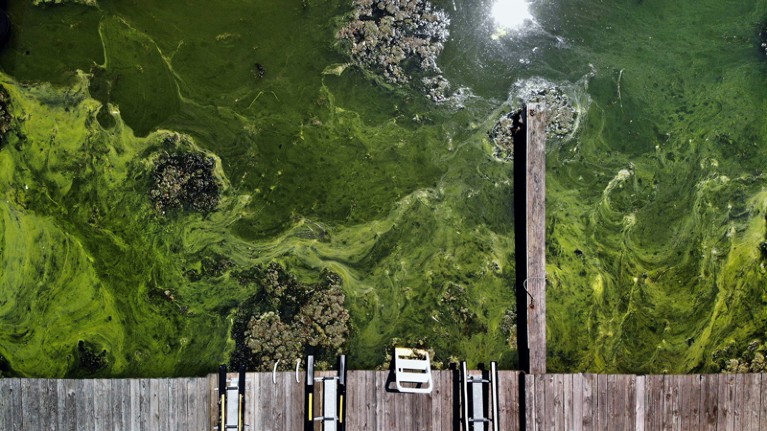
In 2019, a harmful algal bloom developed on Lake Hopatcong in New Jersey.Credit: Rick Loomis/New York Times/Redux/eyevine
Without that context, however, a marine-resource manager equipped with only the 2022 SOE report could justifiably assume that rapid-fire high-heat events separated by short spurts of ‘normal’ now dominate the Gulf of Maine, and begin to adjust their decision-making accordingly. In reality, however, this fixed-baseline statistic does not distinguish whether this region is experiencing more frequent episodic temperature extremes on top of the long-term warming.
The US team that leads the annual SOE report issued by the NOAA Northeast Fisheries Science Center has recognized this issue and, starting with the 2023 SOE report, it will detail marine heatwaves using the shifting baseline approach. Temperature changes relative to a fixed baseline will also be reported, but those excursions will not be described as marine heatwaves.
Both the fixed and shifting baseline methods have merits, and some scientists suggest that the choice of which one to use should be tailored to the application of interest10. For example, the fixed baseline approach might suit some studies of marine-organism physiology5. Many species, such as corals, are severely affected when water temperature reaches a specific threshold.

UN high seas treaty is a landmark – but science needs to fill the gap
Similarly, on land, researchers often judge atmospheric heatwaves relative to fixed historical baselines. Human-health impacts due to extreme heat are also linked to temperature thresholds, and infrastructure (such as houses, air-conditioning units and highways) is designed to tolerate certain temperature ranges. The chance of hitting a ‘perpetual heatwave state’ against a fixed baseline is much smaller on land than at sea, because the temperature anomalies are larger11. On land, where surfaces gain and lose heat more rapidly than the ocean, heatwaves tend to be about 5 °C warmer than usual temperatures, much larger than the trend due to climate change, compared with about 1–2 °C for marine heatwaves.
But there are also problems with the fixed baseline approach when it comes to marine heatwaves. Suggesting that these events will become more extreme and frequent in the future implies that ecological impacts will also become more intense, frequent and widespread. This is unlikely to always be true.
The relatively slow march of global warming and the more rapid shock of an intense marine heatwave will elicit different physiological and behavioural responses from many marine species12. For example, those with short life cycles, such as market squid (Doryteuthis opalescens) or sardine species, might have some capacity to adapt to a slow temperature increase but not necessarily to rapid heat shock. By contrast, some corals might recover from acute temperature impacts but not chronic heat exposure.
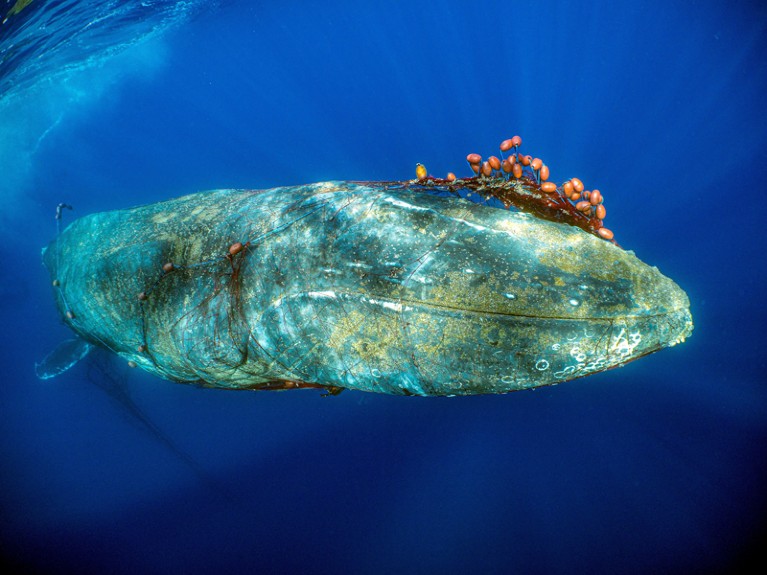
A humpback whale caught in a fishing net in Mallorca, Spain.Credit: Cordon Press/Alamy
The ways in which marine life moves around the ocean will also differ in response to different types of warming13. Some species of fish caught for commercial fishing can shift location rapidly in response to temporary bouts of warming. For example, Pacific bluefin tuna (Thunnus orientalis) off the coast of California moved 1,000 kilometres north in response to The Blob in 2013–15. It is unclear, however, whether such sudden changes in behaviour will become more common in other locations in the future. Instead, in slowly warming waters, displacement of many species might be steady and persistent rather than abrupt and temporary.
Public perceptions of risks from marine heatwaves might also be damaged if people continue to hear that these events will become more extreme in the future, using a fixed baseline. If everything is extremely warm all of the time, then the term ‘extreme’ loses its meaning. The public might become desensitized to the real threat of marine heatwaves, potentially leading to inaction or a lack of preparedness.
There are other compelling physical and ecological arguments in favour of the shifting baseline approach. It is consistent with how people think of a temporary surge in ocean temperature. And it makes it easier to see the connections to other forms of climate variability (such as the El Niño–Southern Oscillation) when long-term warming is removed from the equation.
Both long-term warming and short-term, discrete extreme events are important to quantify, but they should not be called the same thing. We suggest the following unambiguous language that allows scientists to clearly differentiate and communicate the various events and impacts. And we encourage the community to discuss and agree on the use of such or similar terms.
Save reefs to rescue all ecosystems
First, use the phrase ‘long-term temperature trends’ to describe the relatively slow changes in ocean temperature that occur over decades or longer.
Second, only use the term ‘marine heatwave’ with the shifting baseline definition, to describe ocean temperature changes that are transient and extremely warm relative to the expected conditions for a given place and time, as defined by an evolving, recent climatological reference period.
Third, use the term ‘total heat exposure’ to describe the combination of long-term warming and marine heatwaves. This terminology is applicable to studies of impacts on ecosystems that are based on a fixed temperature threshold.
An analogy can be drawn between rising ocean temperatures and sea levels. Over decades, the average height of the global ocean creeps up slowly, centimetre-by-centimetre, forcing coastal infrastructure to gradually adapt to keep buildings and people dry. Marine heatwaves are like storm surges: relatively short-lived and intense changes in ocean height that lead to acute impacts. Both storm surges and long-term sea-level rise contribute to the total ocean height, just as the combination of long-term temperature trends and marine heatwaves drive total heat exposure.
By adopting our suggested ocean temperature communication framework, scientists will be able to better equip marine resource decision makers to assess and prepare for risks associated with different types of ocean temperature change.