x






A conservation nonprofit purchased the animals from entrepreneur John Hume and plans to rewild the animals, an "incredibly daunting" task.
This white rhino and calf, photographed in August 2023, are among 2,000 rhinos that will be released into the wild over the next decade.
PHOTOGRAPH BY BRENT STIRTON
BYDINA FINE MARON
PUBLISHED SEPTEMBER 5, 2023
• 6 MIN READ
About 2,000 white rhinos living on the world’s largest rhino farm will be released into the wild as part of a new deal struck between farm owner John Hume and the conservation nonprofit African Parks.
Hume, an entrepreneur who for years lobbied to sell the animal’s horns, had put his entire 21,000-acre farm in South Africa and all its animals up for auction in April with an initial asking price of $10 million. He received no bids for the farm, which is called the Platinum Rhino Conservation Project. (Watch our TikTok about the rhino farm.)
Instead, under a private deal between Platinum and African Parks, the nonprofit acquired the farm, its thousands of rhinos, and numerous other animals including giraffes, hippos, sheep, and more.
Taylor Tench, a senior policy analyst who specializes in rhinos at the Environmental Investigation Agency, a watchdog group with offices in the United States and United Kingdom, called this deal one of the “most positive outcomes that could have arisen from this situation.” He cautioned, however, that the challenges of rewilding the animals are “incredibly daunting.”
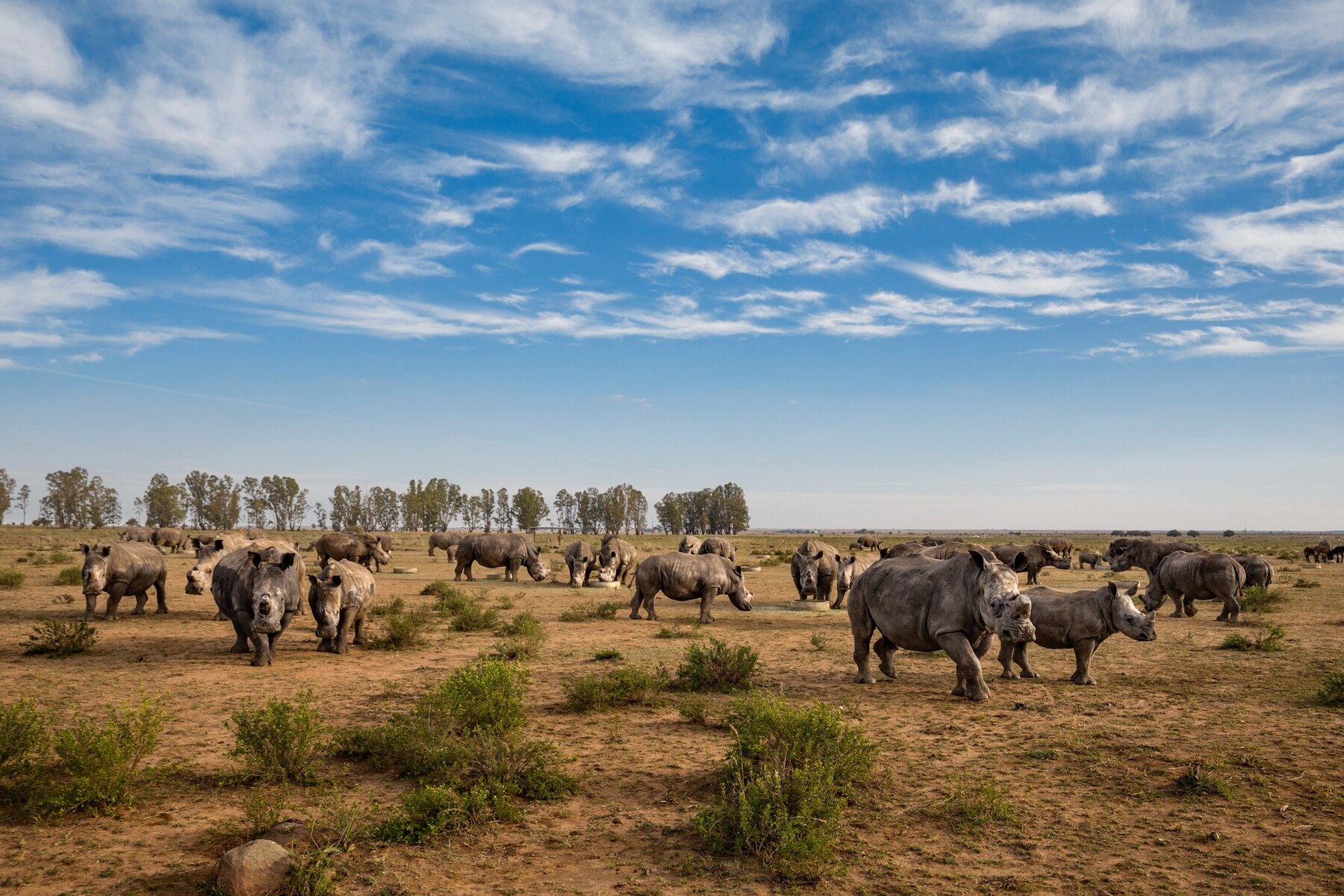
The roughly 2,000 rhinos at the Platinum Rhino Conservation Project represent a significant portion of the world's population.
PHOTOGRAPH BY BRENT STIRTON, GETTY IMAGES/NAT GEO IMAGE COLLECTION
African Parks manages 22 national parks and protected areas across 12 countries in Africa, and it says it will be keeping all of Platinum’s staff employed to care for the animals until they can be relocated to the wild. The nonprofit also confirmed to National Geographic that it will continue the farm’s current security operations to prevent poaching, including helicopter patrols, dozens of armed game rangers with guard dogs, and more.
In documents from the auction, Hume noted that he spends more than $425,000 per month protecting the animals from poachers. But the approach appears to be effective. The farm’s last known poaching incident occurred in March 2017, and African Parks says that it considers the security to be state-of-the-art.
African Parks says it aims to have all the animals in their new homes within the decade, but exactly where the animals will be going in the wild, when, and how the group will be broken up have not yet been determined.
The nonprofit is launching feasibility studies to decide where the animals could go and still have adequate levels of food and water, among other factors. Lands currently managed by African Parks as well as other available areas in Africa may be considered as possible destinations.
“An advisory group is being put in place, and all decisions will be guided by a framework that is currently in development,” says Donovan Jooste, who is overseeing the project for African Parks. Mother and calf units will be translocated together, he says, but exact groups and group numbers will be determined on a case-by-case basis. The security of recipient areas will also be assessed prior to any release as part of the rewilding program.
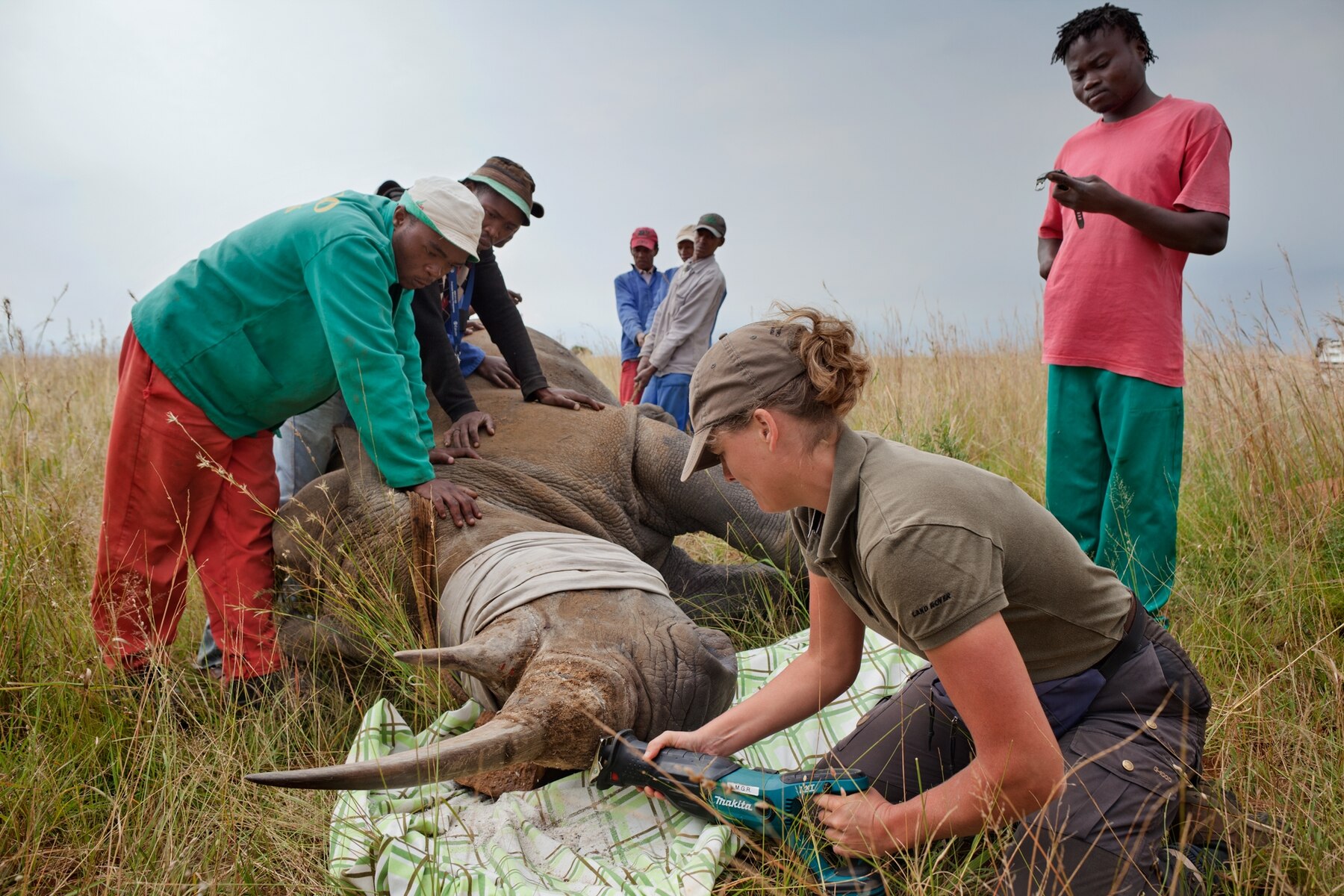
Left: To deter poachers, a veterinarian at the Platinum farm in South Africa trims the horn of an anesthetized white rhino.
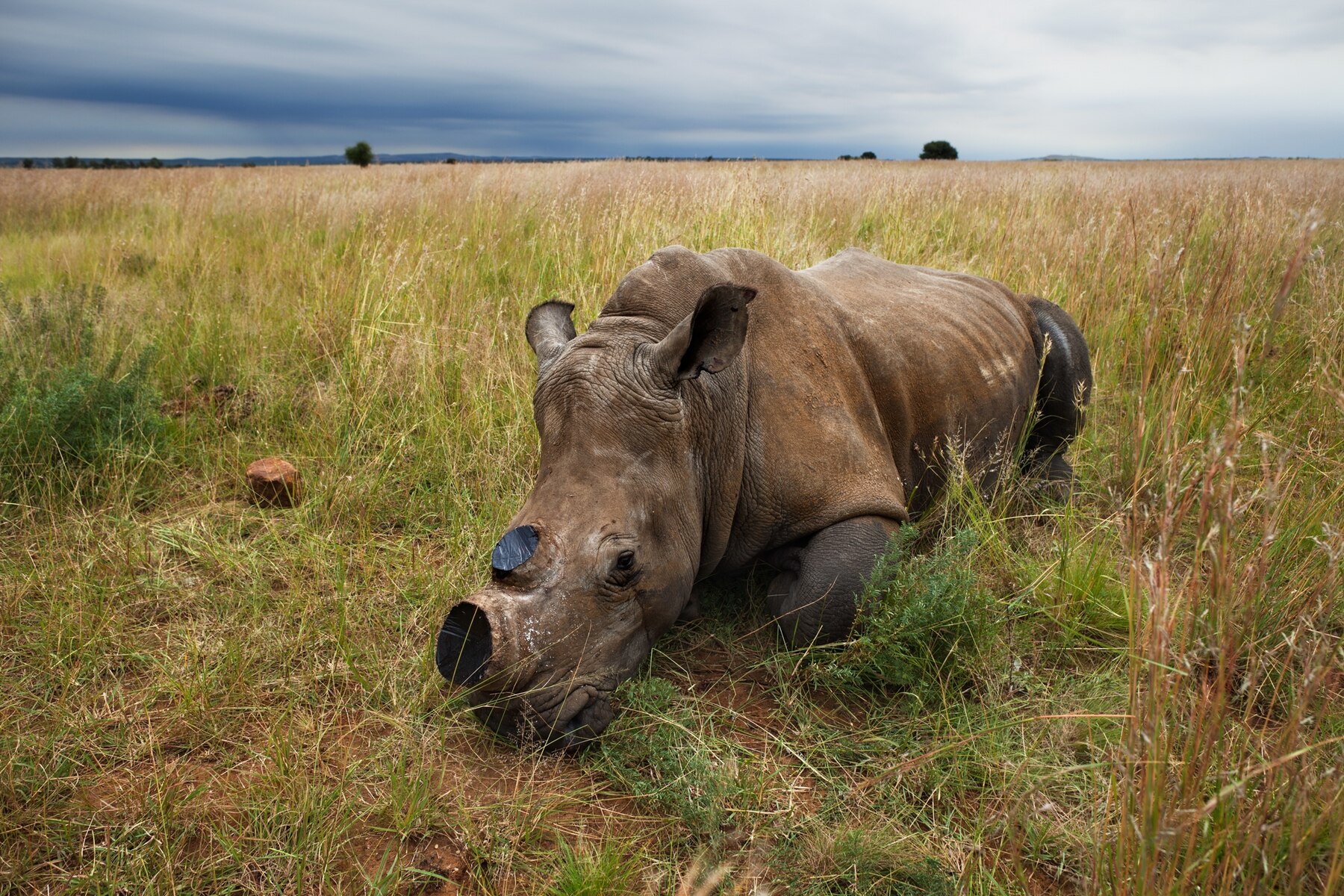
Right: After this white rhino's dehorning procedure in 2011, the animal was left to wake in a field. John Hume, the owner of the property, had planned to sell the horns to support the farm's operations, but the international sale of rhino horns was never legalized.