x






The results of influential studies are being used to monitor the world’s banking system amid continuing concerns over bank failures.
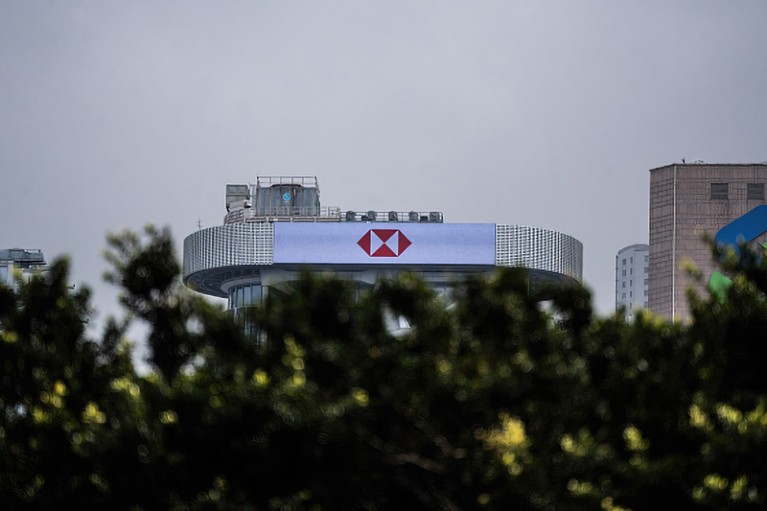
Insights from ecology and epidemiology inform our understanding of bank systems.Credit: Bertha Wang/Bloomberg via Getty
Twelve years ago, an unusual study used insights from ecology and infectious-disease research to show that the failure of ‘superspreader’ banks would rock the whole financial system.1 The work, titled 'Systemic risks in banking ecosystems', demonstrated that banks are interconnected like living things. A series of notable banking failures in the past few weeks have renewed fears that the financial ecosystem is at risk.
Study co-author Andrew Haldane, former chief economist at the Bank of England, says research has played a key role in persuading banking regulators to pay attention to the stability of the banking system after the global financial crisis of 2007–2008, which devastated banks and economies as a result. He produced the study with mathematical ecologist Robert May, drawing on May's long-standing research into diversity and stability in ecosystems.
According to the US government’s Federal Deposit Insurance Corporation (FDIC), more than 400 banks closed in the United States alone between 2008 and 2012 — compared with just 10 in the 5 years before the crisis. The US government paid around US$500 billion for the remaining banks to remain viable, according to a 2019 study by Deborah Lucas, who researches financial policy at the Massachusetts Institute of Technology, based in Cambridge.2
“The penny dropped during the crisis,” says Haldane. It took that event, he says, to open financial regulators’ minds to the idea that the risk of an individual bank failing should really be reflected through the damage it might do to the system; and that depends on how deeply the bank is connected to other parts of the financial system.
Haldane’s latest comments follow a number of notable banking failures over the past month, which has renewed fears over financial instability.
On 10 March, Silicon Valley Bank (SVB), based in Santa Clara, California, which mostly lent money to technology start-up companies, saw depositors withdraw US$42 billion. The California state regulator closed the bank and its UK arm was subsequently absorbed by multinational bank HSBC for £1 (US$1.24). Two days later, New-York-based Signature Bank also closed. A week after that, regulatory agencies in Switzerland approved a takeover of Credit Suisse by its rival bank UBS, both based in Zurich, Switzerland.
According to Stefano Battiston, who studies systemic risks in financial networks at the University of Zurich, Switzerland, the roots of SVB’s failure are rapid interest-rate increases that are being seen globally. For several decades, rates have been low and many banks have put money into seemingly safe interest-bearing bonds. But as interest rates have rocketed, these bonds have rapidly lost value. According to one estimate, US banks held assets with more than $620 billion of unrealized losses due to rising interest rates, as of the end of 2022.
On 8 March, SVB announced that it needed to raise $2.25 billion to cover such asset shortfalls. Sensing trouble, the bank’s customers rushed to withdraw their deposits, creating a run on the bank. Its stock price crashed and 48 hours later, it was closed by regulators, the fastest bank closure in US banking history. Although SVB was an outlier, other banks are at risk, Battiston says, especially those that are more connected to other banks.
The speed of SVB’s collapse was also influenced by frenetic social media activity, according to a study posted on 6 April to the Social Science Research Network preprint repository by Stephan Bales and Hans-Peter Burghof, who both study banking at the University of Hohenheim, Germany. The researchers looked at tweets and Google search data during the days when SVB called out for more capital, until its eventual closure. They found that the most intense period of Twitter activity corresponded with the bank’s collapsing stock price on 9 March.3
So far, however, these incidents have not caused contagion. This doesn’t mean it couldn’t happen, researchers say, but central banks and regulatory authorities have a better grip on the banking system as a whole than they did in 2008.
“In my view it is too early to say we have averted a bank crisis,” Battiston says. “But there’s been real progress since 2008. Authorities now take seriously the idea that the financial system is a complex network which needs close monitoring,” he adds. “There is now also a system of monitoring of banks’ assets at various levels.”
One such measure is a system of banking regulations known as Basel III, adopted after 2010. “These rules reflect a very different model of regulation,” Haldane notes, “in which bigger, more connected banks are forced to hold bigger buffers of regulatory capital.” The Basel III agreement, he says, also identified a list of systemically important banks. These are the kinds of super-networked banks that Haldane and May had identified in their study as having more damaging effects if they fail. Regulators decided they need to hold extra capital. “To a significant extent, these new rules capture much of the basic insight of our ecology and banking paper,” Haldane says.
Other research has also been influential. In particular, a measure called DebtRank — introduced in a paper co-authored by Battiston — is being used by European regulators. DebtRank uses data on bank assets and liabilities to calculate a single figure reflecting the overall damage any bank’s failure would inflict on the financial system.4
Battiston says that this measure was inspired by the PageRank algorithm created in 1998 by Google's co-founders Sergey Brin and Larry Page to rank websites by importance, with the most important sites having the most links to other important sites. DebtRank similarly captures the idea that the most systemically important banks are those which have the most and strongest interconnections with other systemically important banks.
“It is fair to say that DebtRank has helped mainstream the idea that regulation needs to look at the system level to see the onset and diffusion of financial distress,” says Guido Caldarelli, a physicist and complex-networks specialist based at the Ca' Foscari University of Venice in Italy, who helped to develop the measure.
Haldane also notes that regulatory oversight tends to become less strict as time goes on after a financial crisis, as politicians especially push to relax rules in order to boost growth. There is “a gradual, discernible fraying of the regulatory framework”, following the 2008 crisis, he says. “It’s happened in the US, the UK and the euro area.”
“In this sense, having a mini crisis or a set of mini casualties — like what we’ve seen so far — is actually not unhelpful. It may help to sensitize and remind the financial markets and financial-market players to the risks inherent in banking.”