x




A cigarette habit and previous infection with a common virus both have important effects on the immune system.
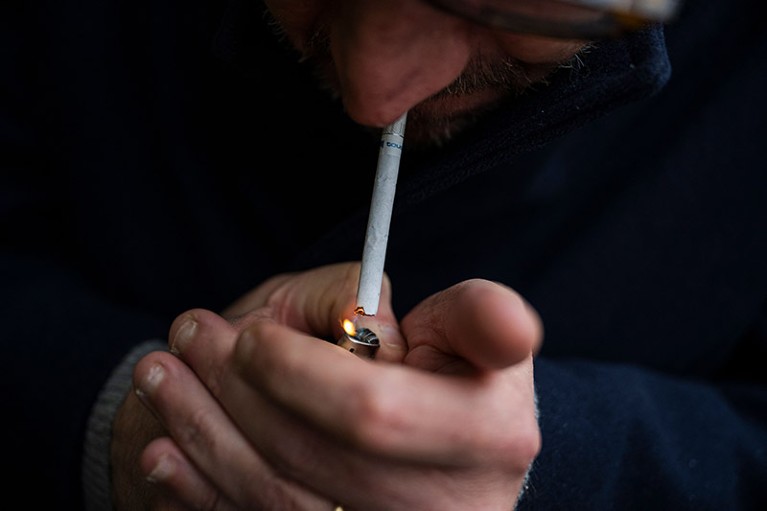
The immune-system signature of cigarette smoking persists for many years after a person kicks the habit.Credit: Jonathan Nackstrand/AFP via Getty
The impacts of cigarette smoking on the immune system lingers long after a smoker’s last puff, according to a study of the immune responses of 1,000 people1.
The analysis, published in Nature on 14 February, is part of an effort to determine why immune responses vary so widely from person to person. In addition to cigarette smoking, the study found that having a higher-than-average body mass index and having previously been infected with a typically benign virus called cytomegalovirus also affect the immune response.
“This highlights the importance of considering not only the immediate effects, but also the enduring consequences of lifestyle choices on immune function,” says Yang Luo, a computational immunologist at the University of Oxford, UK, who was not involved in the research.
The COVID-19 pandemic laid bare how divergent immune responses can be, with some people becoming seriously ill after a SARS-CoV-2 infection, whereas others had no symptoms. Previous studies have highlighted the importance of sex, genetics and age in explaining part of this diversity in immune responses, but the role of other factors has not been defined fully.

Why is COVID life-threatening for some people? Genetics study offers clues
Computational biologist Violaine Saint-André at the Pasteur Institute in Paris and her colleagues analysed blood samples and questionnaires collected by the Milieu Intérieur Consortium from 1,000 healthy people who live in Brittany, France. The researchers exposed the blood samples to molecules, microorganisms and viruses known to activate the immune system. They then measured the effect of each molecule or pathogen on the production of proteins called cytokines, which regulate the body’s inflammatory responses.
The authors combined these results with information about 136 personal traits drawn from demographic, environmental and clinical data. They found that three traits stood out as having particularly strong associations with cytokine responses: cigarette smoking, body mass index and previous cytomegalovirus infection.
The data on cigarette consumption were particularly striking: the effect of smoking on cytokine responses was as large as the effects of age, sex and genetics. And these effects lingered for years after participants had given up cigarettes. Saint-André and her team found that these factors correlated with patterns of chemical tags, called methyl groups, that were added to the cells’ DNA in certain regions. The addition of such methyl groups can alter gene activity.
“It is a very important piece of work,” says Vinod Kumar, a geneticist at Radboud University Medical Center in Nijmegen, the Netherlands, not only because of the specific results about smoking, but also because of the overall effort to track sources of variability in immune responses. The study found that individual environmental factors, for example, can affect different cytokines to different degrees. “It makes me wonder how much detail we should consider when we are looking at targeted therapy or personalized medicine,” he says.
But the study still needs to be repeated to ensure that the results are generalizable, says Saint-André. And, in future, it should include a more ethnically and racially diverse group of participants. The team has now expanded their study to include participants from Senegal and Hong Kong, she says. The researchers have also gone back to the original participants, and have collected fresh blood samples from 415 of them 10 years after the original samples were taken.