x






#KeepRunning. Diesen Hashtag fügte Alexander Kamyschin einem Foto von seiner Sportuhr auf dem Handgelenk an, dahinter zu sehen: ukrainische Landschaft. Kamyschin hat das Bild irgendwo zwischen Borodjanka, Butscha, Irpin und Kiew aufgenommen – vier schwer vom Krieg gezeichnete Städte. Genau diese Route läuft der scheidende Chef der ukrainischen Eisenbahn am ersten kalten Märzwochenende. Vor Kriegsbeginn hatte er sich nämlich für den Marathon in Tokio angemeldet, und da eine Teilnahme nun nicht mehr möglich war, wollte er zumindest in seiner Heimat die 42.195 Meter zurücklegen.
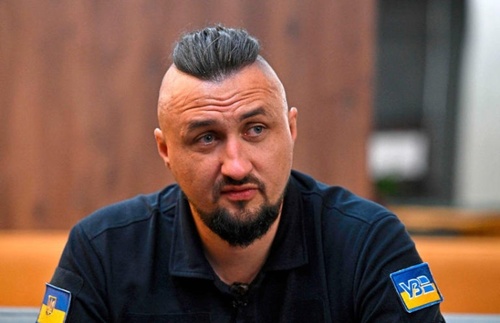
The man who kept the Ukrainian railway and thus the country alive resigns © Photo: APA/AFP/SERGEI SUPINSKY
In any case, after 30 kilometers the famous wall or the "man with the hammer" waited for the 38-year-old almost two-meter giant - as many runners call the difficult intermediate mark. But then he discovered a poster of US President Joe Biden and he just had to keep walking.
Keep going, that's also the motto of the Ukrainian railways since the beginning of the war. "I want to live. I have to survive and find a way for my country to survive," he told his Deutsche Bahn colleagues a few weeks ago. And if his country wants to survive, the train has to keep running. The war shouldn't be an excuse, says Kamyshin, who studied finance and used to be an investment manager.
More punctual than Deutsche Bahn
The impressive thing: despite the constant Russian rocket fire, despite 319 railway employees killed and 703 injured in 2022 alone, the Ukrainian railways have almost gotten better recently. When US President Joe Biden was brought to Kiev with the "Train Force One" under the strictest security precautions, Kamyshin apologized to the population via Twitter that, contrary to the usual performance, the trains in Ukraine were "only" 90 percent on time that day arrived.
While the apology may indeed have been sincere, it should also, above all, send a message to the world. In Ukraine everything goes on, no matter how much Russia bombs and rockets the country. In the USA – where an average of 22 percent of the trains arrive on time – Kamyshin had the laughs on his side anyway. In Germany, where the punctuality rate last fluctuated between 71 percent (in long-distance travel) and 93 percent (in regional traffic) in February 2023, there was also ridicule for the domestic railways according to the motto: "More punctual than Deutsche Bahn even in war".
At the end of February, Kamyshin, who had managed the state railway company Ukrsaliznyzja on an interim basis in 2021 and then officially from April 2022 and was CEO of 230,000 employees, surprised with a job change. In agreement with the Ukrainian Ministry of Transport, he now wants to take care of the stronger integration of the Ukrainian railways into the Union from an EU country, literally connecting the country with the longed-for EU.
war factor rail
Kamyshin, who the tabloid media likes to call the "toughest railway workers" in the world, calls the "iron men and women" of the Ukrainian railways a "second army in the country". And indeed, it is true that for more than a year, the Ukrainian railways have played a crucial role in the success of the Ukrainian army by transporting war equipment and ammunition.
Passenger transport has always been a side business and freight transport has always been the priority, he says. But the war also showed how important it is to transport people. Millions of Ukrainians fled to safe countries abroad. In the meantime, however, millions have ventured back into Ukraine – not least dozens of top politicians and heads of government from the West. And they usually spend more time on the train than in the country, Kamyshin emphasizes again and again.
Boris Johnson, then British Prime Minister and a deeply staunch supporter of Ukraine, also traveled to the Ukrainian capital by train several times. It was there that the famous exchange of caps took place. That of the London Metro was replaced by one of the Ukrainian railway company Ukrsalisnyzja. Johnson later often wore them over his curly blond hair. The sales of the hat then increased significantly.
First class symbolism
It's small, symbolic gestures like this that Ukrainians keep making. They seem to come from the heart, but sometimes they are deliberately conceived to guarantee the goodwill of the West - a survival strategy that is unfortunately necessary.
And so the railway also takes care of the prominent state guests in a particularly sensitive manner. For example, when German President Frank-Walter Steinmeier visited, irises were placed in his cabin. How come? Because the plant is called Iris in English and the Germans had just promised the important Iris-T anti-aircraft system. Another unnamed politician is said to have been greeted by the train crew in leopard print outfits. The reason for this was the promised Leopard 2 main battle tanks from the Eastern European country. It is assumed that it was about Poland.
The Ukrainian rail network is the 12th largest in the world and also the 7th largest freight network. Almost 29 million tons of grain raced through Ukraine on rails last year. And by the way, you could use the infrastructure at eleven border