x






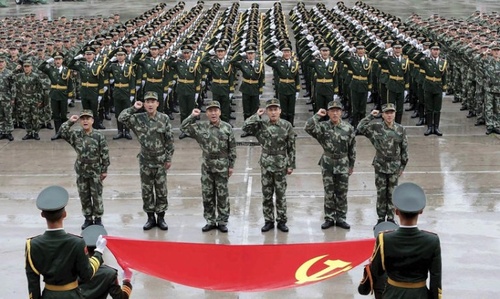
US intelligence agencies have complained about China's "increasingly aggressive foreign policy actions." Among other things, this aims to build a world-class military and expand its own nuclear arsenal, US intelligence coordinator Avril Haines said at a Senate hearing on Wednesday. The government of US President Joe Biden sees China as the greatest and most serious geopolitical challenge.
The US government sees China as the greatest geopolitical challenge. / Picture: REUTERS© The US government sees China as the greatest geopolitical challenge. / Picture: REUTERS
Relations between the US and China are generally very strained over a whole list of issues. Haines stressed, "The People's Republic of China, which increasingly challenges the United States economically, technologically, politically and militarily around the world, remains our top priority." China poses both the greatest and most consequential threat to US national security and global leadership. China is also its most serious intelligence rival because of its intelligence ambitions and capabilities.
"Most direct criticism we've heard so far"
China's head of state and party leader Xi Jinping had recently struck unusually harsh terms against the United States and accused the United States and the West of wanting to prevent China's rise in the world.
"Xi's speech this week was the most public and direct criticism we have heard from him," Haines said. His comments arguably reflected "the growing pessimism in Beijing" about relations with the US, as well as his "growing concerns about the development of China's domestic economy and the challenges in domestic technological innovation, for which he now blames the United States." . Haines said: "He also wants to send the message to his people and regional actors that the US bears responsibility for any future escalation of tensions."
Despite this more public and direct critical rhetoric, however, it is believed that Beijing still benefits most from preventing a spiral of tensions and maintaining stability in relations with the US, Haines said. Xi Jinping wants a "period of relative calm to give China the time and stability it needs to address growing domestic political difficulties." His main focus is on the country's economic development, which is not guaranteed.