x



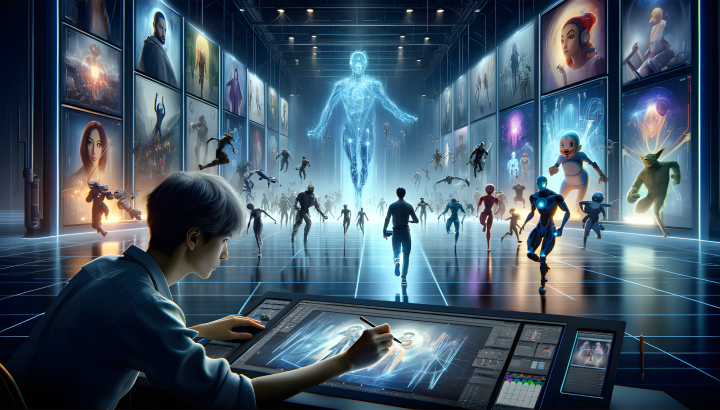
In the rapidly evolving field of artificial intelligence, a groundbreaking study titled "Animate Anyone: Consistent and Controllable Image-to-Video Synthesis for Character Animation" has been introduced by Li Hu, Xin Gao, Peng Zhang, Ke Sun, Bang Zhang, and Liefeng Bo. This 2023 research paper presents a novel approach to character animation, harnessing the power of image-to-video synthesis to bring still images to life in a manner that is both consistent and controllable. Published as an arXiv preprint and detailed on the project's website, this work signifies a significant leap forward in the domain of AI-driven animation techniques.
The "Animate Anyone" project is designed to address some of the most pressing challenges in the realm of digital animation. Traditionally, creating animated sequences from still images has required extensive manual effort, sophisticated software, and a significant investment of time. However, the methodology introduced by Hu and colleagues offers a transformative solution by automating this process, allowing for the seamless animation of characters from a single image.
The core innovation of this research lies in its unique algorithmic approach, which synthesizes consistent and controllable video sequences from static character images. This process involves several key components:
- Image Processing and Analysis: The system first analyzes the input image to understand the character’s structure, features, and potential movements.
- Synthesis Algorithm: Leveraging advanced neural network architectures, possibly including Generative Adversarial Networks (GANs) or Variational Autoencoders (VAEs), the algorithm predicts how the character would move and generates corresponding video frames.
- Consistency and Control Mechanisms: Unique to this approach is its focus on maintaining consistency across the generated animation, ensuring that the character's identity and key attributes remain unchanged. Moreover, the system provides users with control over the animation parameters, such as the type of movement or the speed of animation.
The applications of "Animate Anyone" are vast and varied, spanning entertainment, education, and beyond. In the realm of filmmaking and video content creation, this technology could drastically reduce production times and costs, making high-quality animation accessible to a broader audience. For educators and presenters, it offers an engaging way to bring illustrations and educational materials to life.
From a technical perspective, the study showcases the potential of AI in creative domains, highlighting advancements in neural network design and machine learning algorithms. It also poses interesting questions about the future of content creation, intellectual property, and the role of AI in artistic endeavors.
While the "Animate Anyone" project opens up exciting possibilities, it also raises ethical considerations related to deepfakes and the potential misuse of technology. The authors likely address these concerns by incorporating safeguards and promoting transparent use of the technology.
Looking ahead, the research team may focus on refining the technology to handle more complex animations and scenarios. Further developments could include enhancing the realism of the animations, expanding the range of controllable features, and improving the system's efficiency and user-friendliness.
"Animate Anyone" represents a significant milestone in the integration of AI with character animation, offering a glimpse into a future where creating animated content is as simple as providing an image. As we continue to explore the capabilities and implications of this technology, it's clear that the boundary between the virtual and the real is becoming ever more blurred, promising a new era of creative expression powered by artificial intelligence.
For more details on this revolutionary project, visit the official project website at [https://humanaigc.github.io/animate-anyone/](https://humanaigc.github.io/animate-anyone/).
This exploration into "Animate Anyone" not only showcases the innovative spirit of AI research but also underscores the importance of interdisciplinary collaboration in pushing the boundaries of what technology can achieve in art and beyond.