x




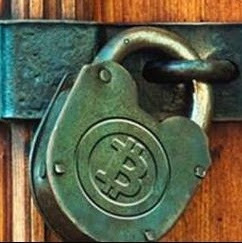
Recently, I received an email stating that someone using malware accessed my computer and now has access to my email account. They even listed my password. Well, I haven’t used that password in several years so I wasn’t too concerned. They also stated they would send everyone in my account a porn video from me unless I sent them $5,000 in Bitcoins.
The good news is that I found out the password was revealed when they hacked the database of my online server. In 2013, 3 billion Yahoo accounts were hacked and they were just getting around to me. What is a little unsettling is that I still get about 20 notifications a day on my phone that a login to Yahoo has failed. I wonder if they will ever give up. I notified Yahoo that this was happening thinking they could block the IP address and they were no help.
Welcome to the world of on-line scams. Scamming has really changed in the last few years. In the last two years, I have heard from a good friend that was traveling that she needed me to buy a gift card for a niece and send it UPS to her. The place she was visiting didn’t accept credit cards. I had a good friend recommend a shopping company that wanted me to buy a Western Union money order and send it to them. They gave me a $1000 cashier’s check, and I was to buy three $300 money orders and keep $100 for myself. I called the bank that supposedly issued the cashier’s check and it was bogus.
Do you remember the nephew that desperately needs $300? How about the Nigerian prince that wants to send millions of dollars to America and needs your help? Please send him $1,000 as a good faith gesture. How about the Social Security scam?
Is your retirement account with TD Ameritrade? An email alerts you to important information for stockholders. Click on this link, answer a few questions — and watch your nest egg vanish.
How much personal information does your Facebook and Linkedin accounts hold? Scouring social media accounts and hacking databases for personal information, criminals have created new tools to attack the unwary. You might think it is alright to share information with your friends, but scammers also have access to that information. Either by hacking the data-base or by pretending to be a friend.
Prosecutors in Los Angeles announced they had cracked one of the largest online scam cases in history, arresting 14 and indicting 66 others. Relying largely on the “romance scam,” the ring took in $6 million and was in the process of grabbing $40 million more.
In other cases, victims think they are communicating with U.S. servicemen stationed overseas, when in fact, they are emailing with con men. Some of the victims lost thousands of dollars.
Foreign-based criminals can also route calls through U.S. area codes. That’s why a call purportedly from the Internal Revenue Service, threatening severe penalties unless you immediately wire money, can appear to originate in the Washington, D.C., area code, 202.
How can people protect themselves from all these scams?
* Use unique passwords for each online account. Password re-use is one of the worst things you can do.
* Consider going a step further and using a password managing app, such as Dashlane, LastPass or 1PassWord. These digital vaults hold all of your passwords.
* If you get a request for money to help or rescue a family member or friend, call them to make sure this request didn’t come from an imposter.
* On social media, share few if any details about your personal life. People expose too much information about themselves. That, coupled with data breaches, is how you get targeted.
* Take a close look at your “friends.” If you don’t personally know your Facebook “friends” or Twitter “followers,” understand that they are not your pals. That’s not your friend, that’s someone who is following what you are doing and may be your enemy.
* Be skeptical about anything Bitcoin-related. If someone asks you to fund something with Bitcoin or another cryptocurrency, it’s probably a scam. Money can be traced, Bitcoins can’t be traced.
* If it is too good to be true, it probably is a scam.