x




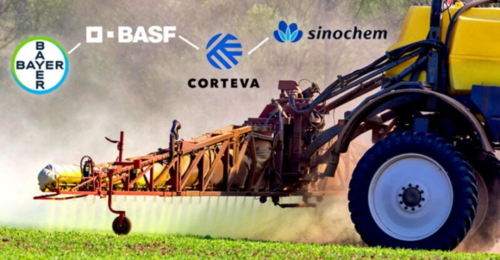
Aspects of the shifting paradigms in agriculture during the past 75 years can be traced to multiple factors, including World War II innovations in materials science, chemical weapons development and other technologies; the so-called “Green Revolution”; advances in genetic science and biotechnology in the last couple of decades; and most recently, the advent of uses of Big Data and the technologies that enable it.
To begin with one of those: the dawn of genetically modified seed that would resist the assaults of applied herbicides was a game changer for the agrochemical industry and ratcheted up sector consolidation (see below).
Glyphosate-resistant seed meant that farmers could plant the seed and use Roundup (glyphosate) liberally because it would not harm the plant — but would knock down weeds.
National Sustainable Agriculture Coalition writes:
“To create and mass produce a seed that would resist Roundup, Monsanto needed a captive supply of germplasm [seed].
“‘One of their main strategies,’ noted [Kiki] Hubbard [of the Organic Seed Alliance], ‘was to buy up smaller [seed] firms to access their varieties and simply insert their GE traits without needing to do any of the breeding work themselves. …
“Monsanto thus began to acquire small and regionally based seed companies, exponentially multiplying their supply of germplasm and restricting the distribution of these varieties which had been carefully bred to possess ideal traits.
“These foundations enabled Monsanto to become the first company to genetically engineer a plant cell and eventually mass produce a Roundup Ready line of seed.”
.jpg)