x






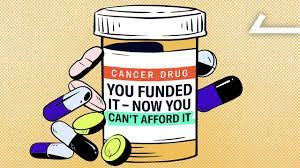
There's a groundbreaking new drug that trains your body cells to fight cancer. It's called Quitruda. It's pretty remarkable. You're literally seeing a doubling of how long they live. It's now a lifeline for many, approved for over 16 different types of cancers. But there's more to this story. Kichuta's price around 200 thousand dollars for a year of treatment makes it one of the highest-grossing drugs in the world. It re cemented Merrick as one of the world's most valuable companies, a staggering 40 percent of its sales. Kitruda. This is the American dream of medical innovation. Isn't it? Companies invest heavily in research, and when they strike gold, the profits are astronomical. But here's the truth. Public funds laid the groundwork for merck's reinvention. That's right. The groundbreaking technology fueling this transformation was funded by you, the American taxpayer. This story is about more than just developing drugs. It's about how big corporations build empires on public research meant for the greater good, using legal moves to block competition and keep prices high. And it's about what the government could finally do to fix it.
The government spends billions on scientific research each year and we let companies use it. Congress passed a law called Bidddole Act and basically said that the 100 of billions of dollars that the federal government invests in basic research. If a private sector actor uses that research to create a new patent, it has the ability to go. Take that patent to market and make money off of it. Think of it like this. The government discovers electricity and then private companies then use that knowledge to invent and profit from light bulbs, but with Kitruda and dozens of other drugs. The government was also part of inventing the light bulb.
Back in the late 90 S, a researcher with federal funding discovered how our immune system makes its moves. Joining forces with a Japanese professor, they hit a breakthrough in snag six patents, a Dutch conglomerate and a nonprofit then use those patents to create what becomes Kitruda. You'll notice that Merck hasn't been involved so far. The early development was done primarily in academic institutions that were funded by governments and charities. It was through acquisitions of companies that ended up owning rights were related to drug. In 2 thousand and Nine. Merck acquired sharing Plow, who previously bought the human science division of that Dutch conglomerate. I mentioned, and the closet collecting dust was Kiurda. They thought this trung wasn't any good at all. And then Britta Mars had success with very similar mechanism for a different drug. Then.
Merck went back and elect at K root and brought it out to the market and Merck brings it to the market in a big way. They work with the government to fast track its development with the government paying about a quarter of the bill. The FDA approves it in 2014 and the thing is Merck didn't invent Kitruda. They bought a company that did using government-funded research. Their big task getting FDA approval, which is more about paperwork. But one thing MERT did do was set the price which is now almost 200 thousand dollars.
It's imposing a big cost on the overall health carers system. It raises the cost of insurance premiums, it raises the cost of taxes. If you pay for it through Medicare or Medicaid, it's sucking money out of the healthcare system. Right now, one out of every five dollars spent on insurance premiums goes towards prescription drugs, and it's rising faster than any other medical expense, largely because of groundbreaking but expensive drugs like Kitruda. In the most recent month, the sales were over two billion dollars in one month. Analyst predict it to reach nearly three billion dollars a month.
These massive sales numbers are enabled by one thing keeping competitors away. Mer does this with patents which let them be the only ones to sell Kichtruda for 20 years when their time's up. Others can make similar drugs which usually makes them cheaper. Kitruda's key patents expire in 2028, but Murk is trying to build a fortress of nearly 100 and 30 patents protecting every conceivable angle of Kichtruda from competition. About a quarter of these are around the drug itself, the rest. While 40 percent of these patents detail its production process and another quarter secure its role in combating specific diseases, they're even reaching out into the cosmos. All of this to keep competition out.
But how can the government stop this if a company is charging an unreasonable price that is a basis for the federal government to march in and to license that patent to some other company or to some nonprofit entity that could charge far less for that product? Remember the development of Ki that I mentioned before and those six key patents. The federal government retains the ability under this Biddy Act to march in, which is really to say we're taking this patent, and instead of you having the exclusive right to use the patented product, we're going to license it to somebody else who can potentially bring it to market on more reasonable terms. Recently, the Biden administration threatened to use these rights to lower the price of drugs developed with federal funds. What we have here from the Biden administration for the first time is a set of guidelines that says to the agencies. If you think that the prices that are being charged for these federally backed products is too high, you can use your marching authority to license that to somebody else who will provide it more cheaply.
We think it's important that we finance research into these important life-saving drugs, but we're going to make sure that we're paying a reasonable price for them because it's gonna be a life or deaf difference for a lot of people. And just like that, kurto's Pat wall could come crashing down. Other companies can start selling cheaper versions of the same drug. Marching rights could be the sledgehammer. This margin authority, in my opinion, is one of the most potent tools that the federal government has to help lower the cost of prescription drugs. The hope behind all of this is that that will lead preemptively to companies charging more fair prices, or at least not unreasonable prices again for products that we, the federal taxpayer, have helped finance. Now, of course, the question is going to be, are they actually going to use the authority that they have now granted themselves to march in on a drug or not? That will be the next question.