x






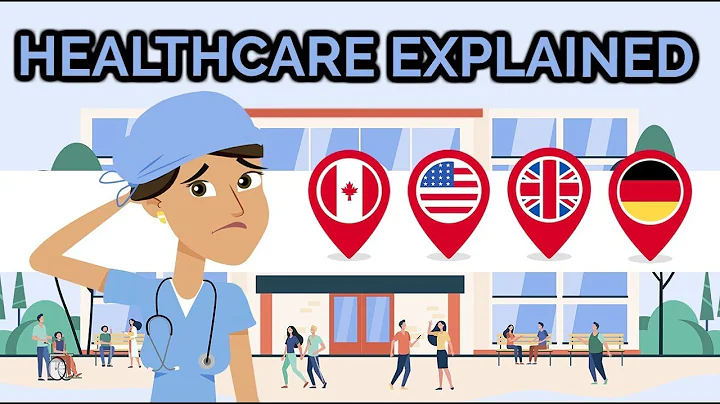
Are you confused by the various healthcare systems in your country and around the world? You're not alone. This is the anatomy of healthcare. Dr. Jamal Mech schoololin Insiders. Dot com. Perhaps you think healthcare is broken and like many of us, you want change, but we must first understand healthcare before trying to fix it. In this three-part series, we'll explore the major healthcare models of the world, how the US fares in comparison, and what changes to make moving forward. Anytime you think about healthcare, whether abroad or here in the US, this is the blueprint that should come to your mind. At the root level, healthcare systems come down to four constituents, the government.
The insurers, the patients and the providers, which includes doctors, healthcare professionals and hospitals. Depending on the healthcare system and consideration, the interaction and dynamic between these constituents vary. For example, sometimes the government is the insure, which means it takes on the financial responsibility. Other times, the government is completely out of the picture or it may play a regulatory role. There are four factors to consider between the four major healthcare models. The first factor is the number of sources of coverage or financial support that exist under the model. If there is one source of coverage, we call it a single-payer model, and if there are several sources of coverage, we call it a multiplayer model. The second factor is the source of coverage itself. This could be the government in single-payer models or private insurance companies in multiplayer models. The third factor is the source of funding, how are the government and insurance companies getting money to provide coverage? The last factor in consideration is the sector responsible for delivering care, the private sector or the public sector.
This has to do with whether the hospitals are government owned or privately owned and whether the doctors are government employed or privately employed. This has major implications for the government's regulatory power, autonomy of providers and innovation. Each of the four major healthcare bottles sits on different points of the nationalization privatization spectrum.
With one end representing 100 percent. Nationalization.
In which the government fully funds and delivers care, and the other end representing 100 percent privatization, in which the private sector fully funds and delivers care with no input from the government.
Broadly speaking, nationalization is associated with greater accessibility to care, lower costs and reduced administrative complexity, whereas privatization is associated with less regulation, greater freedom for physicians, and a more fertile ground for innovation.
Out of the four global healthcare models, there are two single-payer models, one privatepaer model and one multiplayer model. The two singlepaer models are the beverage model found in Britain and the National Health Insurance model found in Canada. In both of these models, the government funds health carers, but the primary difference between these models is in the delivery of care. In the beverage model, there is public delivery of care, which means that the physicians, hospitals and clinics are all government owned or part of the public sector. In the national Health insurance model, there is private delivery of care, which means that hospitals, clinics and physicians are all part of the private sector and have greater freedom to practice as they please without government input.
There is often an expectation that greater government involvement translates to increased bureaucratic complexity, but that isn't necessarily true. In a single-payer system. There is no market competition and with the government financing care, the costs that providers charge are kept low. Benefits are standardized and with no financial motives to deny claims and no concern for profit.
The delivery of care is cheaper and often simpler to navigate the frustrating complexity of insurance plans, claims processing, and claims disputing. Factors that drive administrative expenses through the roof under the US healthcare system are absent from the picture entirely more on this in the next few videos. In both of these single-payer systems, there is universal coverage, which means that every citizen is financially backed by an insurer with little out-ofpocket costs to the citizen. The Beveridge model is often criticized for its potential risk of overutilization, as policymakers fear that free access would drive patients to demand unnecessary services, resulting in higher costs and taxes. That said, these systems have regulations and proactive prevention campaigns to circumvent these issues.
To put this all into perspective, let's say your friend Harry, a British citizen gets into a crazy car accident in Britain. He'll be rushed to the hospital government owned. He'll be treated by physicians, government employed.
And he'll also walk out without any bill because the government pays this is public funding and public delivery. On the other hand, let's say your friend. Justin gets into a crazy car accident in Canada. There, under the National Health Insurance model, he'll receive care at a privately owned hospital, and all his follow-up visits will take place with physicians of his choice in the private sector.
Even though the government is footing the bill, it does not control how healthcare is delivered by the doctors, nor does it mandate its citizens to visit select providers. The doctors have greater freedom to practice, and generally patients also have greater freedom to choose their providers. The third model is the out-ofpocket model. This model is essentially the absence of any formalized healthcare system, and we coin it a private payer model instead of a single-payer or multiplayer model because citizens are forced to pay for care directly out of their pockets with no external coverage.
Most nations are too poor to systematically provide mass medical care. Folks in such countries scramble to pay unaffordable bills in the face of emergencies. Medical care is a luxury reserved for the wealthy. The 4th and final model is the Bismarck model, which the German healthcare system is derived from.
This model is the most privatized of the four models, with the government having the least involvement at a surface level. It may resemble the US healthcare system because insurance is linked to one's employment, just as it is for most working Americans.
The source of coverage is private insurance companies and citizens dedicate a portion of their payroll tax to remain insured, with the delivery of care being mostly private. The theoretical Bismarck model is meant to provide universal coverage, but a criticism of the system is that even though universal coverage is the intent, it fails to financially cover those who are transitioning between jobs or are unemployed, and it's starkly different from the US for reasons we will visit soon.
The final point to consider is the source of coverage for each of these healthcare models. Funding for the beverage and national health insurance model comes from income taxes. The government collects tax from its citizens that ultimately enable government-based funding to support healthcare costs. In the Bismarck model, funding comes from a payroll deduction.
Employers take a portion of their employee salary and put it towards paying a premium to keep their employees enrolled under the health insurance plan.
Note that universal coverage is an intended feature of all three of these models, and it can in fact be achieved in systems that are not single-paper models despite what you may hear from policymakers. In fact, most countries with universal health insurance programs rely on multiplayer systems. Most of these countries use a hybrid of these four models implemented uniformly across the nation's borders. The United States is fundamentally different and more complicated.
The major difference between other nations and the United States is the fact that here in the US, the healthcare system is a hodgepodge of systems. The US is one of few countries that provide care non-uniformly in four different ways, depending on the patient population in consideration. Those four populations are veterans, citizens aged 65 or older, uninsured citizens, and working citizens with employerpoonnsored health insurance. In the past, the term socialized medicine ignited fears of the US moving towards becoming a communist or socialist state.
Today, the term ignites an expectation for poor medical outcomes, horrendous waiting lines, excessive taxation, and the erosion of free private enterprise. While the concept of socialized medicine makes some Americans uncomfortable, the reality is that a major portion of our healthcare system functions analogously to the British system, which is regarded as the closest example of socialized medicine in the world. We do this through the Veterans Health Administration. The VHA is a government funded and government managed vehicle that treats veterans at government-owned hospitals under the service of government employed doctors. Us citizens over the age of 65 receive care in a national health insurance modellike fashion as found in Canada.
Manifesting in the form of Medicare, the government pays for the healthcare costs of the elderly, people under 65 with certain disabilities, and people of all ages with end-stage renal disease. Medicare is financed through tax revenue, a 2.9 percent dedicated payroll tax split evenly between employers and employees, and monthly beneficiary premiums. Medicare funds 70 percent of healthcare spending by the elderly, with the other 30 percent accounted for by out-ofpocket spending or supplementary private insurance. The key takeaway is that for this patient population, the government is publicly financing the cost of care, but the delivery of care remains in the hands of the private sector.
Just as in Canada, the third patient population is the uninsured with 30 million Americans uninsured. Our Nation happens to be the only developed country that lacks a system of universal health coverage. The unfortunate reality is that medical emergency strike when least expected, and in such scenarios, many Americans are forced to potentially face financial ruin in their effort to seek care.
Expanding coverage remains one of our biggest healthcare challenges, but the politicization of care and the doctrine of American exceptionalism often prevents any meaningful conversation about healthcare reform from taking place. Veterans, citizens aged 65 and older, and the uninsured represent only a portion of the US population. For most US citizens, health insurance is provided in a bismarck-like fashion, with insurance linked to one's employment status in a manner that is similar to the system in Germany. Again, the tenet of the Bismarck model is that employers and employees fund their own private health insurance through sickness funds financed by payroll deductions. The primary criticism of both the Bismarck model and the variant use in the United States is that coverage isn't necessarily granted to those who are between jobs or unable to work. For years, people have been asking whether it makes sense for health insurance to be linked to one's job. The pandemic has laid clear that in precise moments where friends and families and neighbors are most in need of care, they may also be least likely to have a job, and by extension.
Access to the very care they need. However, this variant is starkly different from the theoretical Bismarck model. Under the theoretical model, insurance companies are required to be nonprofit and every citizen is supposed to be covered. This is not the case in the United States where our insurance companies have a history of marginalizing those with pre-existing conditions from being covered and are profit driven as our hospitals and providers bill ensure seeking reimbursement for services, ensure fiercely push back denying claims. This insurer provider battle drives billingrelated administrative expenses soaring through the roof, revisiting the nationalization privatization spectrum. As we move from left to right, we see the beverage model implemented in Britain, followed by the National Health Insurance model implemented in Canada and the Bismar model found in Germany. For this to the right lies the United States Health Care System, which is the most privatized and market- driven.
A. Feature that cultivates the nation's fertile ground for innovation. Each of these healthcare models has its own unique basket of pros and cons. Generally, those that are more privatized are driving innovation and enjoying greater autonomy, and those that are more governmentreulated have a simpler delivery of care, less administrative complexity, and a population with greater accessibility to care.
There is A Better Way