x





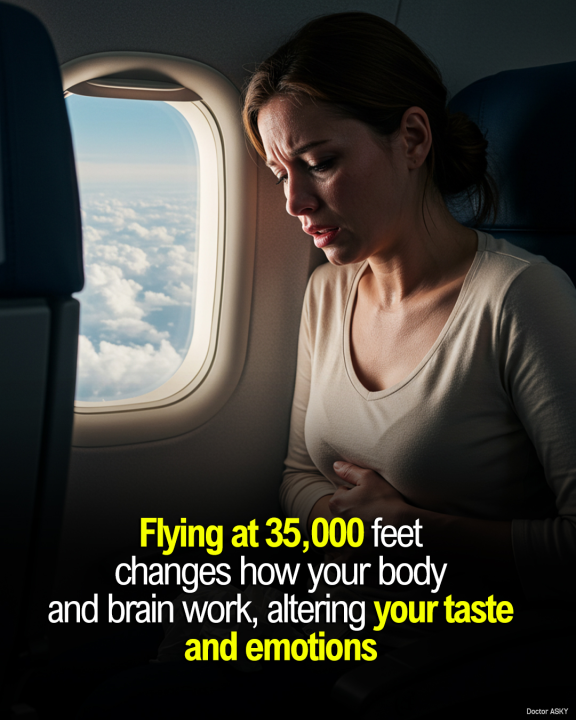
At 35,000 feet, everything from your taste buds to your emotions can undergo a dramatic shift. While flying, your body is exposed to environmental factors that can subtly change how you experience the world, from the food you eat to the emotions you feel. Airplane cabins are pressurized to simulate altitudes of 6,000 to 8,000 feet above sea level, which means lower oxygen levels, reduced air pressure, and low humidity—all factors that influence how your body functions during a flight.
One phenomenon that many travelers have noticed is an increased likelihood of becoming teary-eyed while watching movies on a plane. While there are no definitive scientific studies proving this, the combination of low oxygen and sleep deprivation during long flights could play a role. These factors can impair the brain's emotional regulation, as the amygdala, responsible for processing emotions, and the prefrontal cortex, which helps with reasoning and self-control, may become less synchronized in this low-oxygen environment. This disconnect between the brain regions can lead to "emotional disinhibition," making it easier for emotions to get the best of you.
When it comes to food, flying can also interfere with how you taste things. Research by the Fraunhofer Institute for Building Physics found that taste perception at high altitudes is diminished, with salty flavors becoming up to 30% less intense and sweet ones up to 20% weaker. This isn't due to changes in your taste buds but is likely linked to the brain's sensory processing, especially in the insula, which integrates sensory information. The constant background noise on a plane, often equivalent to a vacuum cleaner or lawn mower, can overload the insula, making it harder for the brain to accurately interpret flavors. While this might dull salty and sweet tastes, it can enhance umami flavors, making some foods taste more intense. The dry air in the cabin also plays a role in how we perceive flavors, as dry nasal passages can diminish our sense of smell, which is crucial for taste.
And if you’ve ever felt more tipsy after a single drink on a flight, altitude is again to blame. The lower oxygen levels in a plane can reduce the amount of oxygen reaching your organs, which makes you more sensitive to alcohol’s effects. While your blood alcohol content remains the same, your brain processes the alcohol differently in a state of mild hypoxia (low oxygen) and dehydration, making you feel more intoxicated than you would on the ground. This is why you may feel a little uncoordinated or tipsy after a drink in the air.
In sum, flying exposes us to a range of factors that affect both our physical and mental experiences. From emotional outbursts to flavor perception and heightened alcohol sensitivity, the unique conditions of a plane cabin create a different environment for your body and brain to navigate. Take Care Of Your Brain Halth Today at www.superbrainpower.org