x





In 2015, the Journal of Nutrition published a study from University of East Anglia researchers that blew up the health headlines:
Eating amino acids could be as good for your heart as quitting smoking or getting more exercise!
Researchers evaluated the effect of seven amino acids on the heart health of nearly 2000 women with healthy BMIs. They studied the women’s diets and compared clinical measures of blood pressure and blood vessel thickness and stiffness. They discovered that the women who ate the most amino acids had the lowest blood pressure and arterial stiffness. Lead researcher Dr. Amy Jennings, from UEA’s Norwich Medical School, said:
“The really surprising thing that we found is that amino acid intake has as much of an effect on blood pressure as established lifestyle risk factors such as salt intake, physical activity and alcohol consumption. For arterial stiffness, the association was similar to the magnitude of change previously associated with not smoking.”
Hence, the sensationalist headline.
What I found particularly interesting (and effective) with this particular study was the emphasis it placed on the importance of getting amino acids from both plant-based and animal-based food sources to protect against heart disease.
The amino acids studied were:
Glutamic acid, leucine, and tyrosine are found in animal-based food sources, such as meat and fish, and they were the only amino acids shown to reduce arterial stiffness.
All seven amino acids for the heart, especially the ones from plant foods, lowered blood pressure.
This was not the first article to show that the amino acids in dietary protein can lower blood pressure. According to the November 2010 issue of the International Dairy Journal, when young adults with elevated systolic, diastolic, and mean arterial pressure took 28 grams of a whey beverage daily for six weeks, their blood pressure dipped way down. The control group of young adults with normal systolic, diastolic, and mean arterial pressure did not show any change in blood pressure. Young adults with elevated systolic pressure only, lowered their systolic blood pressure when taking whey protein for six weeks.
The most likely explanation for the pressure-lowering effect of dietary protein is the increased production of nitric oxide. Nitric oxide widens the blood vessels and therefore reduces the pressure required to push blood through them. Nitric oxide is produced from the metabolism of the amino acid arginine, which is contained in dietary proteins.
The verdict: eating foods high in amino acids, like meat, fish, lentils, dairy, beans, broccoli, and spinach, as the researchers suggest, could lower high-risk factors for heart disease, such as blood pressure and arterial stiffness.
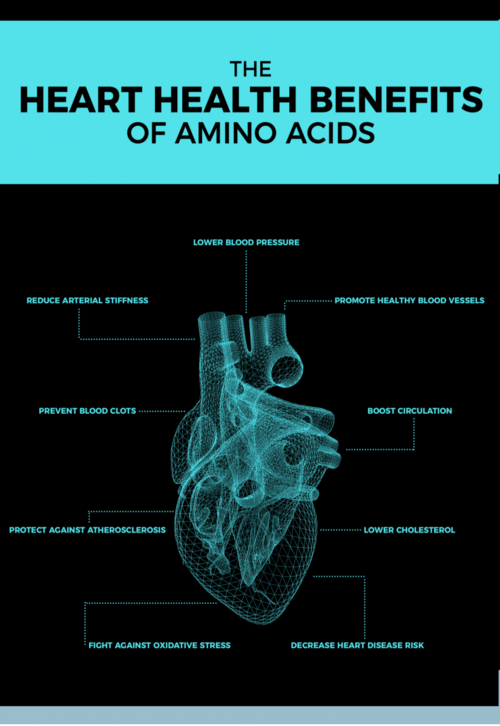
If ever there was a standout amino acid for heart health, it’s arginine, which is celebrated for its blood-pressure-lowering effects. Arginine is a conditionally essential amino acid that’s found in red meat, fish, poultry, wheat germ, grains, nuts, and seeds.
Evidence suggests arginine helps to boost levels of nitric oxide in the body, alleviate systemic inflammation, and enhance the overall health of blood vessels. Nitric oxide is a potent vasodilator that helps blood vessels relax and improves circulation throughout the body. Arginine may help increase the flow of blood to the arteries in the heart, which, in turn, helps to improve clogged arteries and coronary heart disease. These same effects may make arginine a natural solution for erectile dysfunction. Because nitric oxide helps prevent blood clots that can cut off blood supply, arginine may be an effective treatment for angina (chest pain).
Studies also show that arginine may help lower cholesterol by as much as 10%. When you have high cholesterol, the cholesterol builds up in your blood and eventually accumulates on the walls of your arteries causing atherosclerosis and greatly increasing your risk for heart disease.
The amino acid carnitine is often cited as a heart helper. The reason carnitine is important in human nutrition is that it helps transport fatty acids into the mitochondria (the energy plants of cells). Fatty acids are the main fuel for the mitochondria to produce ATP (your body’s energy currency). If your body doesn’t have enough carnitine, then the production of ATP from fatty acids will not occur at maximal capacity. And heart muscle prefers to oxidize long-chain fatty acids for energy! Carnitine also helps eliminate toxins from the mitochondria and fight against the oxidative stress that can instigate heart disease.
A 2013 systemic review and meta-analysis of 13 controlled trials from Mayo Clinic Proceedings showed that carnitine offered cardioprotective benefits for heart attack patients. Researchers concluded:
“Compared with placebo or control, L-carnitine is associated with a 27% reduction in all-cause mortality, a 65% reduction in VAs, and a 40% reduction in anginal symptoms in patients experiencing an acute myocardial infarction. Further study with large randomized controlled trials of this inexpensive and safe therapy in the modern era is warranted.”
The majority of the general population most likely makes enough carnitine from the amino acids lysine and methionine, so it may not be required in supplement form. If a person is carnitine deficient, however, it is very difficult to specifically increase the consumption of the amino acids that make up carnitine—lysine and methionine—sufficiently enough to impact the amount of carnitine produced. The supplementation of the diet directly with carnitine is the most effective way to increase its availability.
AGING - MUSCLE LOSS - DISEASE ARE YOU AT RISK: LEARN MORE