x






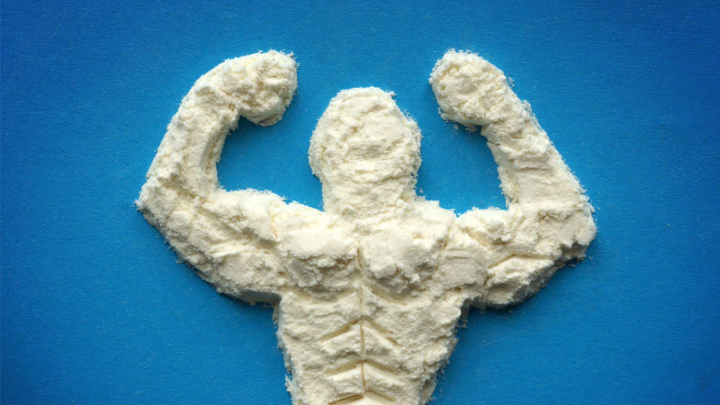
Muscle protein turnover is a constant state of activity: repairing, replacing, and rebuilding every day. This is true for everyone, though for those who work out or do strenuous labor regularly, the rate is even faster. It's also true that as we age, this process slows down, meaning the more we do and the older we get, the more support we need to maintain and grow our muscles. Those who hit the gym frequently have probably heard about amino acid supplements, but which are the best amino acids for muscle growth? Branched-chain aminos? The ones in creatine or whey protein? This article has the rundown on the amino acids responsible for muscle synthesis, and advice on how to get all the relevant amino acids for new muscle growth.
Branched-chain amino acid supplements (or BCAAs) are incredibly popular workout supplements among athletes and bodybuilders for their purported muscle-building abilities, but BCAAs are only a third of the essential amino acids (EAAs) needed to create new muscle. Here are the important differences when it comes to amino acids for working out.
BCAAs are taken as supplements to increase muscle gain, improve muscle recovery, and boost athletic performance. However, it's a little more nuanced than that on the molecular level.
Branched-chain aminos are so-called because of their chemical structures, the branching chains of their chemical bonds. They are valine, leucine, and isoleucine, and they do indeed play vital and irreplaceable roles in muscle building.
BCAAs are metabolized in your muscles, not via the liver, which means they hit your bloodstream fast when you consume a BCAA supplement, and are especially useful for workout energy. Scientific studies show a link between BCAA consumption and improved glycogen energy storage, decreased workout fatigue, and greater muscle mass. So...what could possibly be the drawback?
BCAAs cannot work alone. This meta-analysis of the relevant research done over 30 years (between 1985-2017) found that there are no human studies that show BCAAs working independently to improve athletic performance or increase protein synthesis. While they definitely play a role in new muscle growth, they are not the magic bullet that many fitness enthusiasts are led to believe. How can that be so?
Well, the meta-analysis referenced above highlighted two distinct studies that both showed BCAA supplementation can actually decrease muscle protein synthesis when they are overabundant. As mentioned previously, it takes all nine of the essential amino acids to create new muscle, and without a sufficient amount of every EAA, the excessive amount of BCAAs in the body may accelerate the catabolic rate of muscles (catabolism being a destructive metabolism, the very thing most bodybuilders take supplements to guard against).
In two of the studies profiled, muscle tissue was being broken down much faster than it was being repaired due to the fact that the overwhelming amount of BCAAs in the subjects were seeking to complete their job: achieve protein synthesis. To do this they cannibalized muscle tissue to derive the other six essential amino acids that could not be found quickly enough anywhere else. It's sort of like the way certain parasites kill their hosts, even though it's an illogical action: molecules and basic organisms aren't thinking about the bigger picture, they have one purpose and will clear a path of destruction to complete it if necessary.
Long story short, BCAAs cannot create new muscle alone, without all the ingredients necessary for new protein synthesis, they can actually work against your goals.
BCAAs only work to improve muscle growth in those who just so happen to have a sufficient amount of the other essential amino acids in their bloodstreams. Too many BCAAs taken as a solo supplement can have some other negative side effects.

The positive promises of branched-chain amino acid supplements can still be had, so long as you get them in proper balance with the rest of the essential aminos. The best supplements for muscle growth will include all of the amino acids you can't make yourself, which includes those treasured BCAAs.
Amino acids are known as the building blocks of protein in the body, and have everything to do with muscle gain and protein synthesis. They also have a firm hand in our hormone production, our enzyme creation, our cognitive functioning, and our metabolism.
There are 20 main amino acids in the human body, and while 11 of them can be synthesized in-house and are deemed nonessential, 9 of them are essential to consume from outside the body (like plant and animal protein sources: fish, eggs, beans, etc.). Those nine essential aminos are:
Each of the essential amino acids plays a role in either muscle building, fat burning, energy creation, or joint health, or all of the above. Don't stop at BCAAs when supplementing. Get the full deck of essential amino acids to truly improve your workout and increase your muscle growth.
To reiterate: BCAAs aren't bad, they just aren't the full package that amino acid supplements have to offer. They can't build muscle all on their own, and too many BCAAs without the rest of their EAA cohort can have counterproductive or even destructive effects on your health.
A full roster of essential amino acids can aid muscle repair, improve exercise recovery, help suppress your appetite (due to the EAAs which work in the brain to regulate satiety and hunger hormones), improve cognitive function, aid weight loss, enhance metabolic processes, and lead to better sleep.
With EAAs, your post-workout recovery improves alongside your body weight, blood flow, lean muscle mass, and muscle strength. Learn More at www.drinkbc6.com