x






When you hear “nitric oxide,” you might think of nitrous oxide, better known as laughing gas. While you might appreciate nitrous oxide gas at the dentist’s office, nitric oxide is quite different. Taking care to maintain plenty of nitric oxide in our bodies is no laughing matter, and you need to know why.
Doctors Robert Furchgott, Louis Ignarro and Ferid Murad won the 1998 Nobel Prize for medicine after discovering the importance of “nitric oxide as a signalling molecule in the cardiovascular system. In the two decades since, nitric oxide has been studied extensively and is even considered by some to be the most important molecule in the body due to its role in transmitting nerve impulses from cell to cell in every tissue in the body.
According to the World Heart Federation, deaths due to cardiovascular disease have risen 60% across the globe over the last 30 years. The World Health Organization estimates that 1.28 billion adults over age 30 have hypertension, or high blood pressure, with only 21% having it under control.
Statistically speaking, half of all men in the United States, and nearly half of women, have hypertension. What’s more, almost half of the adults in the U.S. with high blood pressure aren’t aware they have the condition and, therefore, aren’t likely to do anything to improve their cardiovascular health.
While such numbers may not come as news to you, you might be surprised to learn that heart disease often has less to do with the heart itself than with the arteries and blood vessels throughout your circulatory system.
High blood pressure occurs when the force of blood pushing against the walls of your arteries is consistently too high. Vasodilation, or relaxation, of the arteries can become compromised due to damage caused by years of uncontrolled elevated blood pressure, high lipids and glucose in the blood, and calcified plaque buildup in the arterial lining. Instead of the heart having smooth, flexible arteries to pump blood through, the heart has to work extra hard to force blood through narrow, stiff arteries, which can lead to serious cardiovascular conditions as we age.
The best known function of nitric oxide in the body is its ability to help manage high blood pressure, but healthy levels of nitric oxide generate a wealth of benefits for a number of body systems.
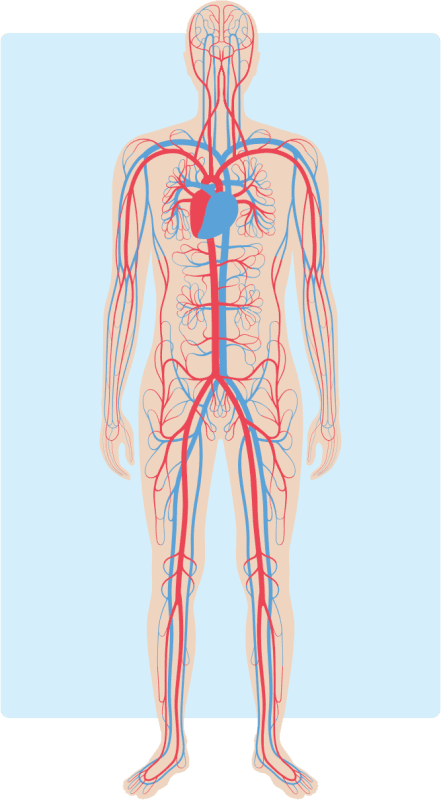
The good news is that our bodies produce nitric oxide as naturally as we breathe, literally! Deep breathing in through your nose not only produces nitric oxide in the paranasal sinuses, it effectively delivers it down into your lungs. Aside from your sinuses, nitric oxide is produced in the endothelial cells that line the insides of your blood vessels—all 60,000 miles of them.
The bad news is that our bodies produce less and less nitric oxide as we age, which can leave us with a lack of energy, high blood pressure and cognitive decline. By age 40, most Americans produce only half the nitric oxide they produced in their 20s. By age 50, nitric oxide production has decreased to only 35%, and it falls to a mere 15% of what it once was by the time we reach age 60.

With such a dramatic decrease in our bodies’ own ability to produce this crucial molecule, it is essential that we find other ways to get nitric oxide. Sadly, nitric oxide itself isn’t something you can consume; however, we can consume food rich in nitrates, which the body converts into nitric oxide, as well as antioxidants, which aid in the conversion process.
The amino acids L-arginine and L-citrulline also produce nitric oxide in the body. L-arginine can be found in red meat, fish and dairy products, while L-citrulline is also available in meat, as well as legumes. Beets are also a wonderful source of nitrates.
If red meat and dairy aren’t feasible for your diet for any reason, supplementing with a product like V-Nitro may be an excellent way to make sure your body can make enough nitric oxide.
Learn More: www.bsuccessful.com